Dating App Fatigue: Why Everyone Gave Up (2026)
Somewhere tonight, a guy is swiping through Tinder with the same dead-eyed rhythm he'd use scrolling through a fast food menu. He doesn't want any of it. He's not hungry. But his thumb keeps moving because that's what thumbs do now. Three floors up, a woman is staring at 47 unread messages that all say "hey" and wondering when meeting someone became this exhausting.
Dating app fatigue is the emotional exhaustion caused by the repetitive cycle of swiping, matching, and messaging strangers based on six photos and a bio.
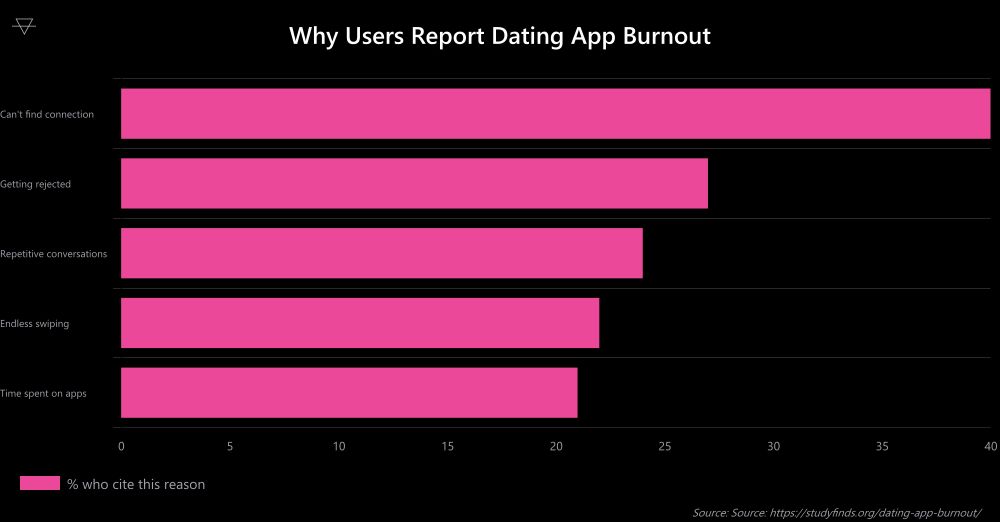
Dating app fatigue hit both of them at the same time. And it hit everyone else too. 78% of dating app users report burnout. Not mild frustration. Burnout. The kind where you delete the app, redownload it 72 hours later, and tell yourself this time will be different. It never is. This is the full story of how 1.5 billion people ended up trapped in the same cycle, why both sides are exhausted for completely different reasons, and what actually broke.
In This Post
- How Dating Apps Went From Revolutionary to Broken
- Why Dating Apps Don't Work Anymore
- Why Men Are Sick of Swiping
- Why Women Are Tired of Dating Apps Too
- How Self-Help Culture Made It Worse
- Social Media, Self-Image, and Modern Dating
- The Real Alternative to Dating Apps
- Where This Leaves Us
- FAQ
How Dating Apps Went From Revolutionary to Broken
Tinder launched on September 12, 2012, out of a startup incubator called Hatch Lab. The idea was simple. Two founders won a hackathon, built a prototype called Matchbox, and turned dating into a card game. Swipe right if you're interested. Swipe left if you're not. By late 2013, users were processing 350 million swipes per day). By the end of 2014, that number hit one billion.
The early pitch was genuinely exciting. Infinite choice. No awkward cold approaches. No rejection that happened to your face. You'd only match with people who already liked you. The friction that made dating painful for centuries was gone overnight. College campuses ate it up first. Then everyone else followed.
Bumble launched in 2014 with a feminist twist. Women message first. Hinge followed with a "designed to be deleted" tagline that aged like milk in a hot car. Between 2014 and 2016, these apps felt like the future. Tinder was one of the top 25 social networking apps by frequency of use). The swipe felt revolutionary because it was. For about three years.
Why Dating Apps Don't Work Anymore
The cracks started showing around 2017. That's when the free tier stopped being useful and the real business model revealed itself.
Here's the thing nobody talks about. In any dating dynamic, there's a natural division of labor. Men initiate. Women filter. That's not a value judgment. It's the pattern that exists across every culture and century. A woman on Tinder has no reason to buy a premium tier. She has extreme demand. Her problem is filtering through too much signal. A man's problem is being seen at all. And that's the only side that got monetized.
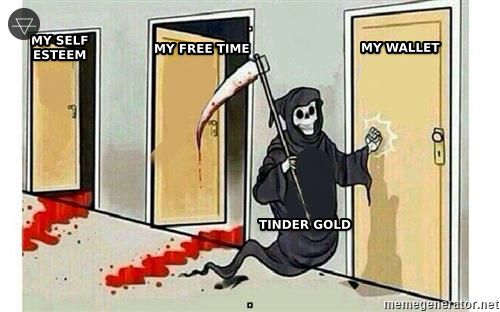
Tinder introduced Tinder Plus in 2015, then Tinder Gold in 2017. The premium tiers gave you back features that used to be free. See who liked you. Get more visibility. Undo accidental left-swipes. The free experience got deliberately worse so the paid experience could feel like a rescue. Bumble and Hinge copied the same playbook within a year. Men's ability to approach was artificially bottlenecked to extract as much money as possible from guys who just wanted a conversation.
Then came the algorithm. Tinder's ELO score system, borrowed from chess ratings, ranked users by attractiveness. If you got swiped right by people with high scores, your score went up and you got shown to more people. If you didn't, you got buried. Success compounded. Failure compounded harder. Most guys never knew why they were invisible. The app just stopped showing them to anyone.
This created a vicious cycle that's entirely artificial. The algorithm buries you. No matches come in. Your self-confidence takes a hit. You start second-guessing your photos, your bio, your face. The desperation creeps in. And women can smell desperation through a screen. So even when you do match, the energy is off. It's engineered. This cycle doesn't exist in the real world. It's a product of a gatekeeper designing a system to extract maximum profit from men who are just looking for connection.
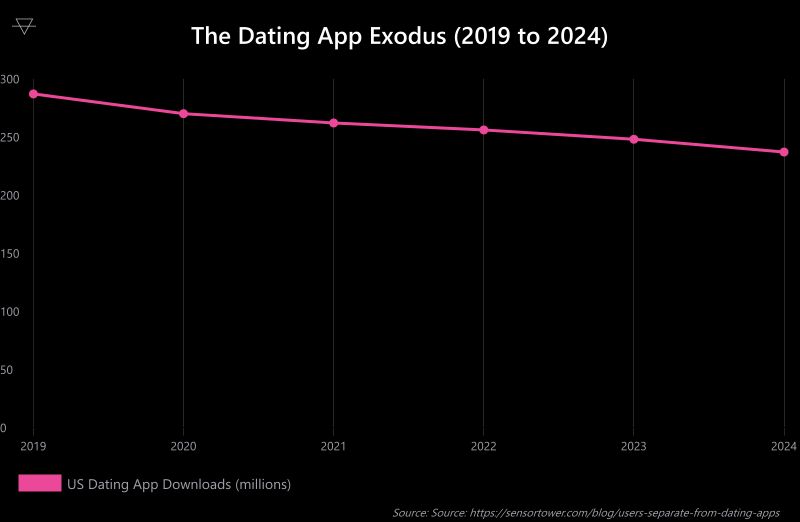
US dating app downloads dropped from 287 million in 2019 to 237 million in 2024. A 17% decline in five years. 69% of dating apps downloaded in 2025 were deleted within a month. The retention rate of spam email.
The business model is the drug dealer playbook. Supply the product. Get everyone addicted to the dopamine of matches and the convenience of swiping. Then slowly reduce the supply while jacking up the price. Tinder Gold. Platinum. Boost. Super Likes. Each one a toll on a road that used to be free. It's plain capitalism. Nothing illegal. But when the product is something as important as dating, something directly connected to whether people form families and whether civilization keeps going, the morality gets complicated fast.
The stock market noticed before the users did. Bumble's stock dropped from $75 per share at its 2021 IPO to less than $5 by March 2025. A 91% collapse. Bumble laid off 30% of its workforce in 2024. Match Group cut 13% of staff citing Gen Z declines. The companies that sold infinite romantic possibility couldn't even sell their own stock anymore.
Why Men Are Sick of Swiping
Here's the math nobody tells you when you download Tinder. The app is roughly 75% male. The average guy gets one match per 130 to 140 swipes. Women swipe right on 5 to 8% of profiles. Men swipe right on 40 to 46%. That's not a level playing field. That's a different sport entirely.
51% of American men had zero dates in 2025. Not bad dates. Not boring dates. Zero. 64% of men on dating apps felt insecure about the volume of messages they received, which is a polite way of saying they felt invisible. 63% of men under 30 are single, compared to 34% of women in the same age group.
I've used dating apps since the very beginning. Every time I was single, they were my go-to. I watched the shift happen in real time. The early days were smooth. You'd go on, get matches, get conversations, get dates. Everyone got dates. Then the free experience got strangled, year by year, update by update, until you were essentially paying rent on a platform that used to be a public park.
I watched a friend spend an entire Sunday swiping on three apps simultaneously. Tinder open on his phone, Bumble on his tablet, Hinge on his laptop. Like a day trader working multiple screens. He got four matches total across all three. Two were bots. One unmatched before he could type. The fourth never replied. He spent roughly three hours on this. If you told any other industry that their product delivered a 0% success rate after three hours of active use, they'd call it broken. But we'd been told to blame ourselves. Bad photos. Wrong bio. Not tall enough.
There's a huge number of guys who aren't even aware of the algorithm working against them. They take the silence personally. No one is matching with me. No one is replying. That must mean something is wrong with me. It crushes your self-confidence. It's a horrible experience. And it's not real. It's a toll booth dressed up as a mirror.
The swiping becomes a coping mechanism. You're not really looking for anyone anymore. You're looking for the tiny dopamine hit of a match notification. It's the same too-available energy that kills attraction in DMs, except now you're doing it to yourself. 88% of men report feeling disappointed by dating app encounters often or sometimes. The product trained you to need it while consistently failing to deliver. Same mechanics as a slot machine.
Why Women Are Tired of Dating Apps Too
The female experience of dating app fatigue is the exact opposite problem producing the exact same exhaustion. Where men deal with silence, women deal with noise.
56% of women under 50 on dating apps have received unsolicited sexually explicit messages. More than a third reported being called offensive names. 54% of women feel overwhelmed by the volume of messages they receive. The inbox is a wall of "hey," "hey beautiful," and content that would get you arrested in public. We covered why those openers fail in detail. They fail because they signal zero effort. Multiply that by 200 messages and you get a woman who stopped reading her inbox entirely.
80% of women on dating apps report burnout. Slightly higher than the 74% for men. The labor of filtering through hundreds of low-effort openers to find one person worth talking to is a second job nobody signed up for. 42% of Gen Z women reported dissatisfaction with the quality of people they dated in 2025. The options weren't the problem. The quality of the options was.
There's also the safety calculus that men rarely think about. Every date from an app requires a woman to tell a friend where she's going, share her location, have an exit plan, and evaluate whether a stranger she met through six photos is someone safe to be alone with. That emotional overhead is real. It accumulates. And after enough dates where the guy looked nothing like his photos or turned aggressive when she didn't want a second date, the rational decision is to stop.
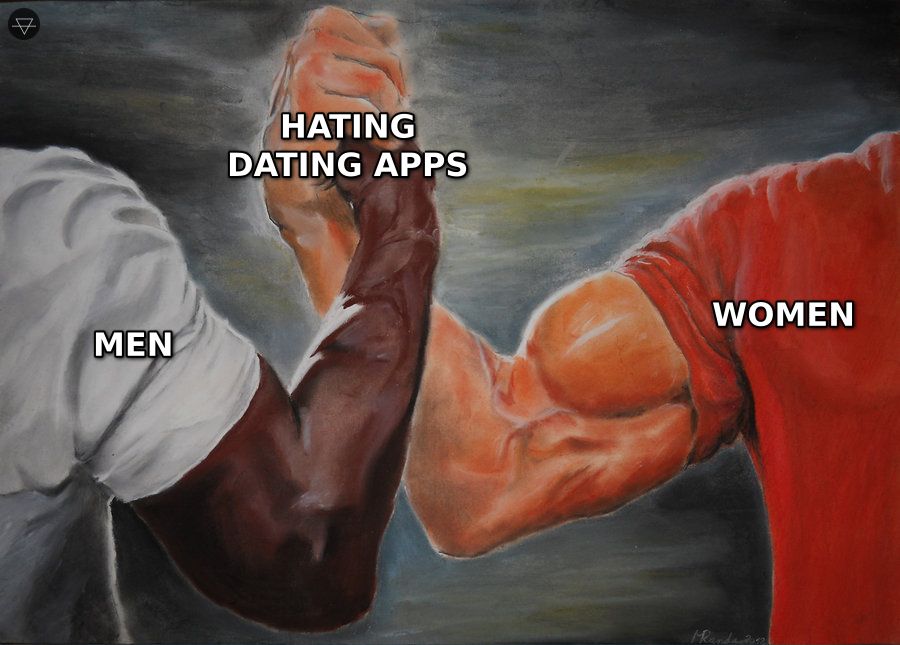
The paradox of choice applies here too. When you have 200 matches, you end up talking to none of them. Every conversation feels disposable because another one is a swipe away. Both sides created this dynamic. But women describe the exhaustion as emotional labor while men describe it as invisibility. Same burnout, completely different symptoms.
How Self-Help Culture Made Dating App Fatigue Worse
Something changed in how people talk about relationships around 2020. Attachment theory went viral on TikTok. The hashtag #attachmenttheory has over 142 million views. Suddenly everyone knew whether they were anxious, avoidant, or secure. They learned terms like "love bombing" and "trauma response" and "emotional availability." They absorbed these concepts without a therapist to contextualize them. And they started applying clinical language to normal human behavior.
A guy who takes six hours to text back isn't "avoidant." He might just be at work. Or doing the exact thing she'd find attractive if she gave him five minutes to show it. A woman who asks for consistency isn't "anxious-attached." She might just be direct. But TikTok compressed years of therapeutic frameworks into 60-second videos, and an entire generation started diagnosing each other on the first date.
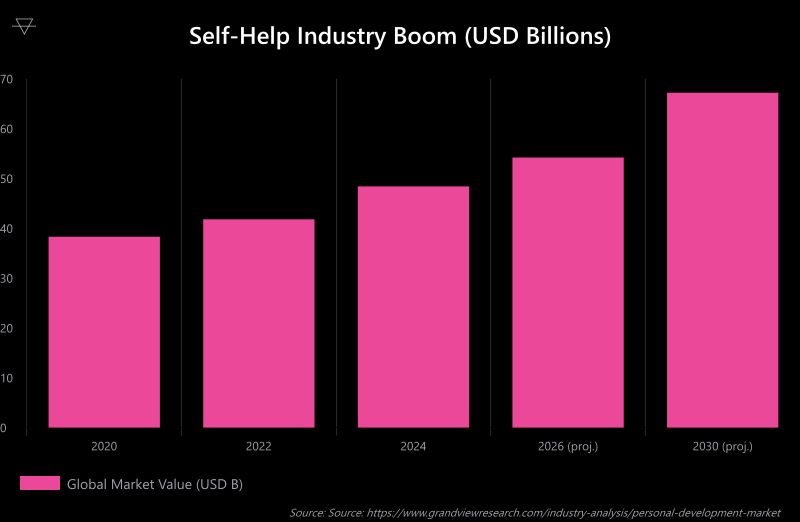
The personal development industry hit $48.4 billion in 2024 and is projected to reach $67 billion by 2030. That money represents a massive cultural shift toward self-awareness. The "know your worth" era. The "I'm working on myself" era. The era where every dating profile includes "looking for emotional intelligence" and "must have done the work."
Here's what nobody says out loud: hyper-self-awareness made people worse at connecting, not better. When you screen every potential partner through a checklist of psychological criteria, you're not dating. You're conducting job interviews. Spontaneity died the moment someone said "that's a red flag" about a person who made a joke they didn't immediately understand.
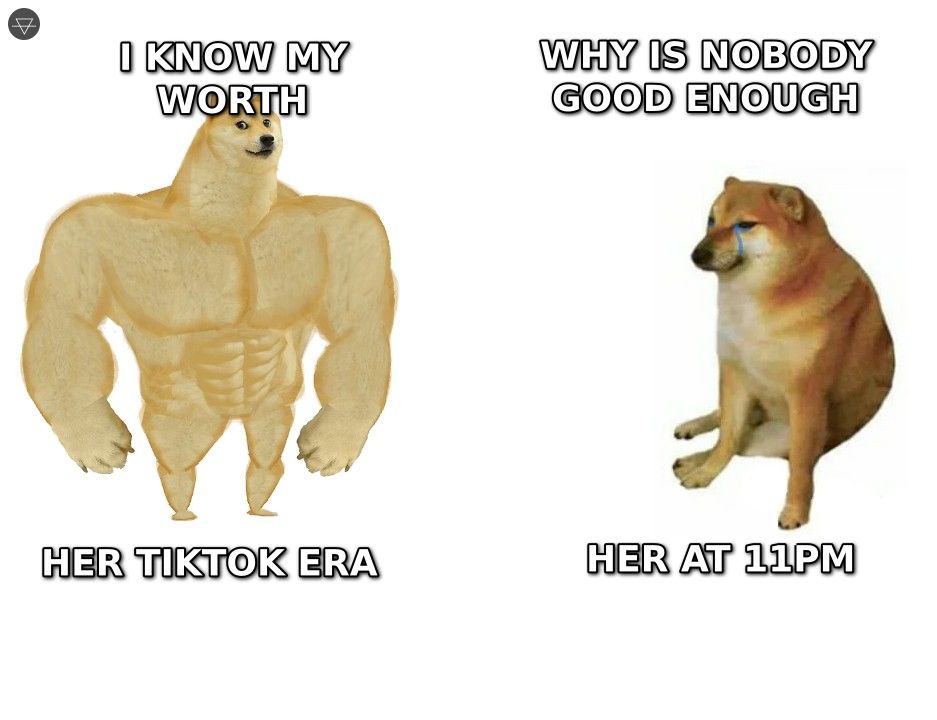
The self-help boom convinced two generations that they should never compromise. That settling is failure. That the right person will check every box. And then those same people sit alone wondering why nobody is good enough. Only 25% of young adults report being able to stay positive after a bad date. 55% say breakups made them reluctant to start new relationships. We built emotional armor so effective that nothing gets through. Including the good stuff.
Piercr finds women on Instagram who match your type and helps you send personalized openers based on what they actually post. No swiping. No subscriptions. Try it free.
Social Media, Self-Image, and Why Modern Dating Is So Hard
The same platforms that broke your confidence are now where dating is migrating to. That's the paradox nobody wants to talk about.
1 in 3 women say social media has made them feel their body isn't attractive. 1 in 3 men report negative mental health impacts from weight loss advertisements on social media. Nearly 1 in 3 Gen Z users say social media makes them feel ugly. 40% of Gen Z won't post a selfie without a filter. Instagram and TikTok created a highlight reel of human attractiveness that made everyone feel like they're competing in a league they don't belong in.
Men compare themselves to gym influencers who've been training for a decade and are lit by professional photographers. Women compare themselves to faces that have been filtered, facetuned, and surgically altered. Both show up to a date already feeling like they're not enough. The comparison machine runs 24 hours a day and over half of people under 35 say unattainable celebrity body standards affect their mental wellbeing.
I remember scrolling through a girl's Instagram before a date last year. Her grid looked like a magazine spread. Professional shots, perfect lighting, outfits that probably cost more than my rent. I almost cancelled. Showed up anyway, and she was a completely normal person who happened to be good at photography. The version of herself that made me feel inadequate didn't exist. It was a curated highlight reel, and I'd measured myself against a fiction.
And here's the twist. 40% of young people now meet partners through social media, compared to only 21% through dating apps. The platforms that warped everyone's self-image are becoming the primary venue for romance. Instagram destroys your confidence on the explore page and then connects you with someone in the DMs. The irony is thick enough to spread on toast.
We wrote about why the shift to dating without dating apps is accelerating. The short version: Instagram gives you months of context about a person before the first message. That context is what apps could never provide. But the self-image damage travels with you regardless of platform.
The Real Alternative to Dating Apps
Both genders raised their standards to a point where almost nobody qualifies. And dating apps are the engine that made it happen.
When you can swipe through 500 people in an hour, you start optimizing for traits that don't matter. Height. The right angle in a photo. Whether they used the correct emoji in their bio. Only 31% of young adults are actively dating despite 86% saying they expect to marry eventually. That gap between wanting a relationship and actually pursuing one is the standards problem in a single statistic.
Men built their ideal from Instagram models and adult content, then wondered why the women they met in real life didn't look like a professional photoshoot. Women built theirs from "green flag" TikToks that described a man who earns six figures, communicates like a therapist, cooks, reads, has a dog, and also somehow has unlimited free time. 64% of Gen Z women say they refuse to settle for less. That's framed as empowerment. And on paper it is. But when your checklist eliminates 97% of the population, the math stops working.
Nobody is saying lower your standards. The observation is structural. Dating apps reduced human beings to checkboxes. You filter by height, education, distance, job title, and zodiac sign before you've ever heard someone laugh or watched how they treat a waiter. Whether she's into yoga or CrossFit, the thing that actually makes her interesting can't be captured in a checkbox. The criteria were built from highlight reels. Nobody's real life survives that filter.
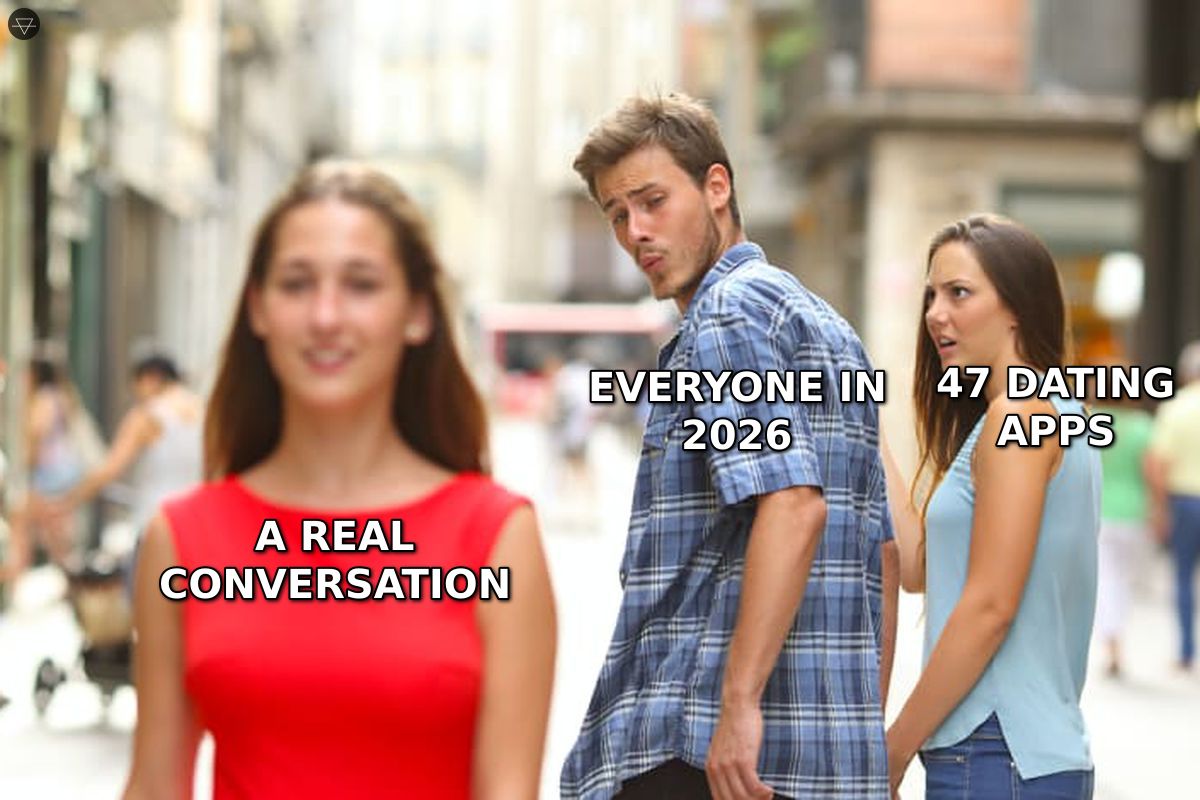
45% of women and 52% of men believe dating was better 10 years ago. Before the apps. Before the algorithms. Before everyone became a consumer of romantic options instead of a participant in them. They're probably right.
Where This Leaves Us
This is not the part where I tell you the answer is a better app. Or that some new platform will fix what Tinder broke. The apps were a symptom. We broke dating by optimizing it.
We turned attraction into a swipe. Conversations into a match rate. Human connection into a funnel with conversion metrics. We let algorithms decide who was visible and who wasn't. We paid for premium tiers that promised more access to the same broken system. And when it stopped working, we blamed ourselves. Bad photos. Wrong bio. Not attractive enough. Not interesting enough. Not worth swiping right on.
53% of singles describe themselves as emotionally exhausted by the dating process. The exhaustion is baked into the design. You gamified something that was never supposed to be a game, and now the players want to quit.
77% of Gen Z couples who found a partner met that person offline. Not through an app. Not through an algorithm. Through the unoptimized, inefficient, sometimes awkward process of being in the same place as another person and saying something. The people actually meeting someone in 2026 are the ones who stepped off the carousel. They stopped screening and started paying attention to what's in front of them.
The dating apps didn't fail because the technology was bad. They failed because they neutered one side of the equation and monetized the desperation. The solution isn't a better algorithm. It's simpler than that. Give men more access. Remove the artificial bottleneck. Let people talk to each other without a toll booth in between. Obviously it's not as simple as flipping a switch. But the direction is clear. The fatigue started because you castrated guys' ability to consistently approach women digitally unless they paid up. Undo that, and the whole system starts breathing again.
Nothing about this is optimistic. But it's honest. And honest is the only thing worth building on.
Try Piercr
Stepping off the apps doesn't mean doing nothing. It means putting your effort somewhere that rewards context over checkboxes. I built Piercr because I said to myself, I'm not going to take it. I'm not going to let a grubby little corporation strangle my ability to meet people. I wanted to keep dating digitally without the extortion. So I made the tool I wished existed.
Piercr helps you find and message women on Instagram based on shared interests, not swipe metrics. No artificial bottleneck. No premium tier that sells back features that should've been free. Try Piercr free and start conversations that actually go somewhere.
FAQ
Q: Why are dating apps losing so many users?
A: Dating apps lost over a million UK users between 2023 and 2024 alone. 78% of users report burnout. The core problem is structural. The business model profits from keeping you single and swiping, not from helping you find someone. When users realized the product was designed to maximize engagement instead of dates, they started leaving.
Q: Is dating app fatigue affecting men and women differently?
A: Both genders are burned out, but for different reasons. 74% of men report fatigue, mostly from invisibility and zero matches. 80% of women report fatigue from low-effort messages, safety concerns, and decision paralysis. 51% of men had zero dates in 2025. 56% of women under 50 received unsolicited explicit messages. Same exhaustion, different causes.
Q: Are dating apps actually dying in 2026?
A: The user base is shrinking and revenue is declining across the board. Bumble's stock lost 91% of its value since its 2021 IPO. Tinder's monthly active users dropped 9% year over year. 69% of dating apps downloaded in 2025 were deleted within a month. The apps are not dead yet, but the trend line is clear.
Q: Why is modern dating so hard right now?
A: Three forces collided. Dating apps gamified attraction and reduced people to checkboxes. Social media created impossible beauty standards that made everyone feel inadequate before the first message. And the self-help boom turned dating into a screening process instead of a human interaction. The result is two generations that want connection but have been trained to optimize instead of feel.
Q: What is replacing dating apps?
A: 77% of Gen Z couples met their partner offline. Social media is the leading digital alternative, with 40% of young people meeting partners through platforms like Instagram. The shift is toward context-rich interactions where you actually know something about a person before you talk to them, instead of judging six photos in two seconds.