
Double Texting: When It Works and When It's Over (2026)
You already typed it. You're staring at it in the text field. The cursor is blinking. You know you shouldn't send it. You're going to send it anyway. And the entire trajectory of this conversation now depends on whether the thing you're about to do is confident or catastrophic.
Double texting. Two messages. No reply in between. The internet will tell you it's always desperate. The internet is wrong. It will also tell you it's always fine. Also wrong. The truth is irritatingly specific: double texting works under exactly three conditions, fails under every other condition, and the difference between the two is not the message itself but everything surrounding it.
Double texting is sending a second message before receiving a reply to your first, and research shows it actually increases response rates when the timing, tone, and content are right.
This post is the definitive breakdown. Not vibes. Not "just be yourself." Actual data, actual rules, and a framework you can apply to any conversation you're currently overthinking at 1 AM.
In This Post
- Why Double Texting Feels Desperate (Even When It Isn't)
- The Hinge Data That Changes Everything
- When Double Texting Actually Works
- When Double Texting Is Never Fine
- The 72-Hour Rule
- What the Second Message Should Actually Say
- FAQ
Why Double Texting Feels Desperate (Even When It Isn't)
Your brain is lying to you about this one. The reason double texting feels like a social crime is the same reason being left on read feels like a punch to the chest: your anterior cingulate cortex processes perceived social rejection through the same neural pathways as physical pain. You're not just worried about looking needy. Your nervous system is treating an unanswered text like a threat to your survival.
31% of people experience texting as a daily source of anxiety. Not weekly. Daily. And when you add the uncertainty of "should I send another one," you're layering decision anxiety on top of rejection anxiety. Your cortisol spikes. Your amygdala lights up. You start composing follow-ups in the shower.
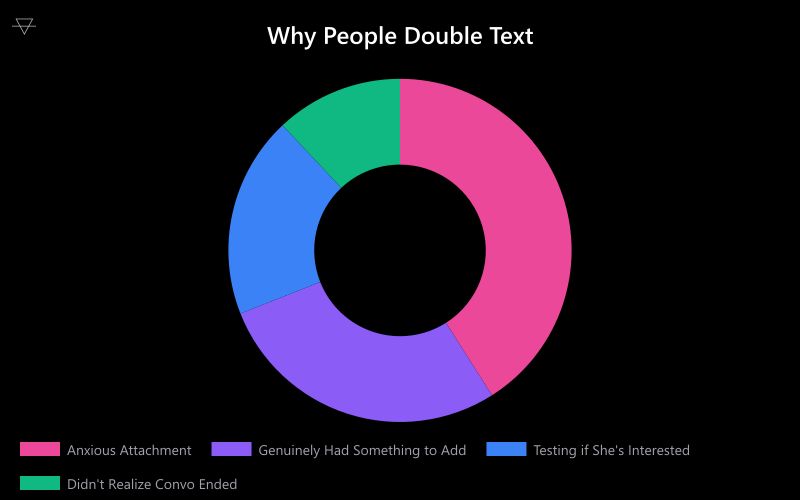
Here's the part nobody talks about: the desperation isn't in the second message. It's in the motivation behind it. A guy who sends a second message because he genuinely thought of something funny to share reads completely differently from a guy who sends a second message because the silence is eating him alive. Same action. Different energy. She can tell the difference. Every time.
A 2025 Vanderbilt study on attachment styles and digital communication found that anxiously attached individuals send more frequent and longer messages, not because they have more to say, but because silence triggers their fear of abandonment. If your double text is an anxiety response rather than a communication choice, she will feel that. Not because women have supernatural intuition. Because anxious follow-ups have a tone. They ask for reassurance. They reference the gap. They try too hard to seem casual about trying too hard.
The question is never "is double texting bad." The question is "why am I sending this." If the answer is "because I have something worth saying," send it. If the answer is "because I can't handle the silence," put the phone down.
The Hinge Data That Changes Everything
Most advice about double texting is opinion dressed up as wisdom. Here's what the numbers actually say.
Hinge analyzed over 300,000 conversations between US users and found something that contradicts every "never double text" take on the internet: sending a second message dramatically improved response rates. Without a follow-up, the chance of getting a response after a week dropped to 1 in 500. With a follow-up, it jumped to 1 in 3.
Read that again. From 0.2% to over 33%. That's not a marginal improvement. That's a different universe.
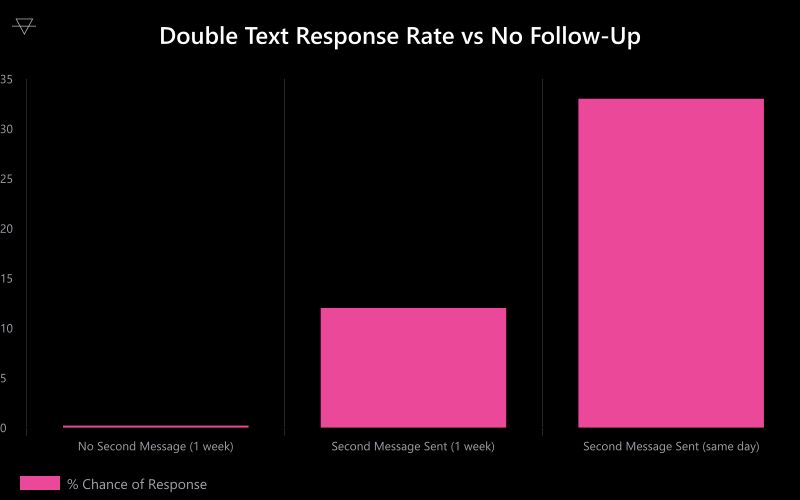
But before you fire off a "hey you there?" to every silent conversation in your inbox, the timing matters enormously. The study found that the optimal wait time before a second message was approximately four hours. More specifically, three hours and 52 minutes. Messages sent before that threshold were less effective. Messages sent after were still effective, even up to a full week later, but the sweet spot was that four-hour window.
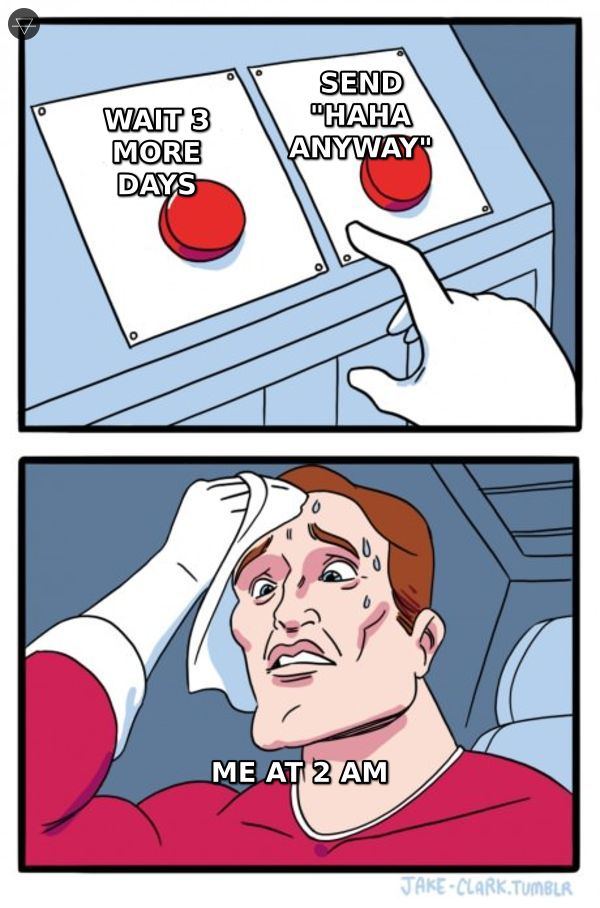
Here's what the data tells us: the problem was never the second message. The problem was always the gap. Send it too fast and you look like you've been watching the conversation. Send it after an appropriate pause and you look like a person with a life who happened to think of something else to say. The act is identical. The perception is entirely about timing.
And one more finding that matters: passive-aggressive follow-ups made senders appear "obsessive at worst." The "guess not" message. The lone question mark. The "lol ok." These don't just fail. They actively damage the sender's perceived value. You went from "maybe she forgot" to "confirmed desperate" in two characters.
When Double Texting Actually Works
Double texting works when three conditions are true at the same time. Not one. Not two. All three.
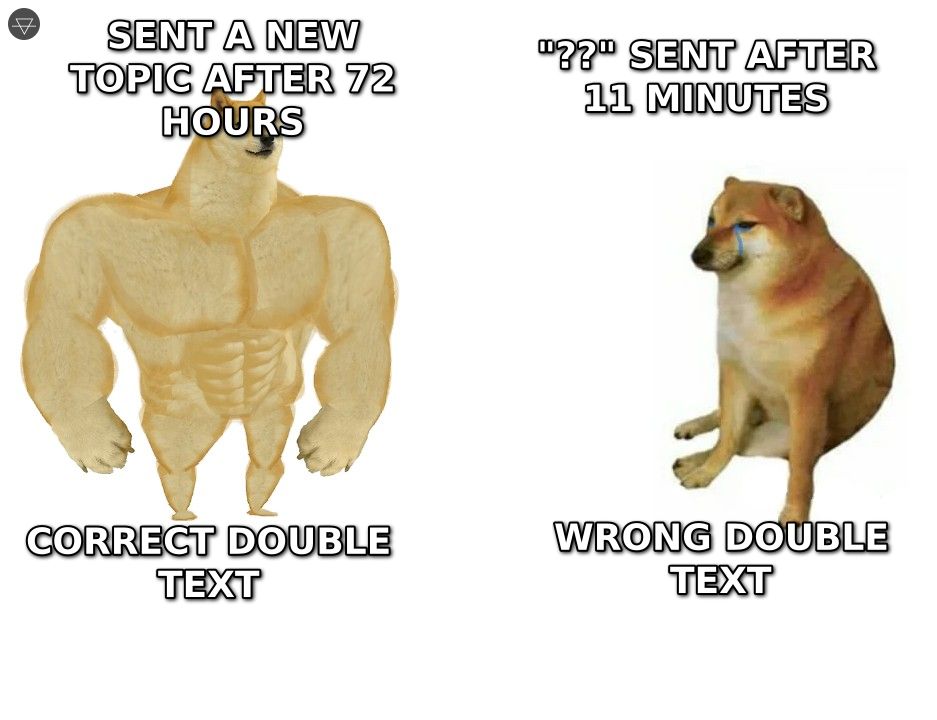
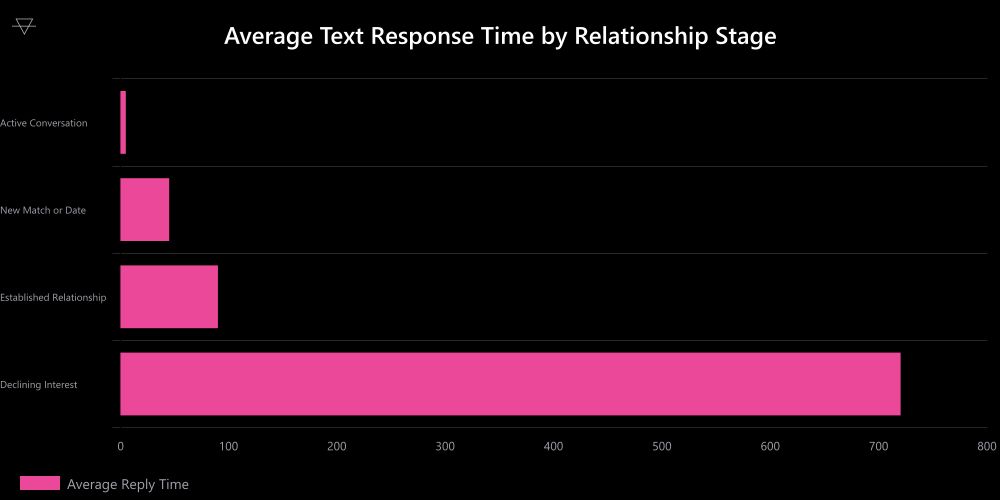
Condition one: enough time has passed. Four hours minimum for an active conversation. Twenty-four hours for a newer connection. Seventy-two hours for a cold DM that went unanswered. Research shows that response times under 12 hours are normal across all relationship stages. If it hasn't been at least half a day, you don't have enough data to justify a follow-up.
Condition two: you're bringing something new. The second message must introduce a different topic, share something genuinely interesting, or reference something timely. It cannot be a continuation of the first message. It cannot be a rephrasing of the first message. It cannot be a check-in about the first message. It needs to stand on its own as something worth opening a notification for.
Condition three: the first message deserved a response. If your first message was "hey" or "what's up" or a fire emoji on her story, the problem isn't that she didn't reply. The problem is that you didn't give her anything to reply to. Sending a second weak message after a first weak message doesn't double your chances. It doubles the evidence that you're not interesting to talk to.
When all three conditions are met, a double text is fine. It's not desperate. It's not clingy. It's a person continuing a conversation, which is what humans have done for the entire history of language. The stigma around it is a byproduct of dating app culture, not a law of social dynamics.
Real example: I messaged a girl about a restaurant she posted on her story. Nothing back for three days. On day four, I saw she posted a story at a completely different spot and sent "ok that place looks way better than the one I asked about." She replied in twenty minutes. The second message worked because it was new, timely, and didn't acknowledge the silence.
When Double Texting Is Never Fine
There are situations where no amount of clever phrasing saves you. If any of these are true, the correct number of follow-up messages is zero.
She read it and clearly chose not to respond. Not "she might have missed it." You can see the read receipt. She opened it during a time when she was active (posting stories, online, etc.) and decided not to reply. That decision was intentional. Sending another message doesn't change the decision. It confirms that you noticed she ignored you and are bothered by it.
Your first message was the follow-up. If you already sent a second message last week and she didn't reply to that either, you're now considering a third message. Stop. You've expressed interest. She's aware. Anything beyond this is pressure, and pressure is the opposite of attraction.
It's been less than four hours. The Hinge data is clear on this. Under four hours, a second message hurts more than it helps. You're not giving her time to live her life, check her phone naturally, and come back to your message on her own terms. You're communicating that the conversation is more urgent to you than it is to her.
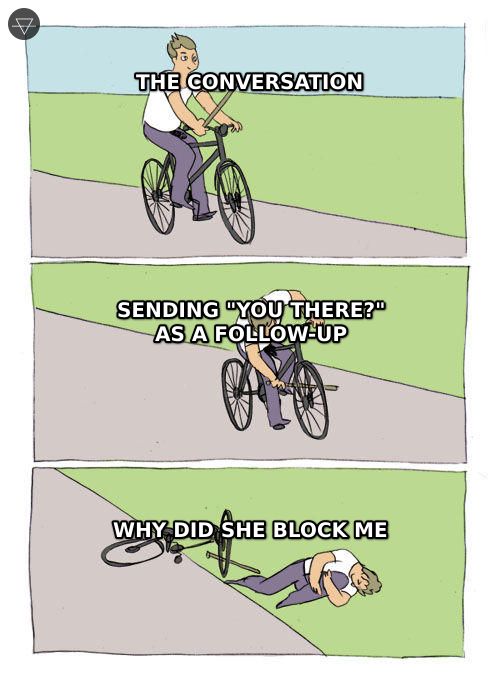
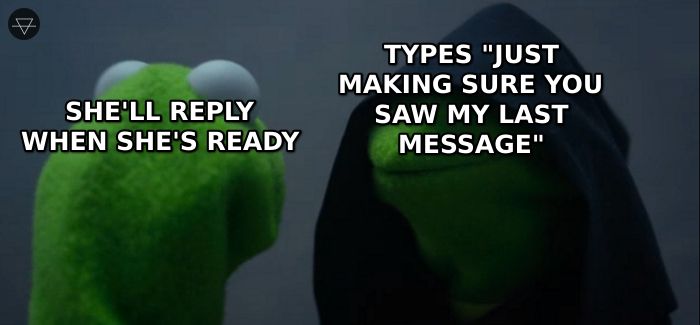
You're about to reference the silence. If your second message contains any variation of "did you see my last message," "guess you're busy," "hello??", or the nuclear option, a lone question mark, do not send it. These passive-aggressive follow-ups rank as the most damaging type of double text. They reframe you from "confident guy" to "guy keeping score."
The conversation was already dying. Look at the last five messages. Were hers getting shorter? Was she taking longer to reply each time? Did she stop asking questions two exchanges ago? If the conversation was on a downward slope, her silence isn't a blip. It's the destination. A second message won't restart something that was already coasting to a stop.
The 72-Hour Rule
Here's the framework. It's simple enough to remember and strict enough to actually work.
If you're in an active conversation (regular back-and-forth within the last week), wait a minimum of four hours. If she was matching your energy and the silence feels out of character, she's probably busy. Your second message should be a new thread, not a continuation.
If you're in a new conversation (matched recently, first few exchanges), wait 24 hours. New connections are fragile. She's still deciding whether this is worth her time. Rushing a follow-up signals that you've already decided it's worth yours, which creates an imbalance that makes her uncomfortable.
If your first message was a cold DM (no prior interaction, no mutual engagement), wait 72 hours. This is the ceiling. If she hasn't responded to a cold DM after three days, a second message is your one and only shot at re-engagement. Research suggests engagement drops sharply after 72 hours, so this is the outer boundary of the window.
After your one follow-up at the appropriate interval, you're done. No third message. No "one more try." If two messages didn't get a response, three won't either. The data supports trying twice. It does not support trying three times. That's the line between persistence and harassment, and it's not subjective.
Piercr reads the person you're agonizing over. Drop her handle and it reads her Instagram, her posts and who she follows, then hands you a plain-English read on what she's into and how to open. You write the message. Stop pinning your week on one silent thread. Try it free.
What the Second Message Should Actually Say
The content of your second message matters more than the fact that you sent one. Here are the rules.
Rule one: it must stand alone. If you deleted your first message, the second one should still make sense as a conversation starter. It should not depend on the context of the first message. It should not continue the thread. It's a soft reset, not a nudge.
Rule two: never acknowledge the gap. No "hey sorry to bother you again." No "I know you're probably busy." No "one more thing." All of these sentences do the same thing: they announce that you noticed she didn't reply and you're insecure about it. She knows she didn't reply. You don't need to remind her.
Rule three: lead with genuine value. The best second messages fall into three categories.
A new observation about her content: "Just saw your story at that market. Is that the one near the bridge? I've been meaning to check it out." This works because it's timely, specific, and gives her an easy thing to respond to.
Something genuinely funny or interesting: A meme, a short take on something relevant to your previous conversation, or a observation that's actually worth reading. Not "haha look at this" with a random link. Something that demonstrates you're a person with thoughts.
A low-pressure question about a shared interest: "Random but have you tried that new place on 5th?" This works because it's casual, doesn't reference the previous message, and doesn't require a long response.
Rule four: keep it short. Your second message should be shorter than your first. A long second message screams effort. Effort screams investment. Visible investment before she's reciprocated screams too available. Three sentences maximum. One is better.
What never to send as a double text:
- "?" (the most passive-aggressive character in the Unicode standard)
- "Hello??" (implies she owes you a response)
- "Guess you're not interested" (manipulation disguised as acceptance)
- "Just checking in" (you're not her manager)
- "Did you get my last message?" (she did)
- The same message again (she saw it the first time)
- A longer, more detailed version of the first message (she didn't need more words)
The Real Framework
Double texting isn't a strategy. It's a decision. And like every decision in dating, the outcome depends less on what you do and more on why you're doing it.
If you have something new to say and enough time has passed, send it. If you're sending it because the silence is uncomfortable and you want relief, don't. That's it. That's the entire framework. Everything else, the timing guidelines, the content rules, the 72-hour ceiling, those are guardrails for the moments when your judgment is compromised by your amygdala.
The guys who do this well aren't following a playbook. They're genuinely busy enough that a second message three days later feels natural because it is natural. They thought of something while doing something else and sent it. No agonizing. No drafting four versions. No checking her activity first. They live their lives and their messages reflect that.
You already know whether your double text is confident or desperate. You knew before you opened this post. If you're looking for permission to send it, that hesitation is your answer. Confident follow-ups don't require a Google search first. They just happen.
Stop treating texting like a chess match. She's not analyzing your response time. She's living her life. The best thing you can do is live yours. And if that life produces a genuinely interesting second message three days from now, send it without thinking twice. That's the energy that gets replies.
Try Piercr
The worst version of double texting comes from having one conversation and treating it like your entire dating life. Piercr takes the pressure off any single thread: drop the handle of someone you're into and it reads her Instagram, her posts and the accounts she follows, then hands you a plain-English read on what she's into and how to open. You write the message.
Try Piercr free and stop drafting your fourth version of a follow-up text.
FAQ
Is double texting a turn-off?
Not inherently. Hinge analyzed over 300,000 conversations and found that sending a second message actually increased response rates from 1 in 500 to 1 in 3. The turn-off is not the second message itself but the timing, tone, and content. A follow-up sent four or more hours later with a new topic performs well. A question mark sent twelve minutes later does not.
How long should I wait before double texting?
Minimum four hours for active conversations, 24 hours for someone you just started talking to, and 72 hours if the first message was a cold DM she never responded to. The Hinge data showed that waiting at least three hours and 52 minutes before a follow-up made recipients more likely to respond than not.
What should I say when I double text?
Something completely unrelated to your first message. Never reference the silence. The best second messages introduce a new topic, share something genuinely interesting, or ask a specific question about her content. The worst are variations of "checking in," question marks, or anything that implies you noticed she did not reply.
Is double texting clingy?
One follow-up with new content after appropriate time is not clingy. What is clingy is multiple follow-ups, messages that reference the lack of response, or sending a second text within minutes of the first. Context matters more than the act. A guy with an interesting second message after three days reads differently than a guy sending question marks after three hours.