
Instagram vs Tinder for Dating (2026 Comparison)
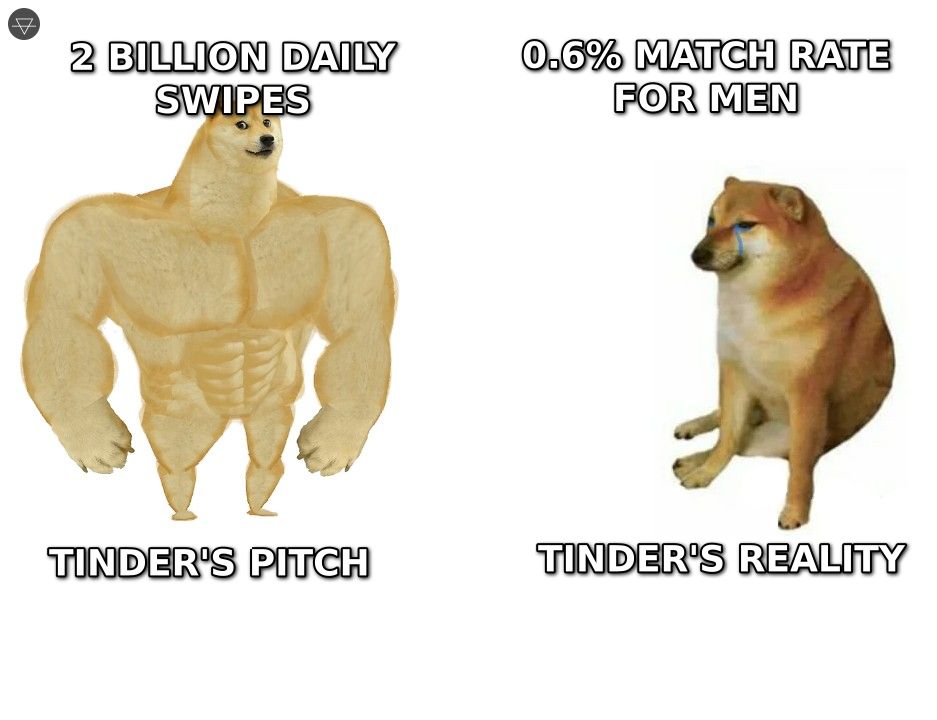
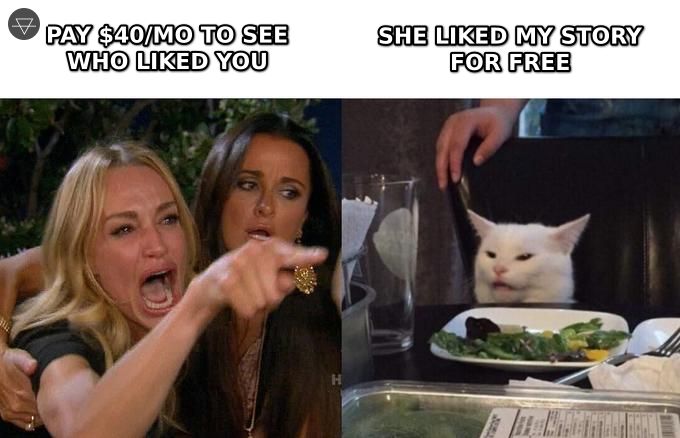
Tinder processes 2 billion swipes per day. Two billion. And the average guy's match rate is 0.6%. If you put those numbers on a product review, no one would download it. The apps aren't all equal either — see Bumble vs Hinge vs Instagram. Instagram vs Tinder isn't even a close comparison in 2026. One platform charges you $40 a month to be invisible. The other is free and gives you months of context before your first message.
Instagram vs Tinder is not a close comparison in 2026: one platform is free with a balanced gender ratio and months of personality context, while the other charges $40 a month to be invisible in a 76% male user base.
This isn't a "delete your apps" rant. We already wrote that piece. This is a head-to-head comparison across eight specific dimensions: gender ratio, cost, context, response rates, authenticity, safety, time investment, and who each platform actually works for. Every category has a winner. The data picks it.
In This Post
- The Numbers That Matter: Instagram vs Tinder at a Glance
- Gender Ratio: Who You're Actually Competing Against
- What Most Guys Get Wrong About Instagram vs Tinder
- Why Instagram Works as a Dating Platform
- The Instagram Dating Playbook (What Tinder Can't Do)
- Cost, Time, and the Instagram vs Tinder ROI
- What Instagram vs Tinder Looks Like in Real Conversations
- FAQ
The Numbers That Matter: Instagram vs Tinder at a Glance
Before the analysis, here's the comparison table. Skim this, then read the breakdowns below.
| Category | Tinder | Winner | |
|---|---|---|---|
| Gender ratio | 76% male, 24% female | 52.5% male, 47.5% female | |
| Monthly cost | $24.99 to $49.99 | Free | |
| Context available | 6 photos + 500-char bio | Months of posts, stories, reels | |
| Response rate | 30-35% of matches send a message | 40-60% open rate on story replies | |
| Authenticity | 37% of users aren't authentic | Profiles curated for friends, not strangers | |
| Time investment | 90 minutes per day swiping | One targeted story reply | |
| Who it favors | Top 10-20% of men by appearance | Anyone with genuine interests and specificity | |
| Safety signals | 6 photos from a stranger | Months of public posting history |
Eight categories. Instagram takes all eight. That should tell you something about where the market is headed.
Gender Ratio: Who You're Actually Competing Against
This is the number that changes everything. Tinder is 76% male. In practical terms, every woman on the platform has three guys competing for her attention. In some markets like India, that ratio climbs past 90% male. Instagram's global gender split is 52.5% male to 47.5% female. Nearly even.
The ratio alone explains most of the frustration guys feel on dating apps. You're not bad at this. The math is bad. 51% of American men had zero dates in all of 2025. Zero. When three-quarters of a platform is male, the bottom 80% of men become functionally invisible. Tinder's own algorithm, which ranks users by attractiveness using an ELO-style scoring system, makes this worse. Low-rated profiles get shown to fewer people. Success compounds. Failure compounds harder.
And the guys who do win on Tinder? They've min-maxed their profiles. Perfect angles, gym photos, status signals. They know exactly what they're doing. They're not looking for a girlfriend. They're running volume. So the girl swipes right, thinks she's found someone great, goes on a date, maybe a second one, sleeps with him, and then he never returns the call. Because he has fifteen other conversations running. After a few rounds of this, she thinks: Tinder is full of fuckboys. And she leaves. The women worth talking to are leaving the platform. The pool is getting slimmer on both sides.
Instagram doesn't have a dating algorithm. There's no ELO score deciding whether she sees your message. A story reply lands in her primary inbox because you're already interacting with her content. That structural difference is worth more than any premium subscription.
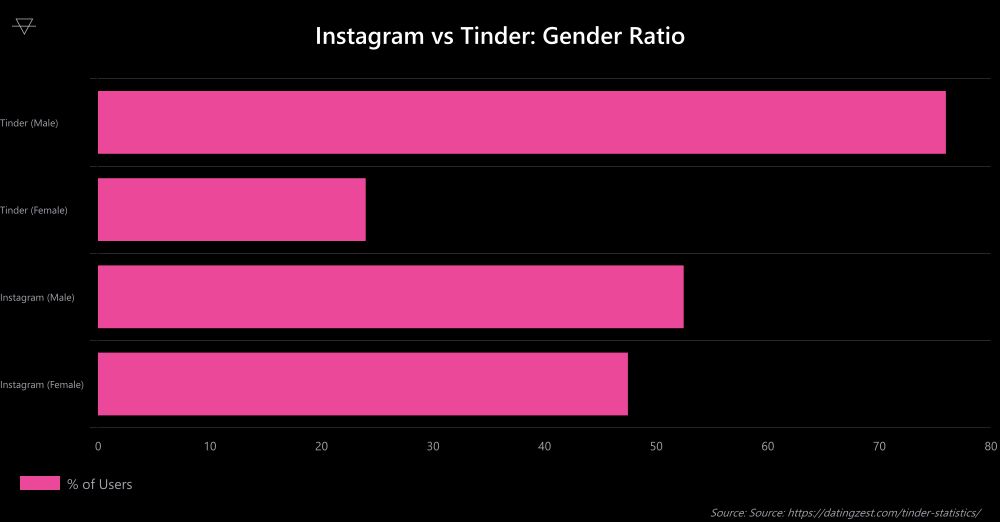
78% of dating app users report burnout. The gender ratio is why. You can't fix a 3:1 imbalance with better photos or a wittier bio.
What Most Guys Get Wrong About Instagram vs Tinder
Thinking Instagram is just Tinder with a different interface
The guys who fail on Instagram are the ones treating it like a dating app. Mass-messaging women from the explore page. Sending "hey beautiful" to anyone with a public profile. Copy-pasting the same opener to twenty accounts. That's Tinder behavior on a different platform, and it produces Tinder results. Instagram works because it's not a dating app. The moment you treat it like one, you lose every advantage it offers. The same mistake sinks people on Hinge, where an opener that names something specific beats a clever one every time.
Assuming match rate equals opportunity
A Tinder match means two people swiped right. It does not mean a conversation will happen. Only 30 to 35% of matches result in someone sending a message. Of those, barely 15 to 20% become two-way conversations. So your 0.6% match rate actually translates to a fraction of a fraction of a conversation. On Instagram, every story reply is already a conversation. No matching required. No algorithm deciding if she's allowed to see you.
Think of it like sales. When a girl is on Tinder, she's signaling intent. She's single, she's looking. Great. But so are a hundred other guys who see that same signal. You're responding to an RFP alongside every other vendor. On Instagram, you're going cold. No signal. No intent. But you're also potentially the only one reaching out. You're one-of-one instead of one-of-a-hundred. That trade-off is massive. And here's the kicker: on Tinder, you get given what you're given. Beggars can't be choosers. On Instagram, you have the entire pool. You pick who to talk to based on what you actually care about. You control your own destiny.
Ignoring the warm-approach advantage
Cold DMs on Instagram get a 1 to 5% response rate. That's comparable to Tinder. But story replies are different. They land in her primary inbox, not message requests. She just engaged with the content. She's already active. Story replies see 40 to 60% open rates. The warm approach is Instagram's entire edge, and most guys skip it because they want to jump straight to the DM.
I spent three months on Tinder Gold last year. $120 total. I could see everyone who swiped right on me. The problem was the list. Full of profiles I'd never swipe on, bots with suspiciously professional photos, and accounts that hadn't been active in months. That was the premium product. I cancelled and spent the same three months replying to stories from women who shared actual interests I cared about. The conversation quality wasn't comparable. On Tinder, I was starting from zero context. On Instagram, I already knew she was into trail running before I said a word.
Why Instagram Works as a Dating Platform
Context is the variable Tinder can't replicate
On Tinder, you get six photos and a 500-character bio. That's all the information you have to decide if someone is worth your time, and all the information she has to decide if you're worth hers. And a bio holds less than it looks like it does: we measured what actually fits in one. Instagram gives you months of someone's actual life. Travel posts, food photos, workout clips, music taste, the jokes she shares on stories, the causes she cares about. You know who you're talking to. That context produces conversations that start at a higher floor than anything swipe-based.
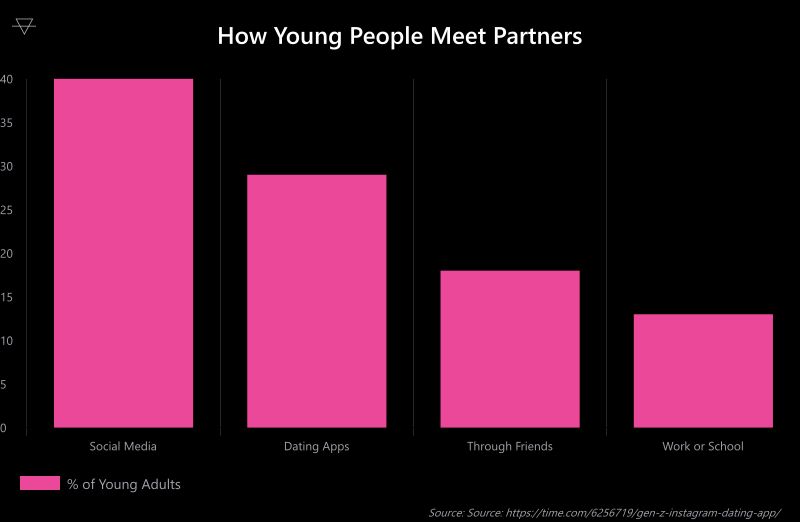
2 in 5 young people met their partners through social media, compared to 29% through dating apps. The shift happened because context beats chemistry-from-a-photo every time.
The authenticity gap
37% of singles report not being authentic on dating apps. Dating profiles are constructed for strangers. Instagram profiles are constructed for friends. The version of herself she shows on Instagram is closer to real. Her stories are spontaneous. Her grid reflects what she genuinely cares about. When you reference something from her actual content, you're responding to the real person, not the curated dating persona.
76% of Gen Z believe other users aren't authentic on dating apps. That trust deficit doesn't exist on Instagram because the profiles weren't built to attract dates. They were built to share a life.
Using Instagram as a dating app without the dating app problems
500 million people use Instagram Stories daily. Every story is a conversation starter that requires zero swiping, zero matching, and zero premium subscriptions. Whether she's into yoga, fashion, or chess, her content tells you exactly what to reference. The specificity that makes a great opener on Instagram is impossible on Tinder because Tinder doesn't give you enough information to be specific about anything.
The Instagram Dating Playbook (What Tinder Can't Do)
1. Find her through shared interests
Hashtags, location tags, mutual followers, explore page. If you're into climbing and she posts bouldering content, you already have the context for a message that isn't generic. On Tinder, you'd swipe right and hope the algorithm showed you to each other. On Instagram, you find her yourself based on what you actually care about.
2. Engage before you message
React to two or three stories over a week. Drop one genuine comment on a post. This does two things. First, her phone shows your name repeatedly, building passive familiarity. Second, story replies from people she's interacted with land in her primary inbox, not the message request graveyard. 62% of women are open to meeting partners outside of dating apps. The door is open. The warm approach is how you walk through it.
3. Reference something specific
"That cortado spot looks legit" beats "hey" because it proves you looked. The entire framework for writing openers that reference her content is covered in how to DM a girl on Instagram. On Tinder, the best you can do is reference one of six photos. On Instagram, you have an archive of interests to draw from.
4. Let the conversation breathe
Five to seven exchanges. Then suggest something specific and low-pressure. DMs are for starting things. The same too-available energy that kills attraction applies here. If you keep the conversation in DMs for three weeks, it dies there.
A friend of mine matched with a girl on Hinge last spring. They exchanged six messages over two weeks. Each one took longer to arrive. The conversation dissolved into nothing. That same month, he found a girl through a climbing hashtag on Instagram. Engaged with her stories for a week. Sent a specific reply about a route she'd posted. Coffee within five days. The Hinge conversation had no context to sustain it. The Instagram conversation had months of shared interest as fuel.
Cost, Time, and the Instagram vs Tinder ROI
The price tag
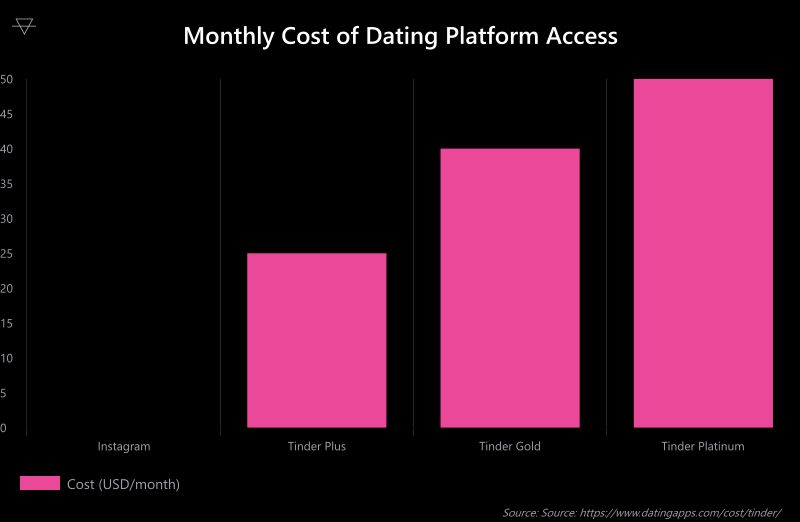
Tinder Plus costs $24.99 per month. Gold is $39.99. Platinum is $49.99. There's also Tinder Select at $499 per month if you really want to throw money at the problem. Active daters spend an average of $310 per month on dating overall, up from $188 in 2022.
Instagram costs nothing. No premium tier. No algorithm suppressing free users. No "boost" feature draining your wallet for temporary visibility. The entire comparison on cost is a category forfeit by Tinder.
The time investment
Tinder users average 90 minutes per day on the app across 11 separate sessions. That's 90 minutes of swiping through profiles with minimal context, hoping the algorithm decides you're worth showing to someone. On Instagram, one well-timed story reply takes 30 seconds. The time-to-conversation ratio isn't close.
Who each platform actually works for
Tinder works for men in the top 10 to 20% by conventional attractiveness. The ELO system and women swiping right on only 8 to 14% of profiles means the platform concentrates attention on a small group. Everyone else is background noise.
Instagram works for anyone willing to be specific. A guy with genuine interests, a decent profile grid, and the ability to reference something real from her content has a structural advantage that Tinder's design makes impossible. Whether she posts about surfing, CrossFit, or movies, the specificity is the differentiator. Not your jawline.
Context is Instagram's whole edge over Tinder. Drop her handle into Piercr and it reads her Instagram — her posts and who she follows — then hands you a plain-English read on what she's into and the best way to open. You write the message. No swiping. No subscriptions. Try it free.
What Instagram vs Tinder Looks Like in Real Conversations
The Tinder approach
You match. You see six photos and a bio that says "probably likes your dog more than you." You type something. Maybe a question about the dog. Maybe just "hey." She has 47 other messages that look exactly like yours. Your message sits in a queue. The algorithm already decided where you rank. If she replies at all, it's to one of the three guys the platform decided to spotlight. Everyone else is noise.
The Instagram approach
She posted a story about her running splits. You noticed the elevation profile in the background and called out the hill pace. She didn't give you much at first. One-word replies. Testing. But your specificity proved you actually looked, and that earned a real exchange. By the eighth message, she was asking you questions.
What both scenarios prove
On Tinder, your message competes in a lineup. On Instagram, your message arrives with context. She can check your profile, see your posts, read your bio, and evaluate whether you're someone worth talking to before she responds. That evaluation happens on Tinder too, except there she has six photos to work with and you have six photos of hers. Neither of you knows anything real about the other.
The framework works the same whether she's into books, martial arts, or astrology. Reference the specific thing. Prove you paid attention. Let the conversation build at her pace. 42% of Gen Z women feel the men they date don't want deep conversations. Your first five messages are your chance to prove otherwise.
The Bigger Picture
Tinder was a good idea in 2012. Infinite access. No awkward cold approach. The friction that made dating painful for centuries, gone overnight. The promise held for about three years before the business model revealed itself. Pay more to be visible. Swipe faster. The app processed 2 billion swipes per day while 51% of men went the entire year without a single date. The product optimized for engagement, not outcomes. And the users finally noticed.
Instagram didn't set out to replace dating apps. It replaced them by accident, because the one thing dating apps could never provide was context. The ability to know who someone actually is before you decide to talk to them. That context changes everything about the first message, the first conversation, and whether it leads anywhere real. Bumble's stock lost 91% of its value since 2021. 40% of young people meet partners through social media. The market already picked a winner. Most guys just haven't caught up.
Some people will have moral qualms about reaching out cold. They'll say she didn't give consent for you to message her. If you're reading this and nodding along with that, I want you to know something. Girls and guys can go into Instagram settings and block messages from people they don't follow. It's a few clicks. Consent is already inherent in having a publicly available profile. The platform was designed for this. If you're too afraid to reach out and go after what you want, that's on you. But if you're not using Instagram for dating in 2026, you are being left behind.
Try Piercr
The Instagram edge is context — you can read who she is before you say a word. But actually reading a full profile and figuring out the right angle takes time. That's what Piercr does for you.
Drop her handle and Piercr reads her Instagram — her posts and the accounts she follows — then gives you a plain-English read on what she's into and the best way to open. You write the message. Try Piercr free and skip the 90 minutes of swiping through strangers.
FAQ
Q: Is Instagram better than Tinder for meeting women?
A: For most men, yes. Tinder's gender ratio is 76% male, which means you're competing against three guys for every woman on the platform. Instagram's split is 52.5% male. You also get months of context from her profile before your first message, which produces higher-quality conversations than a six-photo grid ever could.
Q: Can you actually use Instagram as a dating app?
A: Yes. 2 in 5 young people now meet partners through social media, compared to 29% through dating apps. Instagram works because it isn't designed for dating. There's no swipe fatigue, no paywall, and story replies land in her primary inbox instead of a message request folder that never gets opened.
Q: How much does Tinder cost compared to Instagram for dating?
A: Tinder Plus costs $24.99 per month. Gold is $39.99. Platinum is $49.99. Active daters spend an average of $310 per month on dating overall. Instagram is free. There's no premium tier gating your visibility and no algorithm suppressing your profile because you didn't pay.
Q: What is the response rate on Instagram DMs vs Tinder messages?
A: Cold DMs on Instagram get a 1 to 5% response rate, similar to Tinder where only 30 to 35% of matches send a message. But Instagram story replies land in her primary inbox and see 40 to 60% open rates because she just engaged with the content seconds ago. That warm-approach advantage doesn't exist on any dating app.
Q: What is a good alternative to dating apps in 2026?
A: Instagram is the leading alternative. 40% of young people meet partners through social media. The advantage is context. You can see months of someone's actual life before you message them, and they can see yours. 62% of women are open to meeting romantic partners outside of apps.