The Social Care Girl Isn't Your Therapist. Get One.
Most guys hear "social care girl" and picture one of two things. Florence Nightingale with a tote bag and a soft voice. Or a woman who'll hold space for your childhood trauma over appetizers because "she gets it."
Both are wrong. And the fact that those are your only two templates for a woman who spends her days inside other people's crises says more about you than it does about her.
Reading dysfunction is her profession. Every client she sits with is an exercise in pattern recognition. Every assessment she writes is a piece of how she sees people. And every time you treat a date like a free session, you're confirming a pattern she already identified.
You don't need to understand her caseload. You need to understand why emotional competence matters to her more than it matters to anyone you've ever dated.
What the Social Care Girl's World Actually Looks Like
Call it a career and you're underselling it by a decade.
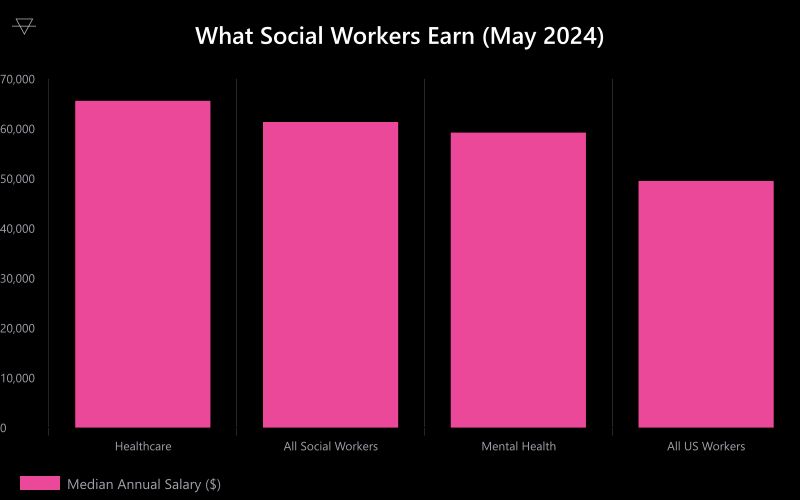
81% of social workers are women. The median salary is $61,330. That's what she earns for work that involves secondary traumatic stress, crisis intervention, and sitting with families in the worst moments of their lives. For context, the average American worker earns $49,500 without absorbing anyone else's pain.
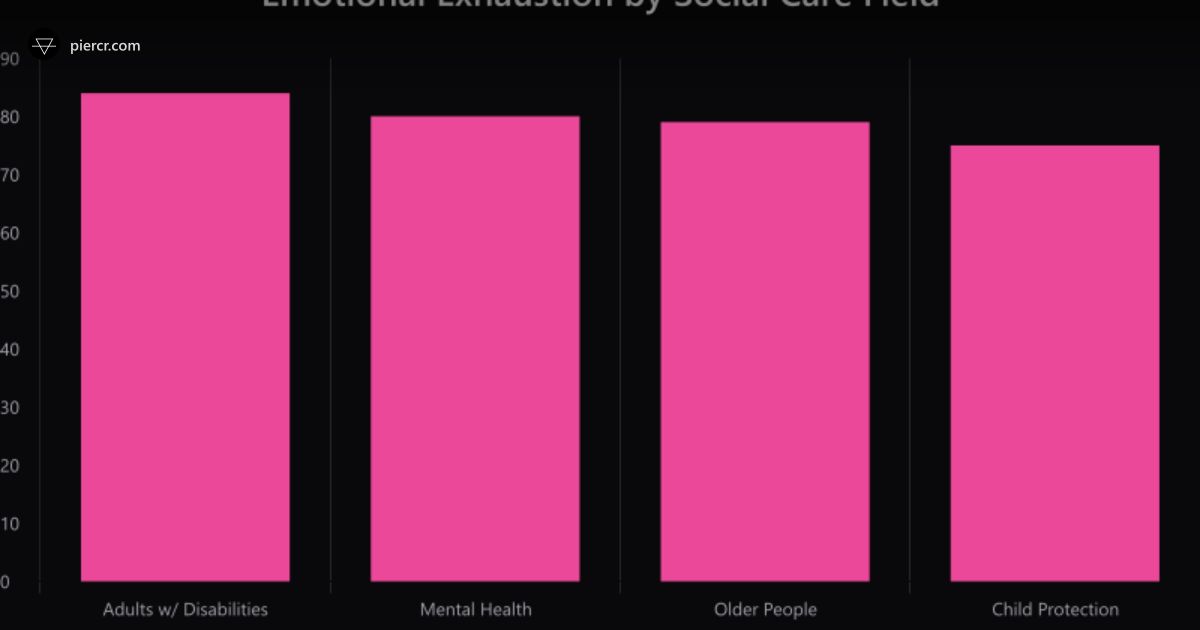
73% of frontline social workers experience elevated emotional exhaustion. That number comes from a study of 1,359 professionals in child welfare, mental health, and gerontology, with published prevalence data and measured clinical outcomes. This is the field she works in.
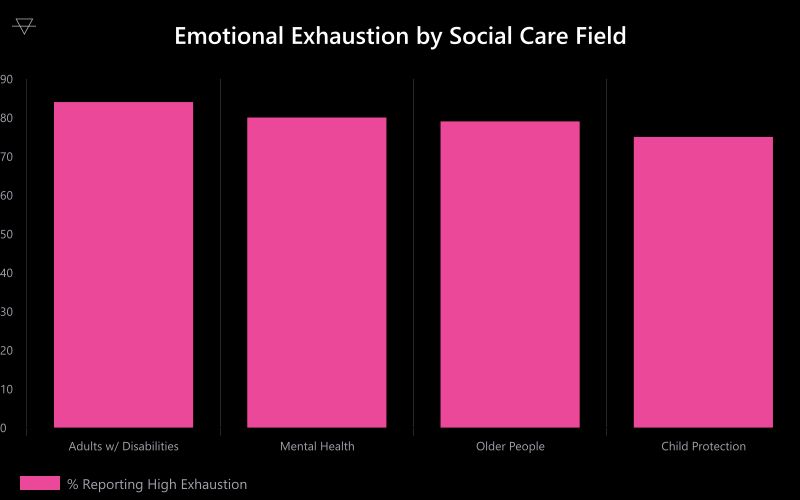
Every one of those percentages is someone's bad day that became her workday. She walks into it knowing the emotional cost, absorbs it anyway, and drives home listening to a podcast about boundaries because she used all hers up by 3pm.
By the time she's sitting across from you at dinner, she's already survived something today that would've wrecked your week. That's the context you're dating inside.
What She Values (And Why)
Emotional self-sufficiency.
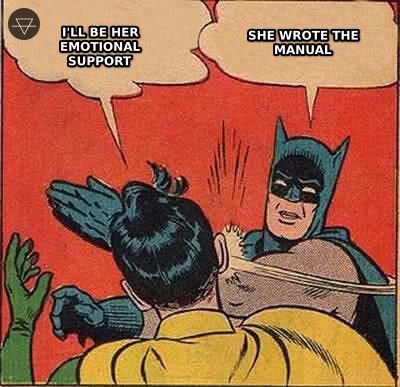
For eight hours a day, she's the steady presence in someone else's chaos. What exhausts her is the assumption that she should carry your emotions too. She can handle your feelings. She just shouldn't have to manage them.
Your own inner work, already done.
Avoidance, deflection, unprocessed anger. She spots all three from across a restaurant table because she's spent years training herself to see those patterns in strangers. You're not going to hide yours.
If you haven't done any work on yourself (therapy, journaling, honest self-reflection) she already knows without you telling her.
Time as sacred resource.
Her calendar is a weapon. Cases, court dates, client meetings, supervision sessions. When she carves out a Thursday evening for you, she's spending her most scarce resource. Being late, being vague, being the guy who says "let's just figure it out when we get there" tells her you don't respect what her time costs.
Respect for the weight.
Calling her job "just talking to people" is like calling surgery "just cutting things." She heard the minimization even if you didn't intend it. And she filed it where she files everything: as data.
Why Most Guys Fail With the Social Care Girl
Treating her as a free therapy session.
This is the big one. You googled "vulnerability" before the date. You decided that "being open" means unloading your entire attachment history between the appetizers and the mains. You thought she'd appreciate the honesty because she's trained for this.
At work, she's trained for this. Where she gets paid. What you called vulnerability was offloading. She knows the difference because she studied it.
I dated a social worker for three months. On our second date, I told her about my parents' divorce, my fear of commitment, and my complicated relationship with my mother. I thought I was being refreshingly honest.
She listened with this calm, professional stillness that I mistook for connection. She never texted back. A mutual friend told me she'd said I "needed a therapist, not a girlfriend." Turns out she was right.

Competing with her emotional intelligence.
You read one Brene Brown book and started dropping words like "boundaries" and "holding space." She clocked the performance before you finished the sentence. She uses those terms in clinical reports. Hearing you borrow them to sound evolved registers the same way it would if someone quoted your company's internal jargon back at you on a first date.
Dismissing her work.
"Must be rewarding though, right?" Four words that tell her you've never sat with a family in crisis at 11pm, written a risk assessment at 6am, or driven home from a home visit wondering if you made the right call.
Understanding every detail isn't required. Just respect the scale.
Expecting her to fix you.
Dating a social worker means free emotional maintenance for life. That's the assumption she noticed the first time you said "you're so good at this" after she helped you process a bad day. That sentence told her she was being cast in a role she didn't audition for.
Ignoring her need for decompression.
Some days require silence when she gets home. She just spent eight hours holding someone else's worst moment and she needs to set it down before she can pick yours up. Taking that personally is another data point she didn't have to ask for.
What Actually Works
Match her emotional maturity, not her credentials.
No psychology degree required. Just evidence that you've done your own work. Therapy, journaling, honest conversations with people who challenge you. She can tell the difference between a man who has processed his history and one who is storing it.
Research backs this up: asking genuine questions and showing curiosity increases likability by 31%. But the key word is genuine. She'll know if you're performing curiosity versus actually feeling it.
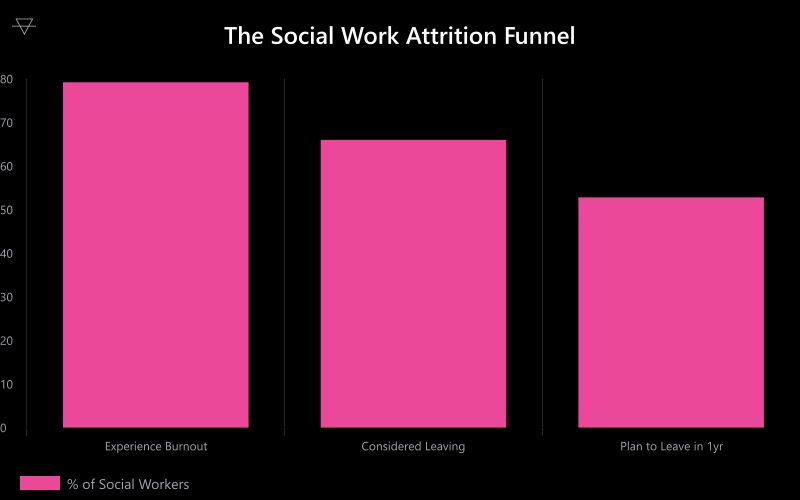
79.2% of social workers report burnout symptoms. 66% have considered leaving the profession entirely. She's doing this work despite the cost, and she's already wondering if she can sustain it.
Be the contrast to her work life.
Crisis, need, people who want things from her. That's every workday. Be the person who wants nothing from her except her company.
Plan the evening. Handle the logistics. Make one part of her day feel easy.
I figured this out by accident. I was seeing a woman who worked in child protection. I asked her how her day was. She said "I can't talk about it."
Panic kicked in and I started filling the silence with random stories about my week. Turns out, better questions weren't the point. She needed me to be the part of her life that had nothing to do with other people's pain.
Ask about the work, not the trauma.
"What are you working on this week?" beats "Tell me the saddest thing you've seen." She's a professional who happens to work with vulnerable people. Treating her expertise as spectacle tells her you see the costume, not the person wearing it.
Handle your own logistics.
Make the reservation. Have a plan. She's made 47 decisions before lunch. Don't add number 48 about where to eat.
What She Won't Tell You
Years of professional observation calibrated her filters. Assessments you'll never see are running constantly.
73% of social workers report high emotional exhaustion, yet 91% still report high personal accomplishment. Burning out AND still believing in the work. That paradox runs through her entire personality. If you only see the tired version, you missed the fire underneath.
Look at what she earns for this. Healthcare social workers make $65,580. Mental health social workers make $59,200. The average American worker makes $49,500 without absorbing anyone else's trauma.
She noticed how you handled the waiter's mistake.
Your order came out wrong. Did you snap, sulk, or shrug? She manages people in crisis for a living. Your response to a minor inconvenience is a data point she didn't have to ask for.
She clocked your emotional vocabulary.
If your entire emotional vocabulary is "fine," "good," and "not bad," she already has her answer. She works with people who can't name their feelings and won't date one voluntarily.
She tested whether you'd follow up.
Remember when she mentioned a hard week? Did you circle back to it or pivot to yourself? She's trained to notice who centers themselves in someone else's difficulty. You were being observed.
She watched your stress response.
Plans changed. Something went wrong. Did you adapt or spiral? How you handle low-stakes disruption tells her everything about the real stuff.
Who the Social Care Girl Follows
Her feed is a map of how she thinks about people, systems, and herself. These names aren't trivia. They're the architecture of her worldview.

- Brene Brown (@brenebrown) Vulnerability researcher with a social work PhD. If she quotes Brown, she's telling you emotional courage is a requirement.
- Dr. Courtney Tracy (@the.truth.doctor) Licensed clinical social worker with 1.7 million TikTok followers. Breaks down clinical concepts for regular people. If she follows her, she values making depth accessible.
- Matthias J. Barker (@matthiasjbarker) Psychotherapist with 2.5 million followers. His monologue videos feel like sitting in a session. She watches these after hard shifts.
- Nedra Glover Tawwab (@nedratawwab) Boundaries expert. If she's into Nedra, she's actively protecting her own energy. Respect that or get filtered.
- The Nap Ministry (@thenapministry) Rest as resistance. Rest is survival for her after absorbing everyone else's pain all week.
- NASW Her professional community. Where she goes for policy updates and the peer recognition her salary doesn't provide.
- Therapy for Black Girls (@therapyforblackgirls) If this is in her feed, intersectionality runs through her daily practice.
A feed heavy on Brene Brown and Nedra Tawwab means she values emotional rigor and firm limits. If it's Courtney Tracy and Matthias Barker, she values making clinical depth feel human. Both tell you something about what she needs from a partner. And if you want to understand how the same empathy-first wiring plays out through narrative instead of case notes, the books girl runs on identical frequency.
The Truth About Dating Someone in Social Care
Here's what nobody tells you. She doesn't just read people. She reads patterns.
Thousands of hours. That's how long she's been sitting with humans in their worst moments. Learning what people do when they're scared, angry, ashamed, or cornered. She brings that pattern recognition to every date, every conversation, every silence you let stretch a beat too long.
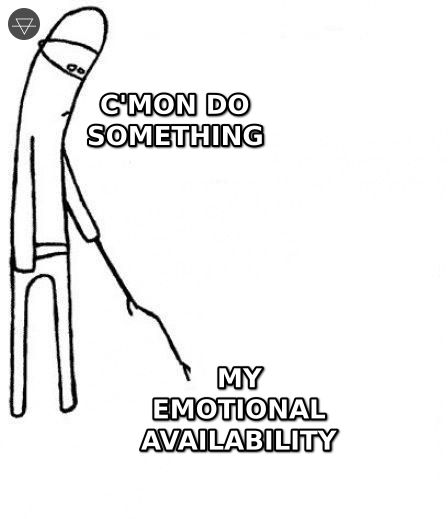
My first time dating someone in social care, I thought she was "analyzing me." I got defensive. Told her it felt like being under a microscope.
She looked at me and said, "I'm just paying attention. Most people aren't used to that." What I called analysis was just someone paying attention for real. The discomfort belonged to me.
That's what she's offering. Presence trained by professional practice. If you can sit in that without flinching, you're further ahead than most.
She Doesn't Need You to Understand Her Caseload
Carry your own weight. Show up with your own inner work done. Have your own intensity about your own life. Let her be a person when she gets home, not a service provider.
That's it. That's the whole thing.

It Works
One of our guys matched with a social care worker who posted about emotional boundaries on her story. Here's how it went:

No clinical jargon. No trauma dumping. He referenced something specific she said, showed genuine understanding, and let the conversation breathe. She could feel the difference.
Why We Built Piercr
Opening with "hey" doesn't work on a girl whose story is a three-slide breakdown of vicarious trauma and professional boundaries. Templates don't work either. Her whole career is about recognizing templates in human behavior.
We built Piercr because this problem kept coming up. You can see exactly who she is from her feed, her stories, her posts about the work that keeps her up at night. But reaching her at scale without sounding generic is impossible to do by hand.
Piercr finds hundreds of girls like her on Instagram, pulls context from their profiles, and helps you send a first message that actually references something she cares about. A real opening that proves you were paying attention.
Try Piercr free and find the ones worth showing up for.
FAQ
How do you date someone who works in social care?
Respect her time and energy. She spends her professional life managing other people's emotions, so the worst thing you can do is add to that load on a date. Be honest about your own emotional state, have your own life in order, and let her be a person instead of a professional when she's with you.
What does a social worker look for in a partner?
Emotional maturity and self-sufficiency. She wants someone who has done their own inner work and doesn't need her to be their therapist. Genuine curiosity, the ability to handle your own logistics, and a willingness to respect her decompression time matter more than any specific interest or career.
Is dating a social worker hard?
Dating her only feels hard if you're unwilling to be real. Her training means she notices things most people miss: how you handle stress, whether you follow up on things she mentions, and whether your emotional vocabulary extends past "fine." If you're genuine, that's not a burden. It's a gift.
How do you know if a social care worker likes you?
She'll make time for you. Given how scarce her time is, that's the clearest signal. She'll also start sharing pieces of her actual life beyond the professional surface and ask follow-up questions that go deeper than small talk. When she recommends a book or podcast, she's giving you a window into how she thinks.