
Breadcrumbing: Is She Breadcrumbing You?
The short version
- Breadcrumbing means getting just enough attention to stay interested, with no plan ever attached: a story like, a late reply, a 'we should hang out' that never gets a day.
- It is more common than ghosting. In one study of 626 adults, 35.6% had been breadcrumbed in the past year and 36.7% admitted doing it.
- It works because the attention is unpredictable. Psychologists compare it to a slot machine that pays out just often enough.
- The test is simple: make one specific plan. Interested people say yes or offer another day. Breadcrumbers stay vague.
- If she stays vague, stop answering crumbs with effort. You do not need to announce it.
In This Post
- What does breadcrumbing mean?
- Breadcrumbing vs left on read vs a dry texter
- What most guys get wrong about breadcrumbing
- Why the crumbs work on you
- Signs she is breadcrumbing you
- Is she breadcrumbing you, or just busy?
- What to do about it
- What the research says
- Watch-outs
- Your move
- Breadcrumbing FAQ
What does breadcrumbing mean?
Breadcrumbing is when someone gives you just enough attention to keep you interested, and never enough to go anywhere. A heart on your story. A "haha you're so random" two days after you sent something. A "we should actually get a drink sometime" that never gets a day attached.
The name comes from Hansel and Gretel, the trail of crumbs you follow without ever being fed. Researchers describe it in almost the same words: sending out "flirtatious, but non-committal" messages to keep someone on the line without spending much effort.
Instagram is close to the perfect place for it. Eight in ten adults aged 18 to 29 use Instagram, and the app is built on gestures that cost nothing. A like takes half a second. A story view takes none.
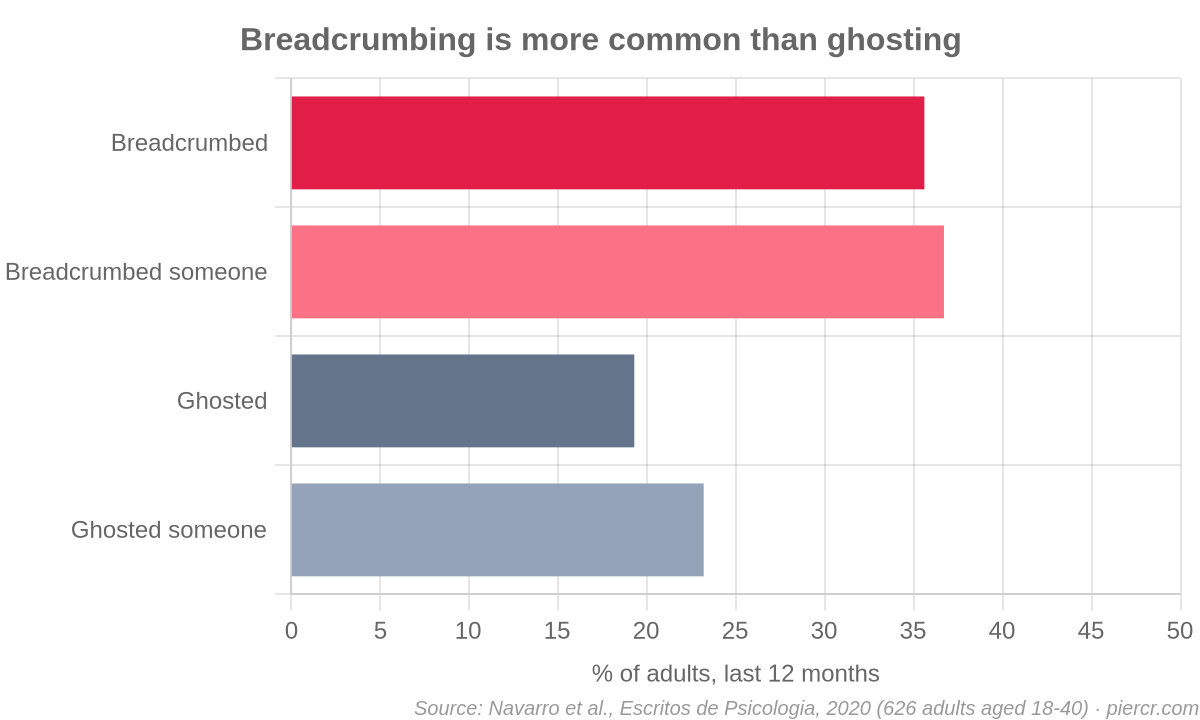
That chart is from a Spanish study of 626 adults aged 18 to 40. 35.6% had been breadcrumbed in the previous year, and 36.7% said they had done it to someone else. Ghosting, the thing everyone writes about, came in at 19.3%. Breadcrumbing is the more common problem. It just makes less noise.
Breadcrumbing vs left on read vs a dry texter
These three get mixed up, and they call for different responses, so it is worth being exact.
Being left on read is silence. She saw it and nothing came back. A dry texter replies, but flat: one word, no questions, nothing to build on. Breadcrumbing is the third shape. The replies are sometimes warm, sometimes even flirty, but they arrive at random and they never turn into a plan.
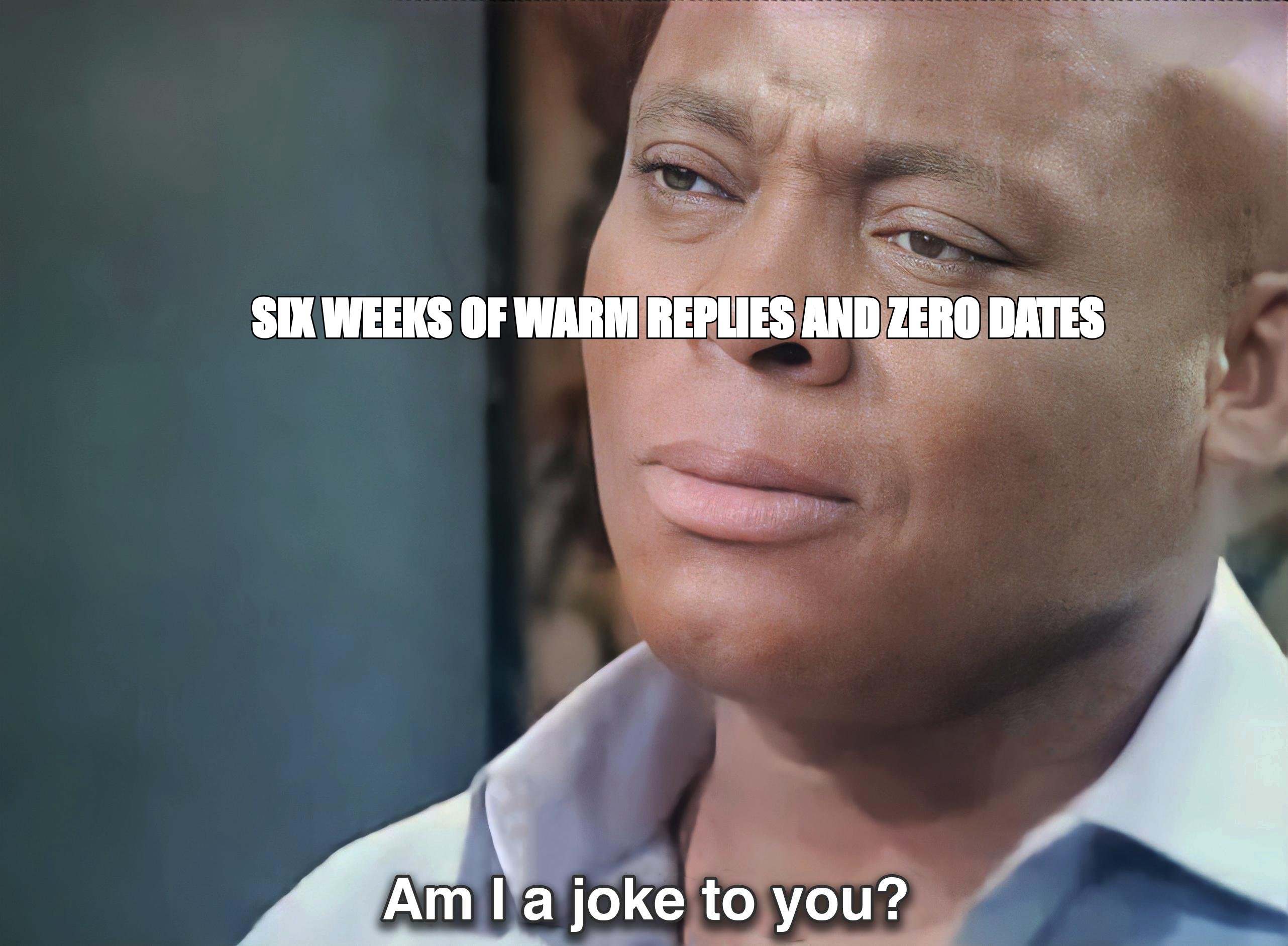
The giveaway is the pattern over weeks, not any single message. One warm reply means nothing. Six weeks of warm replies and zero dates means something.
What most guys get wrong about breadcrumbing
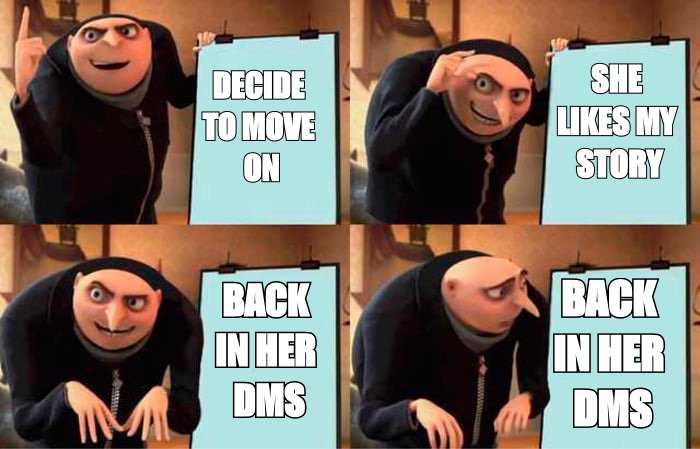
The first mistake is treating every crumb as a fresh start. She likes a story after nine days of nothing, and you are back in the DMs within the minute, writing like the last nine days did not happen. Each crumb resets the clock in your head, so the pattern never gets long enough for you to see.
This is easy to do for a whole season. Every time you decide to drop it, she replies to a story, and you read that one reply as proof you were wrong about the whole thing. You are counting messages. You should be counting plans, and that number is zero.
The second mistake is counting interactions at all. Likes, views and reactions feel like data. They are mostly noise. Hinge found 56% of its daters admit they have overanalyzed someone's digital body language, which is a polite way of saying most people are reading tea leaves.
The third mistake is assuming she is a villain. Remember that 36.7% figure: people who breadcrumb are not a rare species. A lot of it is lukewarm interest, boredom, or keeping an option open without thinking about it much. You have probably liked a story you had no intention of following up on. It is still a lousy thing to do, and it is also less personal than it feels.
Why the crumbs work on you
Attention that arrives at random is harder to walk away from than attention that arrives on schedule. Psychologists call this intermittent reinforcement, and Susan Albers, a psychologist at Cleveland Clinic, explains it with gambling:
If you're putting quarters into a slot machine and nothing comes out, you'll quickly stop, but if you win every once in a while, you're more likely to keep playing.
If she ignored you completely, you would move on in a week. If she replied to everything, you would know where you stood. The crumbs sit in the worst possible middle, where every so often the machine pays out.
And it costs you. In a companion paper on the same 626 adults, people breadcrumbed repeatedly in the past year reported lower life satisfaction and more helplessness and loneliness than people who were not. Ghosting, in the same sample, showed no such link.
That result surprises people until they think about it. Ghosting hurts, then it is over. Breadcrumbing keeps the question open for months.
A friend of mine kept a girl's chat pinned for most of a year. She replied maybe once a fortnight, always friendly, always ending on "we need to hang out." When she finally posted a boyfriend, he said the worst part was not the boyfriend. It was realising how many evenings he had spent waiting on a reply that was never going to be a plan.
Signs she is breadcrumbing you
None of these on its own proves anything. Three or four together, held over a few weeks, is a pattern.
She reacts to your stories but leaves your messages
The cheapest gestures come quickly. The ones that take effort, like answering the actual question you asked, take days or never come. Albers puts the social media version in five words: "Engagement takes very little effort."
She reappears when you go quiet
You stop messaging for a week and a reply turns up. You start messaging again and she fades. If her attention reliably arrives right as yours leaves, the timing is the message.
"We should" never gets a day
"We should get food sometime." "Yes, deffo, when things calm down." Things do not calm down. Every plan stays in the future tense, and when you name a date it gets a laugh or a "maybe, I'll let you know."
Every conversation starts from zero
There is no thread. Each exchange is a new burst of chat that goes nowhere and then stops, and nothing from the last one carries into the next.
She answers, but she never asks
You carry all of it. She responds to what you send and never sends anything of her own. If that is the whole picture, it may simply be a dry texter. If it comes with long gaps and sudden warmth, it is crumbs.
The attention is real only at odd hours
Late-night replies, a burst of messages on a Sunday when she is clearly bored, then a quiet week. Nothing is wrong with a late message. A pattern of only late messages tells you where you rank.
Albers describes the whole thing well: with breadcrumbers, "there's very little talk of what we're doing next week, or where is this relationship going? Everything is very in the moment."
Is she breadcrumbing you, or just busy?
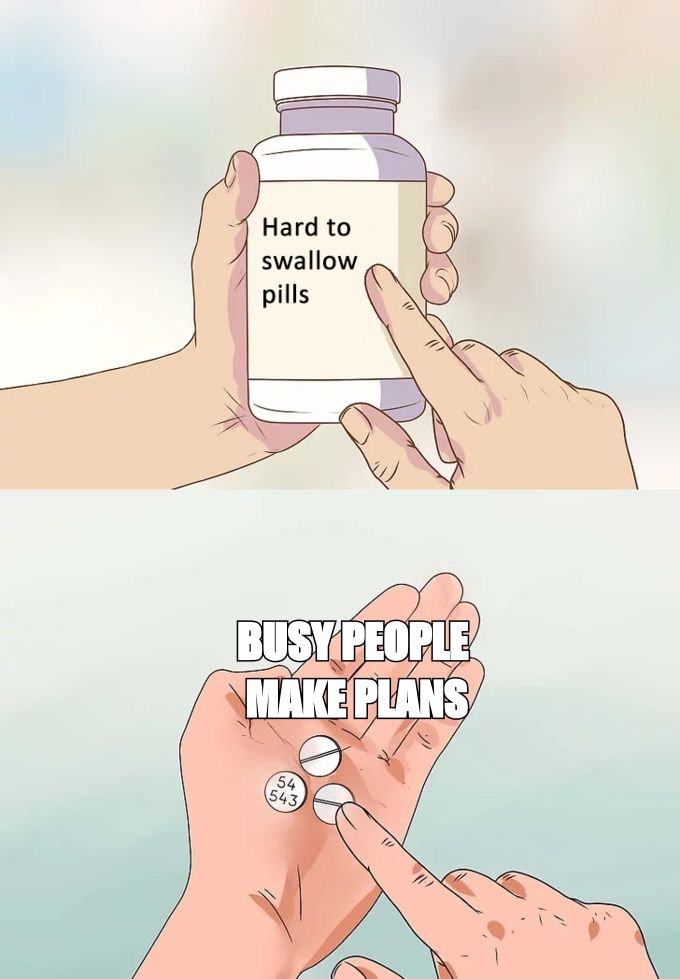
Busy people make plans. They make them for later, they move them, they apologise, but they make them. That is the whole difference, and it is the only test you need.
Liz Tuccillo, who co-wrote He's Just Not That Into You with Greg Behrendt and wrote for Sex and the City, said it plainly in a 2024 interview looking back on the book:
Nobody's any busier than they were 20 years ago, even with all the side hustles and jobs and hobbies they can have.
The book was written about men. It reads the same way round.
| Breadcrumbing | Busy but interested |
|---|---|
| "We should hang out sometime" | "I can't this week, how about Thursday the 14th?" |
| Likes your story, skips your question | Answers the question, sometimes days late |
| Warm when you pull back, cold when you lean in | Roughly the same whenever you talk |
| Plans stay hypothetical | Plans get moved, but they exist |
| Apologises for nothing, explains nothing | Tells you what is going on |
| You always restart the conversation | She restarts it too, at least sometimes |
There is a fourth possibility worth naming. Sometimes the crumbs are what is left of interest that was real and is now fading. If she used to make plans and has stopped, that is a different situation, and the signs she is losing interest are worth reading next.
What to do about it
The goal is not to win anything. It is to find out quickly, and spend your effort where it gets returned.
1. Stop answering crumbs with paragraphs
A heart on your story does not need a three-message reply. Match the effort you are given. This alone changes how the next few weeks feel, because you stop pouring energy into a container with a hole in it.
2. Make one specific invitation
Not "we should hang out." A day, a place, and a reason she in particular would want to go. Vague invites are easy to dodge, and that is exactly why breadcrumbing survives on them. A specific one forces a real answer, and if you have never done it on Instagram, here is how to ask a girl out over DMs without it getting weird.
This is where knowing her matters. "Drinks Friday?" is a plan anyone could send. An invite built on something she actually cares about is much harder to wave off, and much easier to say yes to. If you are not sure what that is, Piercr is useful here: type her Instagram username and you get a read on what she is genuinely into, so the plan is built around her and not around a generic bar. You still write the invite yourself.
3. Read the answer, not the tone
A yes is a yes. "I can't Friday, but Sunday?" is better than a yes, because she did the work of finding another day. "Haha maybe! Let's see" is a no that does not want to say so.
4. Say it once, if you want to
Albers suggests being direct: "Tell the individual that it seems like they're leading you on and not really committing to the relationship." You do not have to. If you do, say it once, calmly, without a speech. Something like "I like talking to you, but I'm looking to actually meet people, so let me know if that's on the cards." Then leave it.
5. Step back without announcing it
Mute her stories if the hearts keep pulling you back in. Stop opening new threads. If she reaches out with a real plan, great. If she reaches out with another crumb, you already know what it is.
Answering a crumb
the first one rewards the crumb with effort and asks for nothing. The second answers lightly and puts a real plan on the table
a vague invite gets a vague answer. One built on something she said is specific enough to need a real yes or no
These are there to show the principle. Copying them word for word will sound like copying them word for word.
What the research says
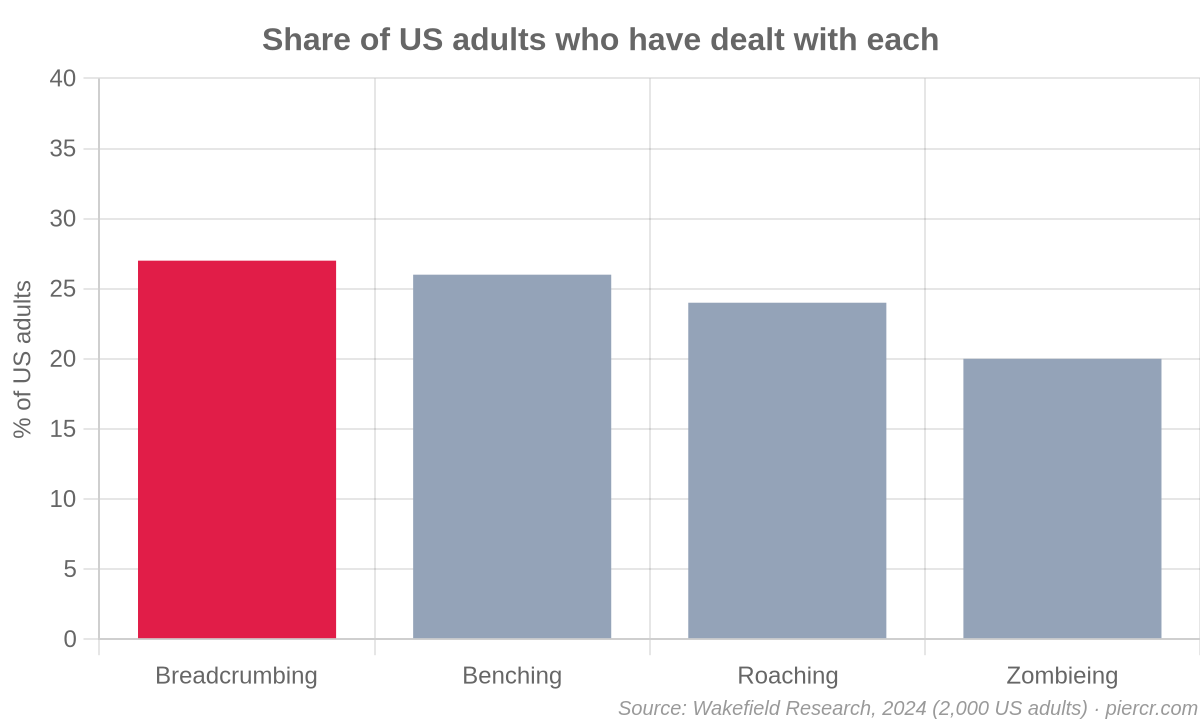
Breadcrumbing has only recently started getting proper study, but the numbers so far agree on one thing: it is ordinary. In a 2024 survey of 2,000 Americans, 27% said they had dealt with breadcrumbing, narrowly ahead of benching (26%) and roaching (24%).
Age matters too. A 2025 study of 544 adults in the UK found younger people were more vulnerable to breadcrumbing, and that people who had also been ghosted or gaslit were more likely to report it. If you are in your twenties, that is you.
The other thing the research shows is how much weight people put on small signals. 77% of Hinge daters say a match's digital body language reveals a lot about their intentions. Breadcrumbing is what happens when someone sends the signals without the intentions.
Watch-outs
Checking her activity makes it worse
The Spanish study found that people who monitored others online were more likely to both experience and initiate breadcrumbing. Refreshing her story viewers and tracking when she was last active keeps you inside the loop. Look at what she does with your plans, not what she does with her phone.
A few more:
- Do not breadcrumb back. Liking her stories to "stay on her radar" while you wait is the same behaviour pointed the other way. It keeps both of you stuck.
- Do not accuse her from a single data point. One slow week is a slow week. Breadcrumbing is a pattern over a month, not a Tuesday.
- Story views are not crumbs. She watches everyone's stories. If you want to know what the order of story viewers does and does not mean, that is its own question.
- She can stop. If she comes back with a real plan, take it at face value. People do get their act together.
Your move
If you think she's breadcrumbing you
- Count plans, not messages. Look back over the last month and write down how many real plans happened.
- Stop rewarding crumbs with effort. A heart gets a light reply or nothing.
- Make one specific invitation: a day, a place, and a reason it suits her.
- Read the answer. A counter-offer is good news. 'Maybe, let's see' is a soft no.
- If you want, say it once, calmly. Then leave it.
- Mute the stories if they keep pulling you back. Spend the energy on people who meet you halfway.
The whole thing comes down to one invitation she can actually say yes to. The easiest way to make that invitation land is to know what she would want to do. Piercr gives you that from her Instagram username, so the plan you put on the table is one she has a real reason to say yes to.
Breadcrumbing FAQ
What does breadcrumbing mean in dating?
Breadcrumbing means giving someone small, occasional bits of attention to keep them interested without any intention of committing or making real plans. On Instagram that usually looks like story likes, reactions and sporadic replies that never lead to meeting up.
What is an example of breadcrumbing?
She replies to your story with a fire emoji after a week of silence, chats for twenty minutes, says "we should actually hang out," and then goes quiet again when you suggest a day. Repeat for two months. That is breadcrumbing.
Is breadcrumbing the same as ghosting?
No. Ghosting is cutting contact completely. Breadcrumbing keeps contact going at a trickle. In one study, breadcrumbing was reported by 35.6% of adults and ghosting by 19.3% over the same year.
Can texting every day still be breadcrumbing?
Yes. Breadcrumbing is about where the attention goes, not how often it arrives. Daily memes and good-morning texts with no plan in sight for weeks is the same pattern with better attendance. The test does not change: suggest a specific day and see what comes back.
Why do people breadcrumb?
Usually because it costs them nothing. Some want the attention, some are keeping an option open, some are lukewarm and avoiding the awkwardness of saying so. It is rarely a master plan, which is why you should not spend too long trying to decode it.
How do you respond to breadcrumbing?
Make one specific plan and see what happens. If she says yes or offers another day, it was not breadcrumbing. If she stays vague, stop answering crumbs with effort and put your attention somewhere it gets returned.
Is liking my stories breadcrumbing?
Not by itself. A like is a like. It becomes breadcrumbing when the likes keep coming but your messages, questions and invitations do not get answered. If she is also replying and starting conversations, look at the signs she likes you instead.