She Studied You Before You Sat Down
Most guys hear "psychology" and do one of two things. They perform emotional intelligence they don't have, or they freeze because they think she's analyzing everything they say. Both wrong. She's calibrated. That's all.
Years of studying human behavior means she reads micro-expressions, tone shifts, and inconsistency the way a mechanic hears an engine knock. You can't bluff past it. But you don't need to. The psychology girl isn't looking for perfection. She's looking for congruence. Say what you mean, mean what you say, and don't rehearse your vulnerability like a TED talk.
Her training gives you the cheat code. This piece breaks down what she's actually screening for, where guys blow it, and how to show up without performing.
What the Psychology Girl's World Actually Looks Like
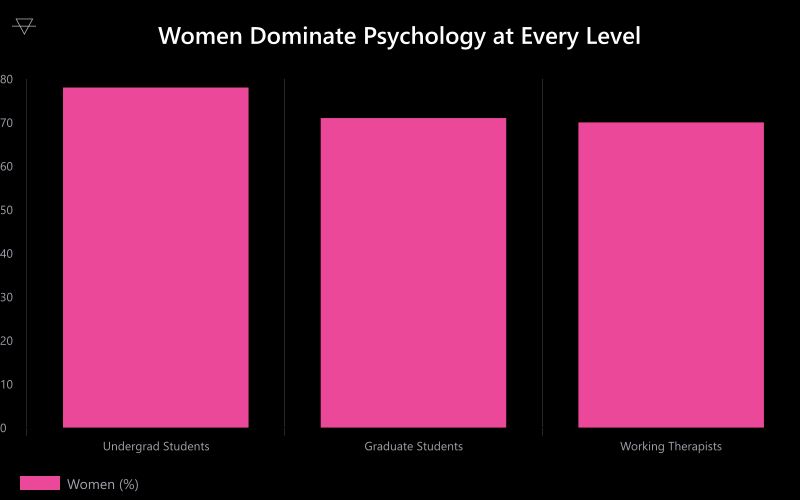
Psychology is one of the most female-dominated professional fields in America. 78% of psychology undergraduates are women. At the graduate level, that number is 71%. By the time she enters the workforce, 70.4% of her colleagues are women. She didn't stumble into a career. She chose a field where understanding people IS the job.
The US behavioral health market is worth $87.82 billion. That's a massive, growing industry where demand outstrips supply and burnout runs at 50%.
What this means for you: she's spent years surrounded by people who think the way she thinks. Male attention isn't novel. Being genuinely understood is. Her entire professional life is about reading between the lines. She does it at work for eight hours. She's not going to stop doing it at dinner.
What She Responds To
She didn't pick a career built on understanding human behavior by accident. Those skills transfer directly to how she evaluates everyone in her personal life. Including you.
Congruence above everything. She knows what performed confidence sounds like because she's studied the research on impression management. When your words say one thing and your body says another, she catches the mismatch before you finish the sentence. When you're actually being honest, she notices because it's rare.
Intellectual honesty over intellectual performance. She doesn't need you to know the difference between CBT and DBT. She needs you to be able to say "I don't know what that is" without crumbling. I once spent a second date with a clinical psychology student trying to casually reference attachment theory. I'd read one blog post. She asked one follow-up question about avoidant subtypes and the whole facade collapsed. She didn't embarrass me. She just changed the subject. That was worse. She'd already filed me under "performs depth he doesn't have."
Autonomy as baseline. She earned her independence in a system that underpays her and overworks her. 50% of therapists have experienced burnout. She's not going to let someone constrain the life she built under that pressure. Needing space isn't rejection. It's how she survives.
Emotional availability without emotional dumping. There's a difference between being open and treating her like a free session. She wants to know how you feel. She doesn't want to be your therapist. That line is thinner than you think, and she draws it firmly.
Why Most Guys Miscalibrate With the Psychology Girl
The failure patterns are predictable. Which makes them avoidable.
Performing emotional intelligence you don't have. Dropping "boundaries" and "secure attachment" and "I've done the work" without understanding any of it. She's heard these words from clients who use them as shields. She's heard them from Instagram posts that are inaccurate 52% of the time. She can tell the difference between someone who's integrated a concept and someone who memorized the vocabulary. It takes her about four sentences.
Turning yourself into a patient. Trauma-dumping on date two because you think she wants depth. She does want depth. She doesn't want to work for free. She already holds space for people's pain 40 hours a week. If you unload your entire childhood over appetizers, she's going to feel like she's clocked back in.
Competing with her expertise. "Actually, I read that attachment theory is overblown." Cool. She has a degree in this. She's read the meta-analyses. She's written papers on it. You read a contrarian take on Reddit. The guy who says "I don't know much about this, what do you think?" is infinitely more attractive than the guy who Googled something this morning and now has opinions.
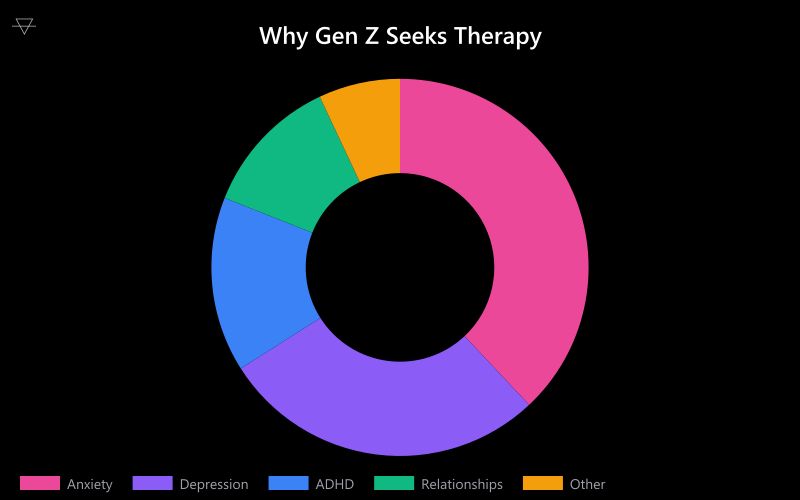
Treating therapy-speak as a cheat code. This is the big one. 42% of Gen Z is currently in therapy. Mental health vocabulary has gone mainstream. But using the words without doing the work is the psychology equivalent of bad karaoke. She can hear you're hitting the notes wrong.
The Playbook
She's looking for a guy who understands her job costs her something and doesn't add to the bill.
Ask genuine questions and then actually listen. Harvard research found that people who ask more follow-up questions are significantly more liked by conversation partners. Speed daters who asked more questions got more second dates. This isn't unique to the psychology girl. But she's more attuned to it. She notices when you ask a question and actually process the answer versus when you're just waiting for your turn to talk.
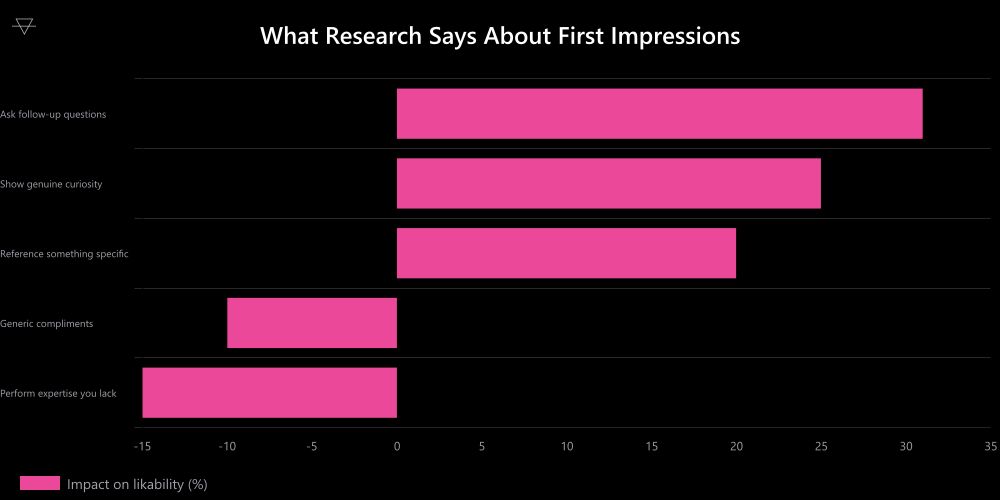
Be the contrast to her work life. She spends all day holding space for anxiety, depression, and relational trauma. By the time she gets to you, her empathy tank is running on fumes. Be the part of her life that doesn't require clinical skills. Be easy. Be fun. Be the guy who makes her laugh about something stupid instead of processing something heavy.
Handle logistics like an adult. Make the reservation. Have a plan. She's made 40 decisions today about treatment plans, client boundaries, and documentation. Don't make her decide where to eat. The social care girl carries a similar load. Career women in helping professions need partners who can run their own lives without supervision. That's the bar.
Have your own thing. She doesn't need you to read psychology journals. She needs you to care about something the way she cares about her work. Music, cooking, business, climbing. The specific interest doesn't matter. What matters is that you're not a blank slate waiting for her to diagnose what's missing.
What She Won't Tell You
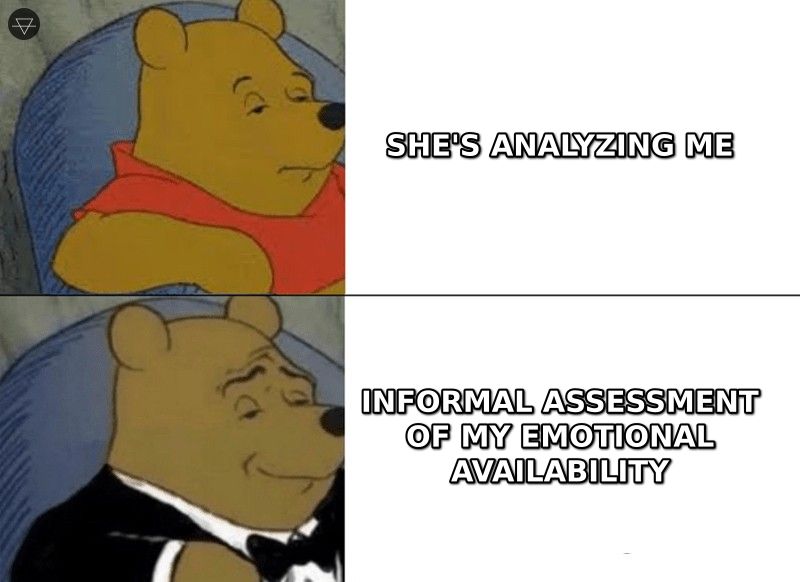
Her training made certain evaluations automatic. She's not running formal assessments over dinner. But the pattern recognition is always on.
She noticed your deflection. When she asked how you're doing and you said "fine," she heard "I don't trust you enough to be honest." She didn't press because pressing is work. But she filed it.
She caught the projection. You described your ex as "emotionally unavailable." She noticed you haven't made eye contact in ten minutes. She won't mention it. She doesn't need to. She already has the data point.
She clocked your stress response. The waiter got the order wrong. She wasn't watching the food. She was watching your face. How you handle small frustrations tells her everything about how you handle big ones. She manages people in crisis for a living. Your response to a wrong entree is a data point, not a disaster.
I dated a clinical psychology grad student who asked "How did that make you feel?" during a disagreement about whose turn it was to pick the movie. I said "frustrated." She waited. The silence stretched out. By the end of it I'd said something honest I didn't even know I meant. Something about feeling like my preferences didn't matter. She didn't fix it. She just let the truth walk into the room on its own. That's what she does. She creates space and waits. If you can sit in that space without panicking, you pass.
She's reading your emotional vocabulary. Can you name what you're feeling beyond "good" and "bad"? She noticed the range. Or the lack of it. 53% of Gen Z has received professional mental health services. Her generation is more fluent in this language than any before it. She expects effort, not perfection.
Conversation Starters
You need one good question that proves you thought about her world. Not therapy cliches. Not "so do you analyze everyone?" Something that shows genuine curiosity about what her days actually look like.
- "What made you pick your specific area? Like was there a moment or did you drift into it?" Every psych professional has an origin story. Some had a professor who changed everything. Some had a personal experience that pointed them toward a specialty. The answer tells you what drives her. It's not an interview question. It's a curiosity question. And she'll tell you more than she planned to.
- "Do you ever catch yourself analyzing people off the clock, or can you actually turn it off?" Slightly playful, acknowledges her skill without pedestalizing it. She gets asked this constantly, but she'll still have a real answer. Most will say something like "I try but no." The honesty in her response tells you how self-aware she is about her own patterns.
- "What's the most common thing people misunderstand about therapy?" She's been correcting misconceptions her entire career. You're giving her the floor. Her answer will tell you what she's passionate about defending. Listen to what fires her up.
- "Is there a concept from your work that changed how you see your own relationships?" This is the one nobody asks. It bridges her professional knowledge with her actual life. She'll pause before answering. That pause means you asked something worth thinking about. And the answer will tell you more about how she operates than anything else she says all night.
Who She Follows
Her feed is a clinical journal disguised as Instagram. These names tell you how she thinks about people, relationships, and the mind.

- Brene Brown (3.5M followers). Vulnerability and shame researcher. If she follows her, she values courage over confidence. She believes the willingness to be seen is more important than looking good.
- Dr. Nicole LePera / @the.holistic.psychologist. Holistic psychology, reparenting, inner child work. More clinical depth than most therapy influencers. She takes self-work seriously.
- Nedra Glover Tawwab (1.8M followers). Boundaries expert. NYT bestselling author. If this name is in her feed, boundaries are non-negotiable. She's read the book. She's internalized it.
- Esther Perel. Relationship therapist, author of "Mating in Captivity." She thinks about desire and domesticity as opposing forces. She's thought about the tension between security and passion more than you have.
- Dr. Ramani Durvasula. Narcissism expert, YouTube educator. She can spot a personality disorder from across the room. If Dr. Ramani is in her feed, she's been hurt by one before.
- Dr. Julie Smith (2.2M followers). Clinical psychologist, NYT bestselling author. Accessible but rigorous. Translates complex research into practical advice.
- @psychotherapymemes. Yes, therapists have meme pages. The humor is extremely specific and usually about countertransference, difficult clients, or the gap between what therapists preach and what they practice. If she follows this account, she doesn't take herself too seriously.
If her feed is all Brene Brown and Esther Perel, she's relational. She thinks about connection as the core of everything. If it's Dr. Ramani and @psychotherapymemes, she's clinical and sharp. She's seen the worst of people and she copes with dark humor. The feed tells you her lens.
The Truth About Dating the Psychology Girl
Here's what it actually comes down to. The psychology girl isn't complicated. She's just not going to pretend she doesn't see what she sees. Every archetype has a filter. Hers is congruence.
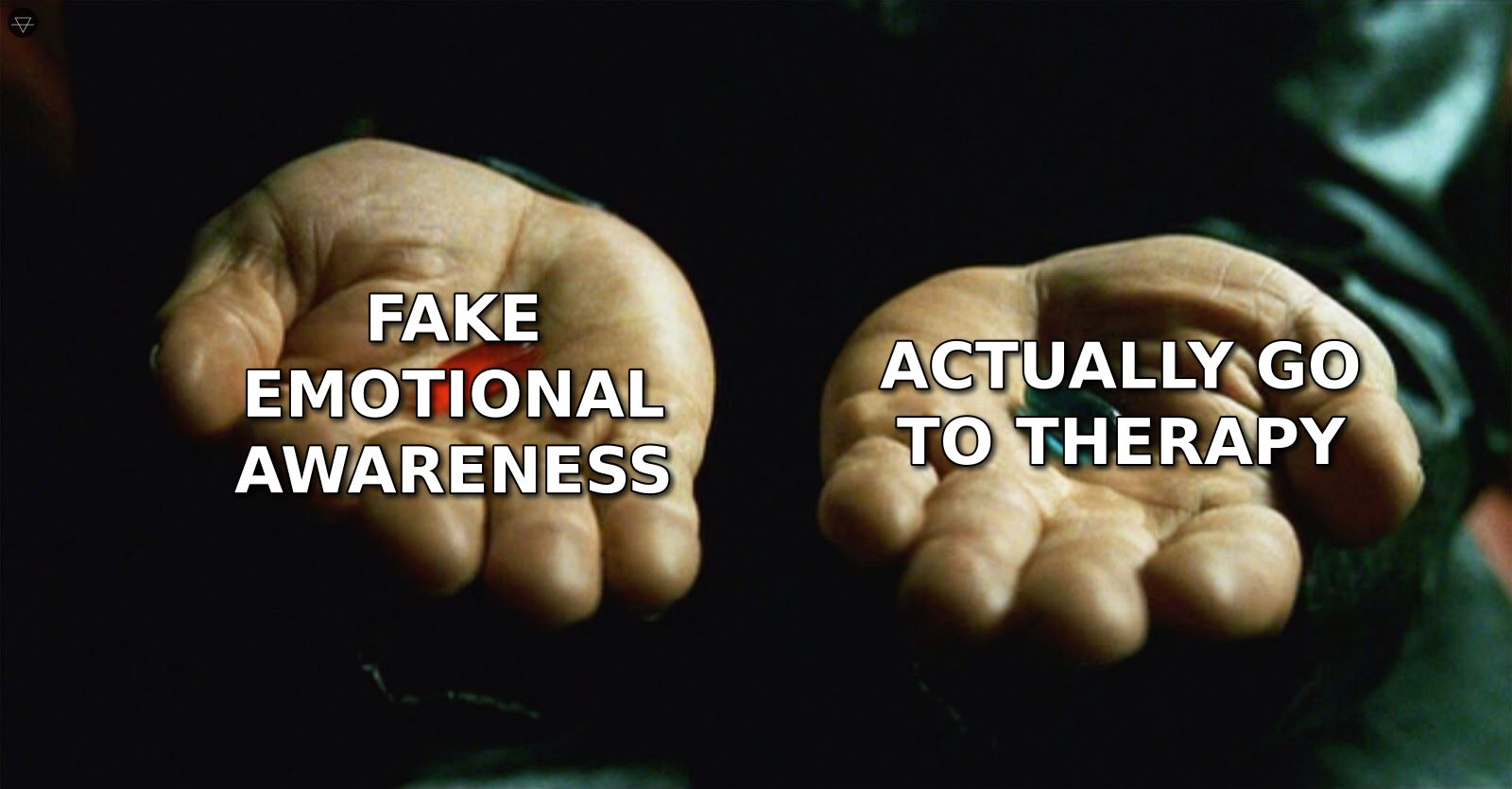
Say what you mean. Mean what you say. Don't rehearse your vulnerability. Don't perform depth you haven't earned. Don't weaponize therapy-speak you picked up from Instagram.
That's not a high bar. It just feels high because most guys have been performing their entire lives and never noticed they were doing it. She noticed. She noticed the first time you said "I'm fine" when you weren't. She noticed when you changed the subject instead of sitting with something uncomfortable. She noticed when you agreed with her to avoid conflict instead of saying what you actually thought.
She's not judging you for any of that. She just can't unsee it. And she's waiting for the guy who doesn't make her pretend she didn't.
The Bottom Line
She's not hard to read. She's just the first one who reads you back.
Why We Built Piercr
You can't fake congruence. But you can find the women worth being congruent for.
The psychology girl is one of the hardest types to cold-approach because she reads intent before you finish your first sentence. Generic openers don't just fail. They actively disqualify you. She needs to see something specific in your first message that proves you looked at HER, not at a template.
Piercr pulls psychology girls from Instagram, gives you profile context so your first message references her actual work, her research interests, or the accounts she engages with. You reach hundreds without copy-pasting "hey." She's going to analyze your opener whether you like it or not. Might as well give her something worth analyzing.
FAQ
How do you date someone who studied psychology?
Don't perform. She reads incongruence faster than most people read body language. Be honest about what you don't know, have your own thing going on, and don't treat her degree as a free therapy session. Reference something specific about her work when you message her.
Do therapists analyze everyone they date?
Not deliberately, but pattern recognition becomes automatic after enough training. She's not running formal assessments over dinner. She notices deflection, emotional range, and consistency between words and behavior without trying. It's not a test. It's just how she processes the world now.
Are psychology girls high-maintenance?
They're high-awareness, which isn't the same thing. She won't ignore red flags or pretend things are fine when they aren't. That feels high-maintenance to a guy who's used to partners who don't name what they see. If you're honest and consistent, she's one of the easier types to be with because you always know where you stand.
What should you never say to a girl who studies psychology?
"Can you analyze me?" and "Are you reading my mind right now?" She's heard both a thousand times. Also avoid performing therapy-speak you picked up from Instagram. She knows the difference between someone who's done the work and someone who memorized the vocabulary. Say less. Mean more.