
How to Be More Attractive as a Man (Beyond Looks)
There is a guy in your friend group who gets more attention from women than anyone else. He's not the tallest. Not the most jacked. Probably not the best-looking by any conventional measure. But something about him makes women lean in, laugh longer, and reply faster. You've noticed it. You've probably been annoyed by it.
That something is not a mystery. It's not genetics. It's not a jawline routine he found on YouTube. It's a combination of things that are all within your control, and none of them require you to look different than you do right now.
Male attractiveness is a combination of humor, grooming, visible interests, and social proof that research consistently ranks above physical appearance in what women find desirable.
This isn't a looksmaxing post (does looksmaxxing actually work? Sometimes — up to a point). This isn't a gym-bro guide. This is about understanding what actually makes a man attractive to women, backed by research, and then becoming someone worth messaging.
In This Post
- Looks Are Number Four (The Research)
- The Perception Gap That's Ruining Your Strategy
- The Halo Effect of Having Interests
- Presentation Moves the Needle More Than Bone Structure
- Where Looks Actually Matter (and Where They Stop)
- The Confidence Paradox
- What She Notices in the First Ten Minutes
- Your Instagram Is Your Attractiveness Pitch
- The Practical Playbook
- FAQ
Looks Are Number Four (The Research)
Every corner of the internet will tell you that women care about looks above everything else. The data says otherwise.
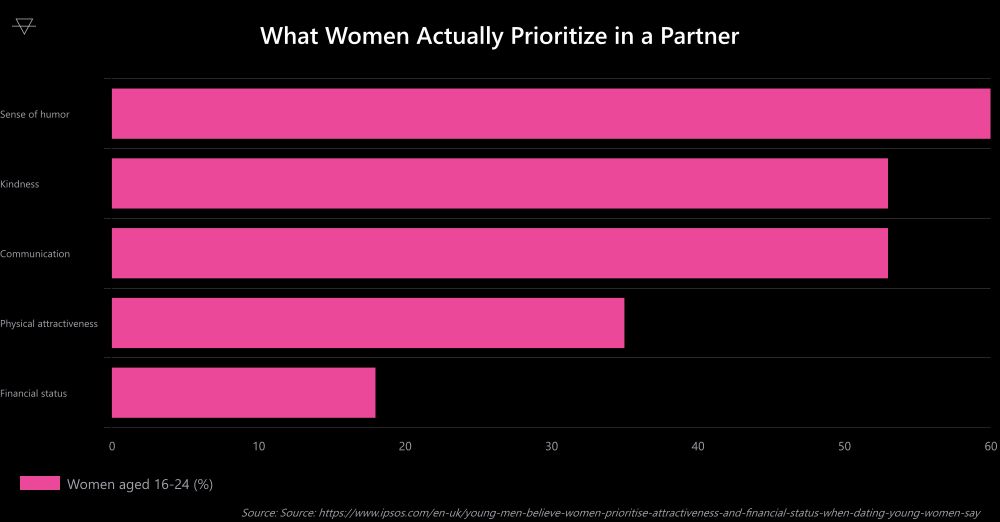
An Ipsos survey of women aged 16 to 24 asked what they prioritize most in a romantic partner. Sense of humor came in at 60%. Kindness at 53%. Communication skills at 53%. Physical attractiveness didn't even make the podium. It landed at fourth, behind three traits that have nothing to do with how you look.
A 2024 study published in Evolutionary Psychology went further. Across 3,000 participants from multiple countries and backgrounds, 89% of women said kindness is the trait they value most in a potential partner. Not height. Not face symmetry. Not income. Kindness.
This doesn't mean looks are irrelevant. It means they're not the ceiling everyone treats them as. A guy who is a 6 in looks but a 9 in humor, kindness, and genuine interests will outperform a guy who is a 9 in looks and a 4 in everything else. Every single time. Because women aren't ranking you on one axis. They're running a multi-variable evaluation, and most of the variables are things you can change starting today.
The Perception Gap That's Ruining Your Strategy
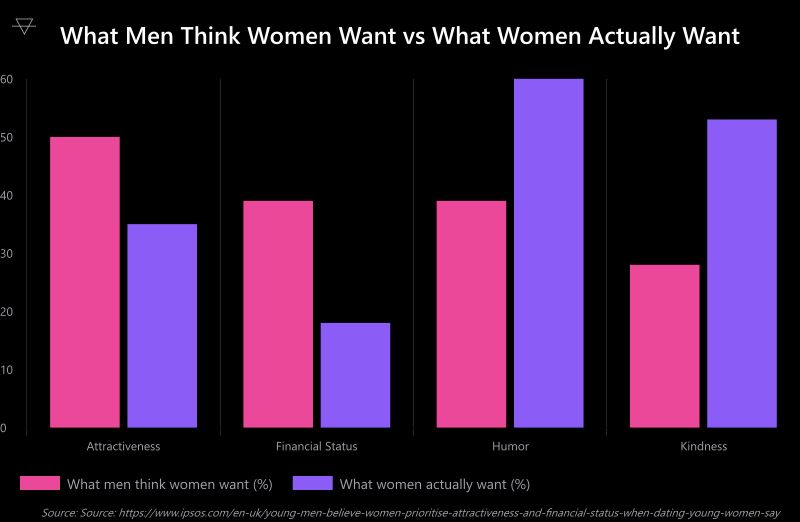
Here's where it gets interesting. The same Ipsos survey asked young men what they think women prioritize. 50% of men aged 16 to 24 believe women care most about physical attractiveness. 39% think financial status matters most. They're wrong on both counts, and by significant margins.
Men overestimate how much women care about looks by nearly 15 percentage points. They overestimate how much women care about money by more than 20 percentage points. And they underestimate how much women care about humor by more than 20 percentage points.
This perception gap is the reason so many guys are optimizing the wrong things. They're spending money on supplements, obsessing over their jawline, trying to fake a lifestyle they don't have, because they've been told that's what women want. Meanwhile, the guy who actually makes her laugh, who remembers what she said, who has a genuine opinion about something that isn't his bench press, is the one she's texting back.
You cannot solve the wrong problem harder and expect it to work. If you've been treating attractiveness as a looks problem, you've been solving the wrong problem.
The Halo Effect of Having Interests
The halo effect is one of the most documented cognitive biases in psychology. Research published in Current Psychology confirmed it works across all 11 world regions studied: when someone has one positive trait, observers automatically assume they have other positive traits too. In dating, this means a man who demonstrates one attractive quality gets bonus points on everything else.
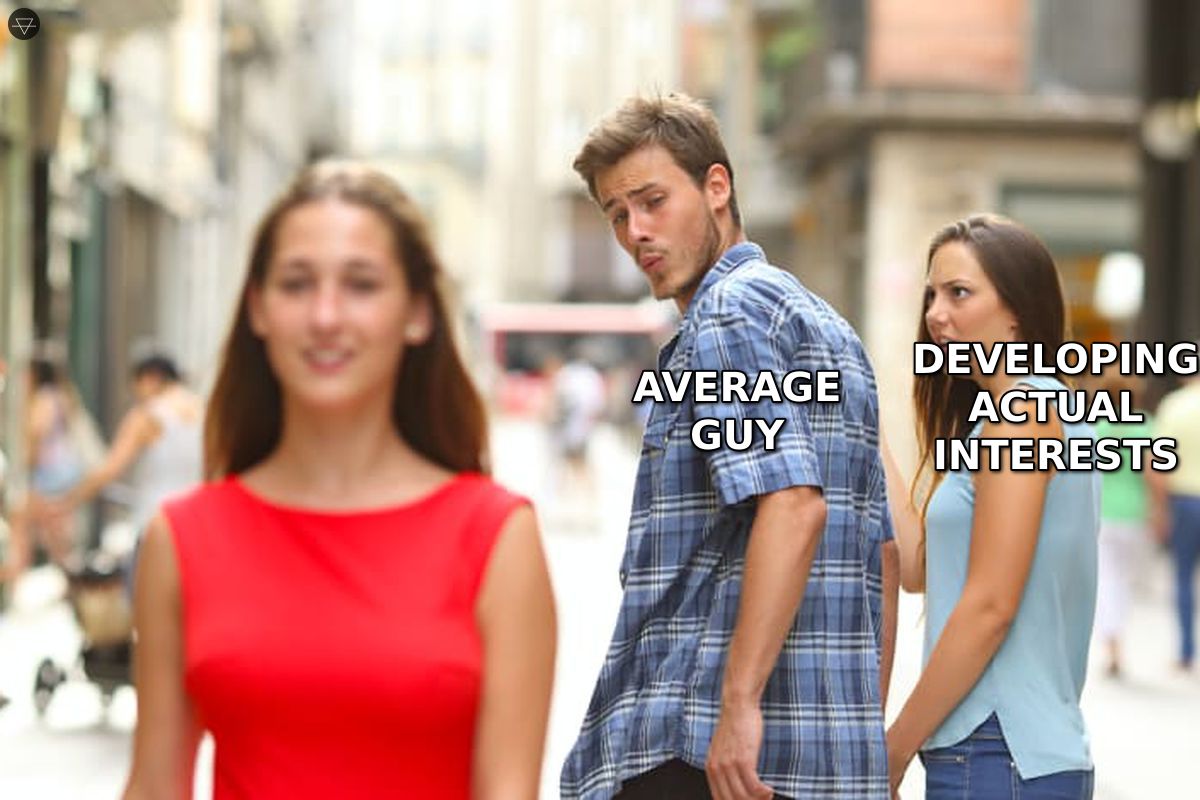
This is why having genuine hobbies and interests is one of the most underrated attractiveness multipliers. A guy who reads gets rated as more intelligent. A guy who cooks gets rated as more caring. A guy who climbs or surfs or builds furniture gets rated as more adventurous, more capable, more interesting. Not because those hobbies directly make him better-looking. Because the halo effect extends one visible trait across his entire perceived personality.
Date Psychology surveyed women on 74 different male hobbies. Reading was rated attractive by 98.2% of respondents. Traveling, exercise, cooking, and dancing all ranked near the top. The research also found that the total number of hobbies listed had a stronger effect on perceived attractiveness than any individual hobby. Having six or more visible interests significantly increased page views and invitations on dating platforms.
Here's the translation for the real world: a boring guy with abs is less attractive than an interesting guy with hobbies. Not in theory. In measured, replicated research. The guy who can talk about the book he just read, the meal he cooked last night, the trail he ran on Saturday morning, is running circles around the guy who can only talk about his workout split. Because the halo effect turns "he has interesting hobbies" into "he's probably smart, probably fun, probably worth my time."
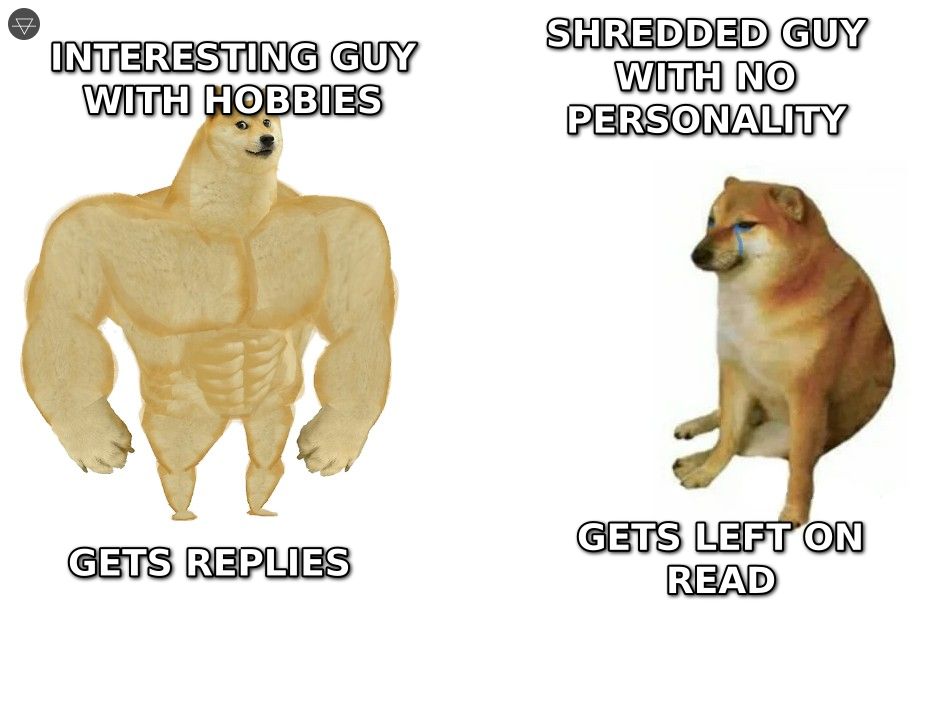
And this is exactly why your Instagram profile matters so much. Your grid is where your interests become visible before she ever talks to you. A profile full of varied content, a hike here, a restaurant there, a concert, a friend's birthday, triggers the halo effect before the first message. A profile full of gym selfies triggers the opposite.
Presentation Moves the Needle More Than Bone Structure
There is a version of this conversation that pretends genetics don't matter at all. That's not this post. Bone structure, height, facial symmetry, they contribute to initial physical attraction. But here's what the looksmaxing community won't tell you: the gap between "I don't put any effort into how I present myself" and "I put reasonable effort into how I present myself" is far larger than the gap between average facial features and above-average facial features.
Grooming is the highest-ROI attractiveness investment most men ignore. A study across 93 countries with over 93,000 participants found that grooming behaviors, including hair care, clothing style, body hygiene, and skincare, are universal beauty-enhancing practices that significantly affect perceived attractiveness regardless of underlying facial features.
Here's what actually moves the needle:
Clothing that fits. Not expensive. Not trendy. Clothes that fit your body properly. A well-fitting plain t-shirt looks better than an ill-fitting designer shirt. Every time. If you've never had a tailor adjust a pair of pants, you're leaving attractiveness points on the table.
Grooming basics. Clean nails. Managed eyebrows. A haircut that suits your face shape, not the one you've had since high school. Skincare doesn't need to be a twelve-step routine. Cleanser, moisturizer, sunscreen. Three products. Three minutes. The bar is genuinely on the floor for men, which means even minimal effort puts you ahead of most.
Posture. Research consistently shows that people with upright, open posture are rated as more attractive, more confident, and more trustworthy. Standing straight with your shoulders back is free. It changes how every person in the room perceives you. It changes how you perceive yourself.
Scent. Women notice this more than men realize. You don't need a $300 fragrance. You need to not smell bad, and then you need one consistent, clean scent that she associates with you. That's it.
None of these require surgery. None require a gym membership. None require money you don't have. They require attention. And attention to how you present yourself is itself an attractive trait, because it signals that you care about the details of your life.
Where Looks Actually Matter (and Where They Stop)
None of this means looksmaxxing is pointless. It means it has a ceiling, and most guys hit it without noticing because they keep adding inputs.
Looks matter most in one place: the swipe. Women swipe right on fewer than 5% of male profiles on Tinder, and women receive average match rates of 44.4% versus 5.3% for men. When a photo is the only thing she can evaluate, the photo wins. A 2024 conjoint analysis found physical appearance is 7 to 20 times more influential than intelligence, height, or occupation in swipe-stage decisions.
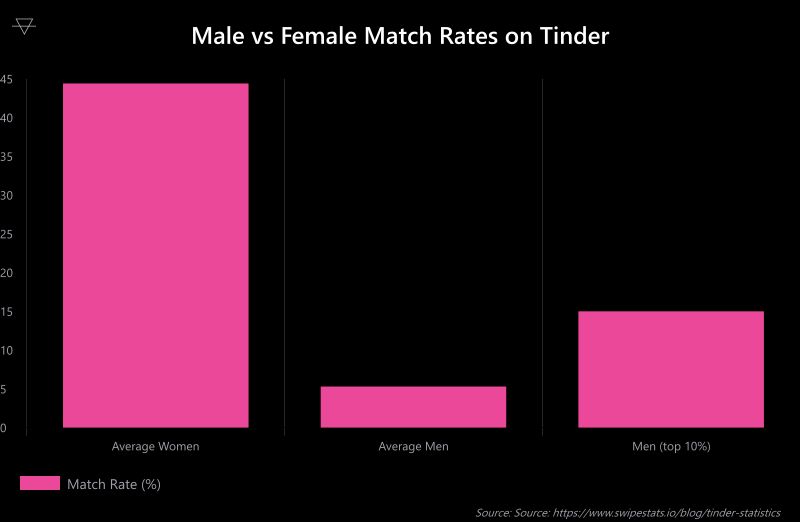
But look at how big the effect actually is. A 2024 study of 5,340 actual swipe decisions found a one standard deviation improvement in physical attractiveness increases selection odds by about 20%. That's an advantage, not a gate. You win more often. You don't suddenly play a different game.
And it fades once she's past the photo. Physical attractiveness explains 82 to 93% of the effect size in short-term partner desirability studies, where she's sorting people she'll probably never meet. For long-term desirability, humor production adds another 10 to 12%, and personality becomes the variable that decides things.
So here's the honest split.
Softmaxxing works. Gym a few times a week, a good haircut, facial hair groomed somehow, clothes that fit. That's the presentation layer above, and it's table stakes. The jump from a 3 to a 4 is proportionally much larger in real-world impact than the jump from a 7 to an 8. The early gains are the cheap ones.
Hardmaxxing mostly doesn't. Mewing does not reshape adult bone structure. That's the medical consensus. And the face-rating apps aren't on your side: Umax has 7 million downloads and generates approximately $500,000 per month in subscription revenue. It gets paid while you stay insecure, not when you get a date.
The ceiling is also partly imaginary. 53% of young men believe most women are only attracted to a small subset of men. Only 31% of young women agreed. The wall a lot of guys are trying to climb is one they built themselves.
One more thing the forums skip: the halo effect runs in both directions. Studies have shown that reading a positive character description of someone makes observers rate their photograph as more attractive. Your jawline doesn't change. How she sees it does.
The Confidence Paradox
Every piece of dating advice ever written tells you to be confident. Almost none of them explain the catch: trying to be confident is inherently unconfident. The act of performing confidence broadcasts that you don't have it naturally.
Research from the Society for Personality and Social Psychology confirmed that both men and women rate confidence as a highly attractive trait. But the same body of research draws a hard line between genuine confidence and performed confidence. The line is thinner than you think, and women are better at detecting it than you want to believe.
Genuine confidence looks like this: a guy who has opinions and shares them without checking if the room agrees. A guy who can laugh at himself because his identity isn't built on being impressive. A guy who listens more than he performs. A guy who can say "I don't know about that, tell me more" without feeling like he lost something.
Performed confidence looks like this: dominating conversations. Never admitting ignorance. Negging. Peacocking. Running routines. Any behavior that's designed to create an impression rather than express a reality.
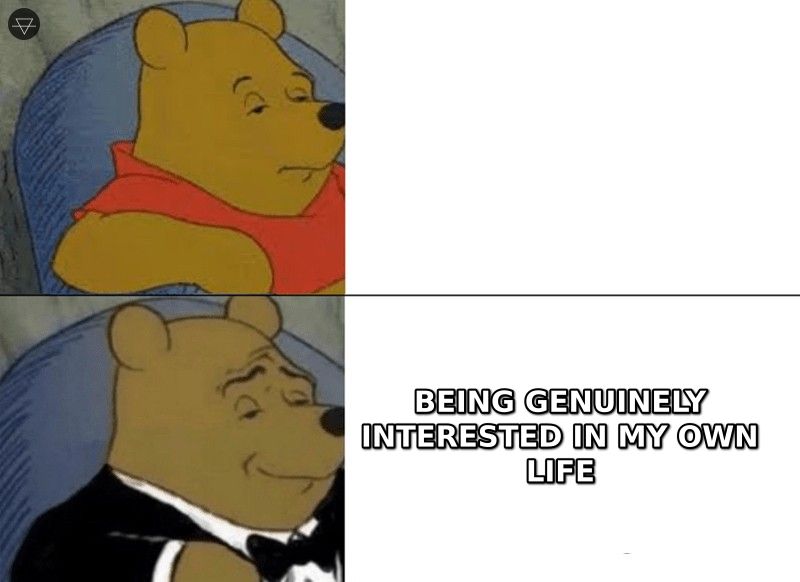
The paradox is that the most attractive version of confidence comes from not trying to be attractive at all. It comes from being genuinely interested in your own life. When you're actually engaged in your hobbies, your work, your friendships, your growth, you stop performing for other people. That absence of performance is what women read as confidence. Because real confidence doesn't announce itself. It just shows up, orders a coffee, and talks about something interesting.
What She Notices in the First Ten Minutes
All of this gets tested the moment you meet in person. People form first impressions within 100 milliseconds of seeing a face. The next ten minutes aren't her forming an opinion. They're her checking whether that snap read holds up.
Almost nothing she's checking is about your face. It's about whether you're easy to be around.
How you treat the server. A YouGov survey of 2,221 adults found that 88% consider being rude to service staff unacceptable on a first date. No other behavior in the 30-item study had a stronger consensus. She already assumes you'll be polite to her. She's watching how you talk to someone who can't do anything for you.
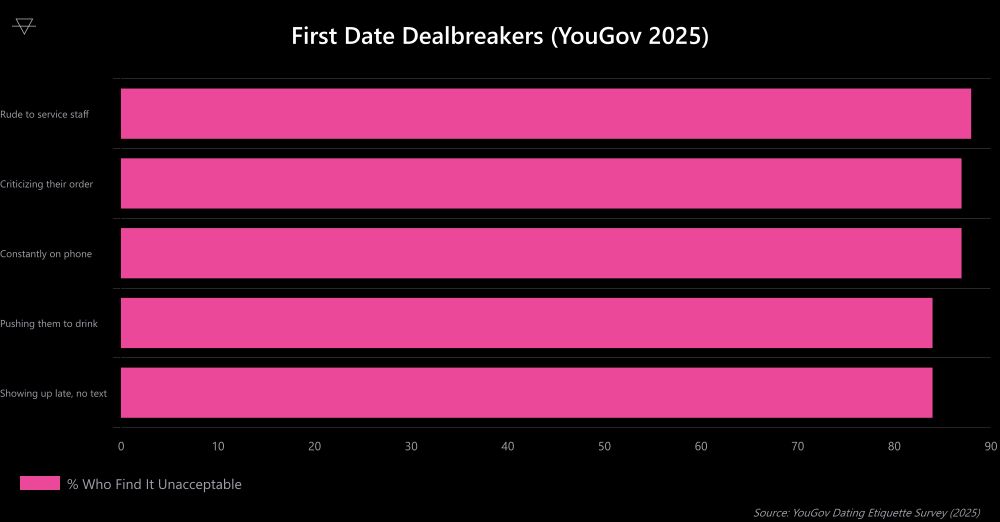
Your phone. 87% of adults consider frequent phone checking unacceptable on a first date, level with being rude to the waiter. A glance at the screen is a choice she watches you make. Put it on silent and in your jacket pocket before you walk in.
Your eyes. A speed-dating study using eye-tracking glasses found that each additional minute of mutual eye contact made participants 2.8 times more likely to want a second date. The catch: people thought they were making eye contact about 60% of the time. The measured amount was 8.25%. You're doing far less of it than you think. If you get to pick the seat, take the one facing the wall and give her the room.
Your posture, and whether it lasts. A speed-dating study published in PNAS found that people with open, expansive posture were 76% more likely to get a "yes" from their date. You walk in upright because you're nervous. Twenty minutes later you've folded into the chair. Use every sip of your drink as the cue to sit back up.
Whether you listened. Research from Harvard found that people who ask more questions are rated approximately 10% more likable. The tell is what your follow-up is made of. If you could have asked it before she spoke, it's not a follow-up. A real one contains a detail she just gave you.
Your voice. Voice pitch and speaking pace significantly affect how attractive someone is perceived. Pitch is mostly out of your hands. Pace isn't. Nerves speed you up, so don't try to talk slower. Pause. One breath at the end of a sentence reads as composure.
Shoes and hands. Not the brand, the condition. Scuffed shoes and bitten nails aren't unattractive in themselves. They're evidence you didn't check before you left. Two minutes with a wipe and a nail file fixes both.
Notice the pattern. Every item is behavior, and nearly all of it is decided in the ten minutes before you leave the house.
Drop her handle and Piercr reads her Instagram — her posts and who she follows — then gives you a plain-English read on what she's into and how to open. You write the message. No copy-paste. Try it free.
Your Instagram Is Your Attractiveness Pitch
Everything in this post, humor, kindness, interests, presentation, confidence, is amplified or destroyed by your Instagram profile. Because in 2026, she's checking your profile before she decides whether you're attractive. Not before she decides whether to reply. Before she decides whether you're attractive at all.
Research from Baylor University found that social media presentation, specifically follower count, engagement, and content quality, is twice as important as physical attractiveness for perceived likability. A Washington State University study found that profiles with varied, non-selfie content are rated as more likable, more successful, and more adventurous than selfie-heavy profiles.
Your Instagram profile is the halo effect in digital form. When your grid shows you cooking, traveling, spending time with friends, doing something you care about, it triggers the same multi-trait uplift that having hobbies triggers in person. She sees one thing, your grid, and extrapolates everything: this guy is interesting, social, has good taste, probably funny, worth replying to.
When your grid is six gym selfies and three car photos, the halo effect works in reverse. She sees one thing and extrapolates: this guy has no personality, probably sends the same DM to fifty women, hard pass.
This is why what she looks for on your Instagram is directly connected to what makes you attractive as a person. Your profile isn't separate from your attractiveness. It IS your attractiveness, compressed into nine squares and a bio line. If you haven't audited your profile recently, you're showing up to the attractiveness evaluation in sweatpants.
Your stories matter just as much. Consistent story activity shows her your day-to-day personality before she meets you. The guy who posts stories about a book he's reading, a meal he's cooking, a trail he ran, is building attractiveness through the halo effect every single day. The guy who posts nothing is invisible. She can't find you attractive if she can't find you at all.
The Four-Second Profile Audit
She isn't scrolling your archive. She's looking at your top nine posts, your bio, your ratio, and your tagged photos, and she's done in seconds. Here's what to check.
Count your selfies. The Baylor study put a number on it: social media users with a high percentage of selfies are perceived as 1.5 times less likable. If more than two of your last nine are selfies, you're losing before the DM. The fix isn't banning selfies. It's having enough going on that other people take photos of you doing things.
Make every photo say two things. You in a forest carrying a puppy: outdoorsy, loves animals. Two facts, one photo. Have at least one photo with other people in it and one of you actually doing a hobby, not posing next to it.
Fix the bio. "Living my best life. Dog dad. Wanderlust. DM me." tells her nothing. "Building bikes in East London." or "Physical therapist. Will argue about running form." gives her something to ask about. If you're proud of your work or something you've done, put it there. A cryptic quote reads as having nothing to show.
Check your ratio. Following 3,000 accounts with 200 followers tells her you follow everyone hoping they follow back, or that most of those 3,000 are Instagram models. The average personal Instagram account has around 264 followers. You don't need thousands. You need a ratio that doesn't raise questions, so unfollow the accounts you never engage with.
Look at your tagged photos. They're the lie detector. Zero tags suggests no friends who post with you. A polished travel grid next to tagged photos of you on the couch every weekend shows the gap. She'd rather see you looking normal at a friend's birthday than a staged grid that feels manufactured.
The Practical Playbook
Here's what actually becoming more attractive looks like, organized by effort and impact.
This Week (High Impact, Low Effort)
- Get a haircut that suits your face shape. Ask the barber for advice. They do this for a living.
- Buy a cleanser, moisturizer, and sunscreen. Use them every morning. Three minutes.
- Go through your wardrobe. Donate anything that doesn't fit properly. You don't need more clothes. You need fewer clothes that actually fit.
- Audit your Instagram. Delete gym selfies from your top nine. Post one photo showing an actual interest or activity.
- Stand up straighter. Set a posture reminder on your phone if you have to.
- Before any date: clean shoes, trimmed nails, phone on silent and in your pocket before you walk in.
This Month (Medium Effort, Compounding Returns)
- Pick up one hobby you've been putting off. Cooking, climbing, reading, photography, anything that isn't scrolling. Do it once a week. Post about it occasionally. Not for content. Because you actually did something.
- Start posting Instagram stories three to four times a week. Real moments from your day. Not curated. Not performative. Just proof you're a person with a life.
- Read one book. Fiction, nonfiction, doesn't matter. Having an opinion about something you read makes you more interesting than 90% of the men she talks to.
- Practice actually listening in conversations. Ask follow-up questions. Remember details. This is what women mean when they say they want communication skills.
Ongoing (The Real Work)
- Build a life you're genuinely interested in. Pursue goals. Develop skills. Maintain friendships. The confidence paradox resolves itself when your life is interesting enough that you stop performing for approval.
- Stop optimizing for what you think women want. The Ipsos data proves you're probably wrong about what they want anyway. Optimize for becoming someone you'd want to be around.
- Let your Instagram reflect reality, not aspiration. The version of you that actually cooks, actually reads, actually has friends over for dinner, is more attractive than the version of you that pretends to.
The Bottom Line
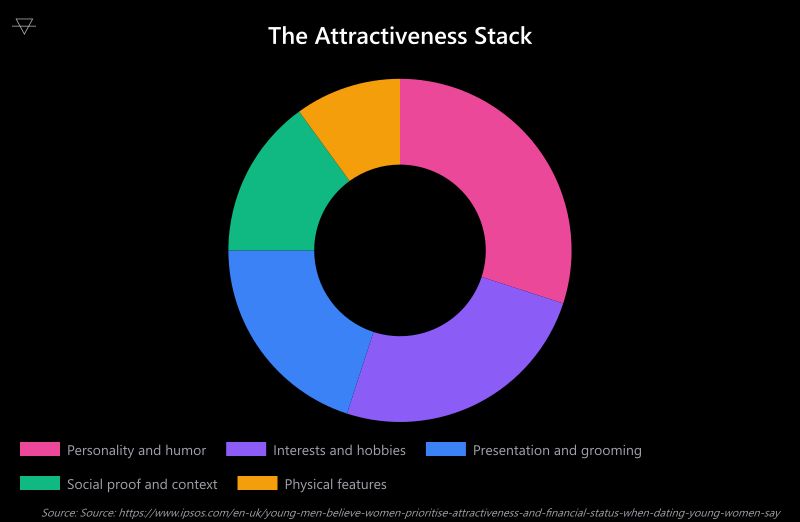
Attractiveness is not a fixed trait. It's a stack. Personality sits on top, followed by interests, then presentation, then social context, and finally physical features at the bottom. Most men spend all their energy on the bottom of the stack and ignore the four layers above it that matter more.
The guy who gets more attention from women than anyone else in your friend group isn't doing anything exotic. He's funny. He's kind without performing kindness. He has things going on in his life that he genuinely cares about. He pays attention to how he presents himself without obsessing over it. And his Instagram reflects all of that.
That's how to be more attractive as a man. Not by changing your face. By building a life that makes your face the least interesting thing about you.
If you want to see what happens when your profile actually matches the person you're becoming, start a conversation with someone worth talking to. Point Piercr at her profile and it reads what she's into. You handle the being interesting part.
Try Piercr free — seeing what it finds is free.
FAQ
Q: What do women actually find most attractive in a man?
A: According to an Ipsos survey, women aged 16 to 24 rank sense of humor at 60% and kindness at 53% as the most important traits in a romantic partner. Physical attractiveness ranked fourth behind communication skills. A 2024 study in Evolutionary Psychology found that 89% of women across all backgrounds value kindness above all other traits.
Q: Can you become more attractive without changing how you look?
A: Yes. Attractiveness is a combination of presentation, behavior, and context. Research shows that grooming, posture, genuine confidence, having visible hobbies, and how you present yourself on social media all shift perceived attractiveness significantly. A Baylor University study found that social media presentation is twice as important as physical appearance for perceived likability.
Q: What is the halo effect in dating?
A: The halo effect is a cognitive bias where one positive trait causes people to assume other positive traits. In dating, a man who demonstrates humor or an interesting hobby gets rated higher on intelligence, trustworthiness, and attractiveness overall. Research published in Current Psychology confirmed this effect operates across all 11 world regions studied.
Q: Does confidence actually make you more attractive?
A: Yes, but only genuine confidence. Research from the Society for Personality and Social Psychology found that both men and women rate confidence as highly attractive. However, performed confidence reads as arrogance. The paradox is that trying to appear confident is less attractive than simply being engaged in your own life and interests.
Q: How does Instagram affect perceived attractiveness?
A: Instagram amplifies attractiveness because it shows context, not just appearance. Your grid, stories, and bio communicate personality, interests, and social proof. A Washington State University study found that profiles with varied content are rated as more likable, more successful, and more adventurous than selfie-heavy profiles. Your profile is your attractiveness pitch before she ever meets you.
Q: Does looksmaxxing actually work for dating?
A: Up to a point. A 2024 study of real swipe decisions found a one standard deviation improvement in physical attractiveness increases selection odds by about 20%. Softmaxxing basics like the gym, grooming, and clothes that fit deliver real returns. Extreme hardmaxxing mostly doesn't, and mewing does not reshape adult bone structure.
Q: What do girls notice first when they meet a guy?
A: Body language, posture, and overall grooming. People form first impressions within 100 milliseconds, so she's reading your physical presence before you've said a word. After that, how you treat staff and how often you check your phone carry the most weight: 88% and 87% of adults call them unacceptable on a first date.