
How to Date a Girl Out of Your League (2026)
You've looked at her profile. Scrolled through her photos. Read her bio. And somewhere between the third photo and the story highlight, you decided she's out of your league.
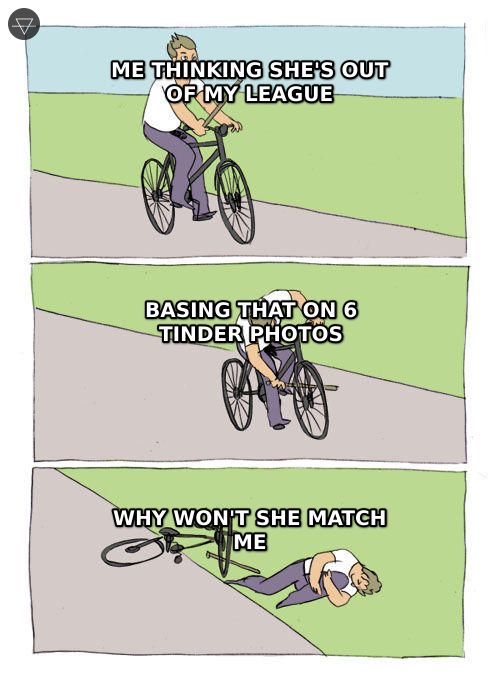
That decision took about four seconds. And it was based on the same information a dating app would give you. Photos. Attractiveness. The immediate visual hierarchy that makes one person "above" another. If you want to know how to date a girl out of your league, the first thing to understand is that leagues are a product of the platform, not the person. They exist because dating apps stripped away every variable except how you look. Instagram puts those variables back. None of it matters much until the wider approach is right, which is the ground covered in how to find a girlfriend.
Dating out of your league is only difficult on platforms where six photos are the entire evaluation; on Instagram, where she has months of your personality to reference, the attractiveness hierarchy collapses.
This post covers the research behind why leagues are a dating app construct, how context eliminates the attractiveness hierarchy, and the practical steps for connecting with women who seem above your level. All sourced. No motivational fluff.
In This Post
- The Math That Creates Leagues
- What Most Guys Get Wrong About Dating Out of Your League
- The Science of Why Leagues Disappear With Context
- How to Date Someone More Attractive Than You
- Advanced Moves for Dating Up
- What Dating Out of Your League Actually Looks Like
- FAQ
The Math That Creates Leagues
Leagues feel real because on dating apps, they are real. Tinder is 76% male. Men have a 0.6% match rate. Women swipe right on only 8 to 14% of profiles. When the platform reduces you to six photos and a 500-character bio, the only filter she has is how you look. A hierarchy forms instantly. The top 10 to 20% of men receive the vast majority of female attention. Everyone else is invisible.
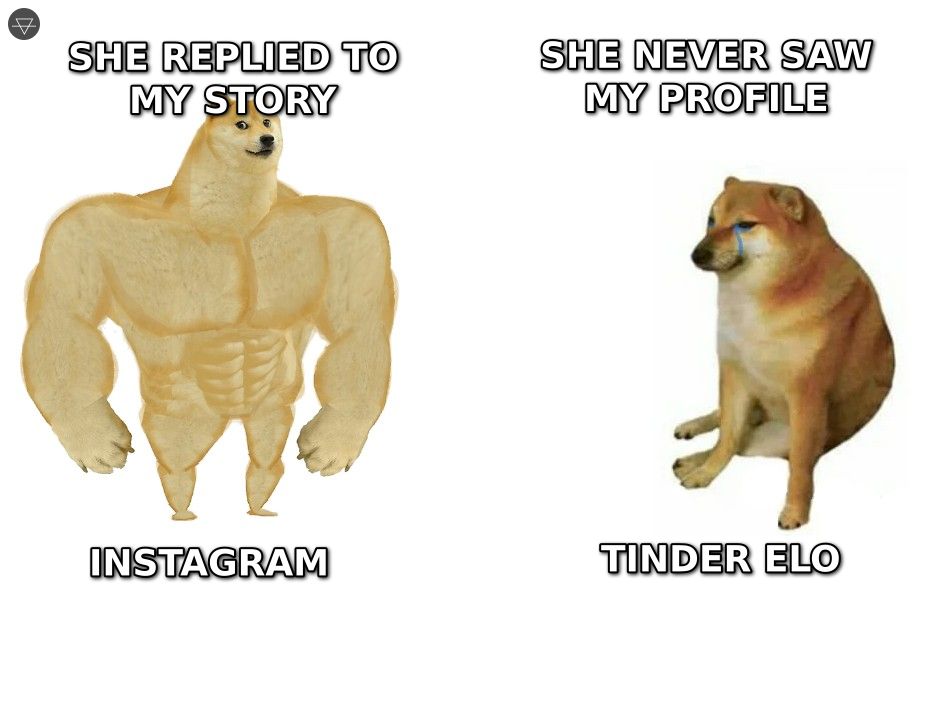
Tinder's algorithm formalized this. The platform ranked users by desirability using an ELO-style scoring system borrowed from chess. Swipe left on someone, they lose points. Swipe right, they gain points. High-ranked profiles get shown to more people. Low-ranked profiles get buried. The system created the league. You didn't imagine it. The algorithm built it.
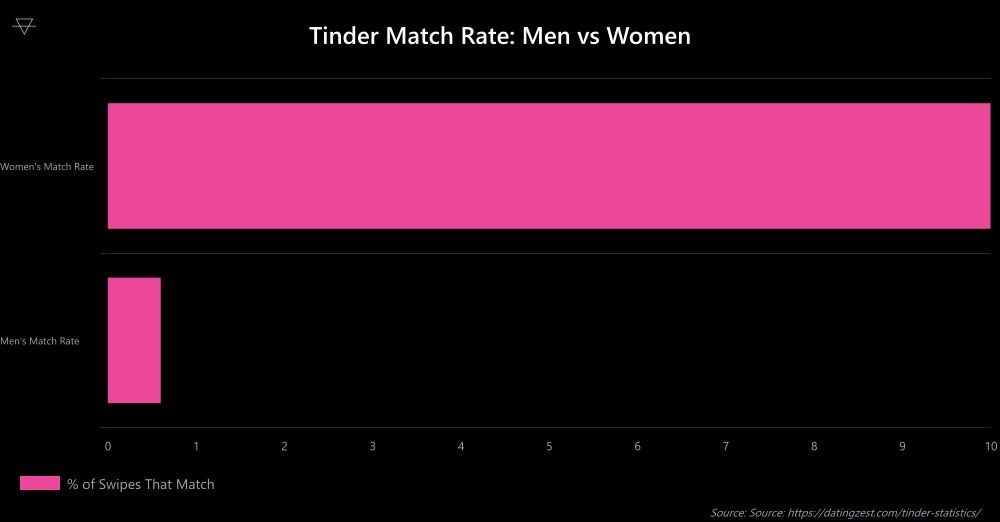
78% of dating app users report burnout. The league system is why. When the bottom 80% of men are competing for attention from the same small pool of women who can actually see their profiles, the math doesn't work. 51% of American men had zero dates in all of 2025. Not bad dates. Zero dates.
But leagues only exist when six photos are the entire evaluation. Take away the photo-only filter and the hierarchy collapses. That's not an opinion. That's what the research says.
What Most Guys Get Wrong About Dating Out of Your League
Assuming leagues are permanent
The league you're assigned on Tinder is a function of the platform, not your actual value. On dating apps, people pursue partners approximately 25% more desirable than themselves. And 21% of them actually get a reply. Those are the numbers on a platform designed to stratify by looks. Off the platform, the league dissolves because the evaluation criteria change entirely.
Trying to "level up" to her league instead of changing the game
Gym selfies. Better haircut. Professional photos. These help on apps, sure. But they're playing within a system designed to rank you. The guys who date "out of their league" consistently aren't the ones who climbed the app ladder. They're the ones who left the ladder and met women in contexts where attractiveness was one variable among many instead of the only one.
Treating her like she's above you
The moment you approach a woman like she's doing you a favor by talking to you, the conversation is over. She can feel the energy. Pedestalizing is the fastest way to confirm the league gap in her mind. She doesn't need another follower. She needs someone who engages with her as an equal.
I matched with a girl on Hinge last spring who was, by any conventional measure, out of my league. Model-adjacent. Two thousand likes in her queue. We exchanged four messages. Each one took longer to arrive than the last. The conversation evaporated. That same month, I found her friend's ceramics page through an explore hashtag. Replied to a story about a kiln disaster with a specific question about her glaze technique. Coffee within a week. The girl from Hinge saw me as one of two thousand. The ceramics girl saw me as someone who noticed the thing she cared about. Same guy. Different context. Different outcome.
The Science of Why Leagues Disappear With Context
Familiarity rewrites the hierarchy
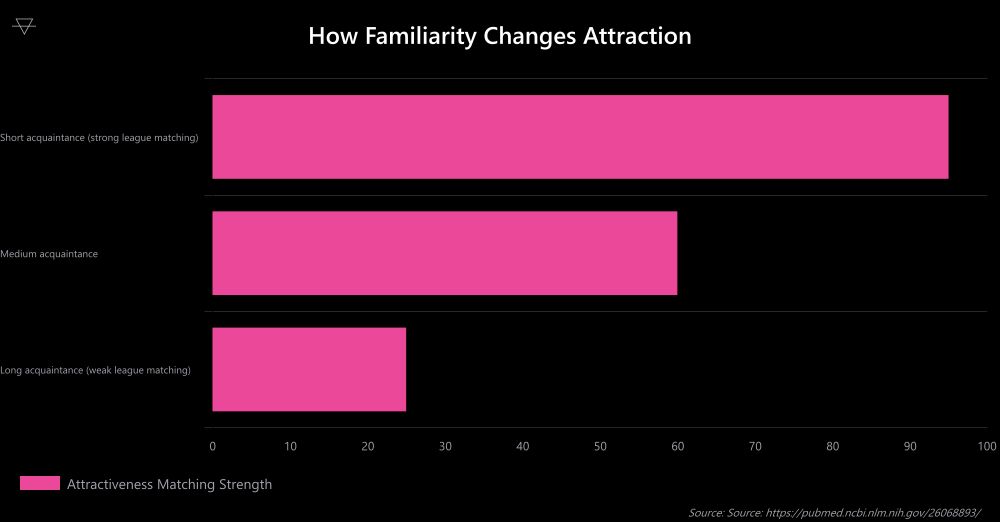
A 2015 study from Northwestern University studied 167 couples and found that the longer partners knew each other before dating, the weaker the attractiveness-based matching became. Couples who started dating quickly looked like they were in each other's "league." Couples who were friends first, who knew each other from class or work or a shared hobby, showed almost no correlation between their attractiveness levels.
The researchers called it "leveling the playing field." Familiarity introduces variables that photos can't capture. Humor, intelligence, the way someone tells a story, how they handle an awkward moment. These qualities take time to surface. On a dating app, time doesn't exist. On Instagram, it does.
The mere exposure effect
Research on familiarity and attraction has consistently shown that repeated exposure increases liking. When she sees your name pop up in her story views, when your comment appears under her post, when your face becomes familiar in her notification feed, attraction builds before a conversation ever starts. A Rochester study found that increased interaction led to increased attraction through three mechanisms: perceived responsiveness, comfort, and perceived knowledge. All three are available on Instagram. None are available on Tinder.
Context is the variable that kills leagues
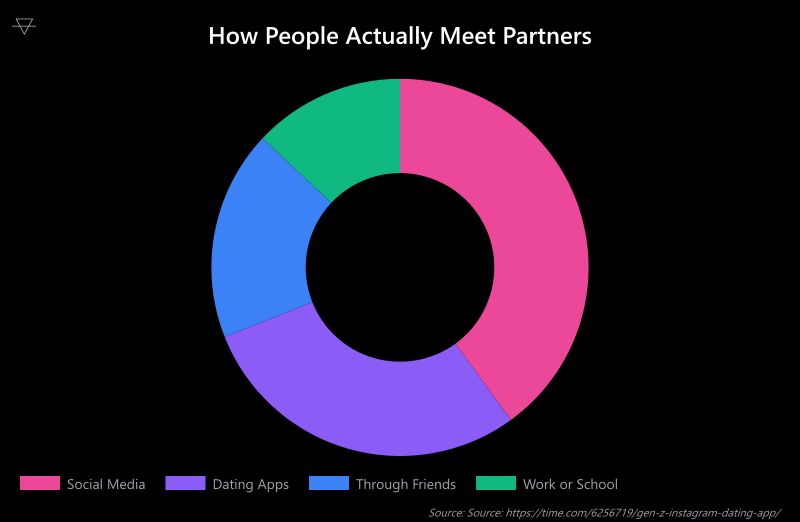
On a dating app, she has six photos and a bio. That's all the information available to decide if you're worth her time. Instagram gives her months of your actual life. Your friend group. Your hobbies. Your sense of humor. The places you go. The things you post about. 2 in 5 young people now meet their partners through social media, compared to 29% through dating apps. The shift happened because context provides what photos alone never could: a reason to respond.
A guy with a 4/10 dating app profile and a 9/10 conversation is still a 4 on Tinder. On Instagram, he's the guy who noticed the specific thing about her ceramics kiln and made her laugh about it. The number disappears when the context is rich enough.
Attractiveness is multisensory, not photographic
Recent research confirms what most people already sense: physical attractiveness in real interactions incorporates voice, movement, expressiveness, humor, and body language. A photograph captures exactly one of those channels. When 60% of young women say humor is the most important trait in a partner, ranking men by photos alone is measuring the wrong thing. Instagram stories, reels, and captions let more of those channels through than any dating profile ever could.
How to Date Someone More Attractive Than You
1. Stop competing on looks
If she's conventionally attractive and you're not, a dating app is the worst possible venue. You're entering a competition judged on the one criterion where you're weakest. Move to a platform where the criteria include personality, humor, shared interests, and effort. That platform is Instagram. Instagram's gender split is 52.5% male to 47.5% female. Nearly even. No ELO score. No desirability ranking. No algorithm deciding you're not good enough to appear in her feed.
2. Find her through shared interests
The league disappears fastest when you share genuine common ground. Hashtags, explore page, mutual followers. If you're into climbing and she posts bouldering content, you already have context for a message that has nothing to do with how either of you looks. The matching hypothesis predicts that people partner with others of similar attractiveness. But that hypothesis was tested in contexts where attractiveness was the primary available information. Change the information and you change the outcome.
3. Build familiarity before the message
React to two or three stories over a week. Drop one genuine comment on a post. Not "fire emoji." Something that shows you engaged with the content. 500 million people use Instagram Stories daily. Story replies go to her primary inbox, not message requests. When your name is already familiar, your DM arrives with built-in trust that a cold approach from a stranger never has.
4. Reference specifics, not appearances
"That glaze on your last piece looks like it took about nine failed batches to get right" proves you paid attention to what she cares about. "You're gorgeous" proves you have eyes. One of these starts a conversation. The other gets archived. Hinge data shows personalized openers draw 98% stronger response rates than generic compliments. The specificity makes her "league" irrelevant because you're no longer competing on the same axis as everyone else in her DMs.
5. Match energy, don't chase
If she sends five words, send six. If she takes a day to reply, don't respond in four minutes. 42% of Gen Z women feel the men they date don't want deep conversations. Your calibration proves you're capable of one. This is the same pattern we broke down in Double Texting: When It Works and When It's Over. The moment she can predict your reply speed to the minute, the intrigue dies.
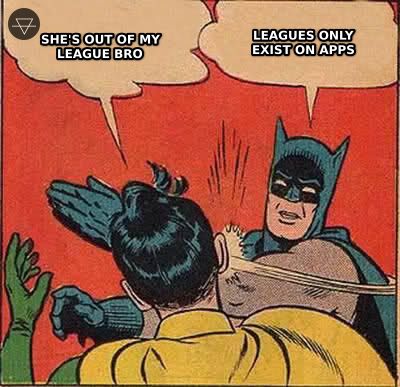
A friend of mine spent three years convinced a specific girl was "out of his league." They had mutual friends. They'd been at the same parties. He never approached her because he'd already decided she wouldn't be interested. One night she posted a story about a book he'd just finished. He replied with a one-sentence take on the ending. They've been together eight months. Three years of assumption, undone by one specific comment about a plot twist. The league was in his head. It was never in hers.
Advanced Moves for Dating Up
Profile as proof of personality
She checks your page before she replies. Every time. Your grid is your resume for dating out of your league. Six to nine recent posts that show interests, personality, social context. Remove anything low-effort. The profile needs to answer one question without her asking it: "Is this person interesting enough to talk to?" We covered the specific things she evaluates in what girls look for on Instagram. Whether she's into fashion, yoga, or surfing, she's scanning for evidence that you have a life outside of your interest in her.
Story reply timing and positioning
Reply to her third or fourth story of the day, not the first. Everyone piles onto the first one, especially if it's a selfie. By story three or four, her inbox for that post is quieter. Your message gets more real estate. Over 2 billion story likes are sent on Instagram daily. Standing out in that volume requires positioning, not just good content.
The five-to-seven exchange window
DMs are for starting things. Five to seven exchanges, then suggest something specific and low-pressure. Coffee at a place one of you mentioned. A walk in a neighborhood that came up. If you keep the conversation in DMs for three weeks, it dies there. The transition to real life is where the "league" question gets answered once and for all. In person, all those variables that photos couldn't capture are working for you.
Drop her handle and Piercr reads her Instagram — her posts and who she follows — then gives you a plain-English read on what she's into and how to open. No leagues. No ELO scores. Try it free.
What Dating Out of Your League Actually Looks Like
Scenario 1: The ceramics artist
She has 12K followers. A curated grid of finished pieces and studio shots. Objectively attractive. On Tinder, a guy like him would never appear in her stack. The algorithm would bury him three pages deep.
On Instagram, he noticed a story about a failed glaze batch. He referenced the specific number of attempts and made a self-deprecating joke about his own ceramics disaster. She gave him a short reply. He didn't panic. He matched her energy, stayed specific, and earned a longer response by message four. By message eight, she was asking him questions.
Scenario 2: The trail runner
She's fast. Fit. Her profile is full of race photos and split times. The kind of girl who gets "you're so hot" in her DMs daily and ignores all of them.
He didn't comment on how she looked. He noticed her negative splits on a trail course and called out how unusual that was. She gave him almost nothing at first. "lol what." "ok thanks I guess." But his specificity proved he actually understood what she'd accomplished. His self-deprecating running story earned a genuine laugh. By the last message, she was asking about his usual distance.

What both prove
Neither guy was in her "league" by dating app standards. Both guys got real engagement by doing something that dating apps make impossible: demonstrating personality through specificity. She didn't evaluate them on six photos. She evaluated them on what they noticed, how they expressed it, and whether the conversation felt worth continuing.
The framework stays the same regardless of what she's into. Books, martial arts, chess. Reference the specific thing. Prove you looked. Let the conversation build on her terms. The "league" is a fiction that only survives in environments with no context. Give her context and the fiction dissolves.
The Bigger Picture
The concept of dating leagues is a side effect of a system that reduces people to photographs. Tinder needed a way to sort millions of users. It built a desirability score. That score created a hierarchy. The hierarchy convinced millions of men that certain women were permanently inaccessible. And the business model depended on that belief, because men who feel outclassed will pay $50 a month for Platinum to try to climb a ladder that was rigged from the start.
Instagram didn't set out to kill leagues. It killed them by accident, because it provides the one thing dating apps can't: information. Real, layered, accumulated information about who a person actually is. When she can see your humor, your friend group, your interests, and your personality before you ever send a message, the six-photo hierarchy becomes irrelevant. 62% of women are open to meeting romantic partners outside of dating apps. They're already looking for a different evaluation system. Instagram is that system.
Leagues don't exist when you have context. They only exist when all she has is six photos.
Try Piercr
Approaching someone who seems out of your league on Instagram works — when you actually know who she is instead of guessing. Reading her feed closely enough to find the real thing worth mentioning takes time, and most guys skip it. We built Piercr to do that reading for you.
Drop her handle and Piercr reads her Instagram — her posts and the accounts she follows — then hands you a plain-English read on what she's into and the best way to open. You write the message yourself. No leagues, no ELO rankings, no algorithm deciding you're not good enough. Try Piercr free — seeing what it finds is free.
FAQ
Q: Can you really date someone out of your league?
A: Yes. Research from Northwestern University found that couples who knew each other longer before dating showed significantly less attractiveness-based matching. Leagues are strongest when all she has is photos. On Instagram, she has months of your actual personality, which changes how she evaluates you entirely.
Q: Do leagues actually exist in dating?
A: On dating apps, yes. Tinder's algorithm ranked users by desirability and showed you to fewer people if your score was low. That creates a hierarchy based almost entirely on photos. Off the apps, research shows that familiarity, context, and shared interests reduce the role of physical attractiveness in partner selection.
Q: How do you approach a girl who seems out of your league?
A: Stop approaching cold. Engage with her content first. Reply to a story with something specific about what she posted. 21% of people who message someone more desirable than themselves get a reply. That number climbs when your message proves you paid attention.
Q: Why do some guys date women way more attractive than them?
A: Because they met in contexts where attractiveness was not the primary filter. At work, through friends, on Instagram. Those settings give a woman more information about a man than six photos ever could. Context levels the playing field that dating apps tilt toward looks alone.
Q: Is dating out of your league harder on dating apps?
A: Significantly. Dating apps rank users by attractiveness and concentrate female attention on the top 10 to 20% of men. Instagram removes the ranking system entirely and lets your personality do the work. 62% of women are open to meeting romantic partners outside of apps.