Why Is Dating So Hard in 2026? (The Real Reasons)
There's a guy sitting in his apartment right now with four dating apps installed and zero plans this weekend. He's not ugly. He's not boring. He has a job, a personality, and the ability to hold a conversation. He just can't figure out why meeting someone feels like solving a Rubik's cube blindfolded while the cube is on fire and everyone watching is filming it for content.
Three streets over, a woman is declining her fourth coffee date this month. Not because anything was wrong with the guys. Because the last three dates felt like job interviews, and she's tired of performing enthusiasm for someone who clearly rehearsed their "what are you looking for" answer in the mirror that morning. Knowing why it is hard is only half of it; the other half is what to actually do about finding someone.
Both of them will go to bed tonight wondering the same thing: why is dating so hard?
Modern dating is hard because five structural forces, the paradox of choice, social media comparison, pop-psychology checklists, the death of third places, and economic pressure, all broke at the same time and nobody fixed any of them.
The answer isn't one thing. It's five things that all broke at the same time and nobody bothered to fix any of them. This is the big-picture version. Not about dating apps specifically and not about switching platforms. This is about why dating itself stopped working, regardless of where you try to do it.
In This Post
- The Paradox of Choice Killed Decision-Making
- Everyone's Standards Are Based on Fiction
- The Self-Help Industrial Complex Made Everyone a Therapist
- Third Places Are Gone
- Dating Is Too Expensive for This Economy
- The Loneliness Epidemic Is the Real Crisis
- The Solution Nobody Wants to Hear
- FAQ
The Paradox of Choice Killed Decision-Making
In 2004, psychologist Barry Schwartz published a book called The Paradox of Choice. The thesis was simple: the more options you have, the less satisfied you feel with any decision you make. Too many choices paralyze you. And when you do finally choose, you spend the rest of the time wondering if you should have chosen differently.
He was talking about jam at a grocery store. Twenty years later, his theory describes dating with surgical precision.
Only 31% of young adults are actively dating. That's not a typo. Less than a third. 74% of women and 64% of men reported they had not dated or dated only a few times in the past year. Not because they don't want relationships. 86% say they expect to get married eventually. They just can't bring themselves to commit to trying with anyone specific when the theoretical next person might be 2% better.
This is what infinite scrolling did to human connection. When you can browse through hundreds of profiles in an hour, you start treating people like menu items. Not this one. Not that one. The sauce looks weird on this one. You're not actually evaluating humans anymore. You're doing product comparison shopping for a product that doesn't exist in the form you're imagining it.
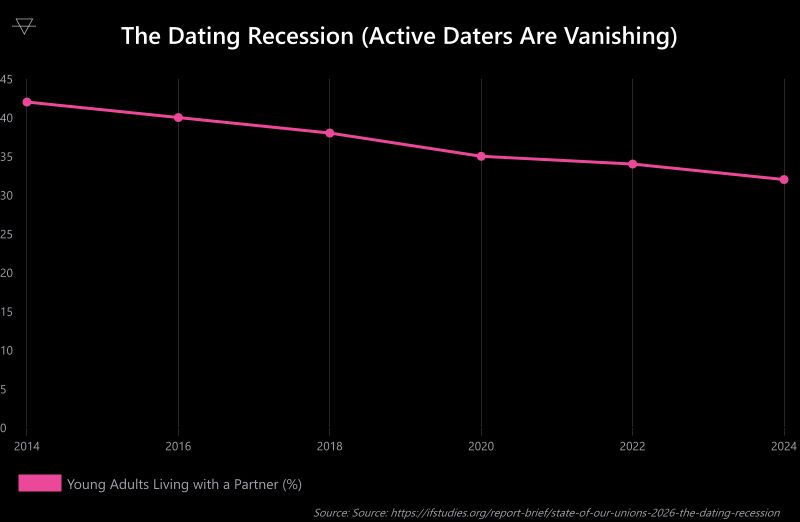
The share of young adults living with a partner dropped from 42% in 2014 to 32% in 2024. A ten-point collapse in a decade. The median expected marriage age is now 33 for women and 35 for men, and that horizon stays five to six years away regardless of current age. People keep pushing marriage further into the future because the present always feels like it hasn't produced the right option yet.
Barry Schwartz also said something else that nobody quotes: "The more options there are, the easier it is to regret everything that is disappointing about the option that you chose." That's modern dating in a sentence. You finally go on a date with someone, and instead of being present, you're cataloging their imperfections and wondering whether person number 347 in your DMs would have been funnier.
The paradox isn't that there aren't enough options. It's that there are so many options that choosing feels dangerous. So most people choose nothing. They stay on the menu, browsing, forever.
Everyone's Standards Are Based on Fiction
Here's a question nobody wants to answer honestly: where did your idea of the perfect partner come from?
Not from someone you've actually dated. Not from a relationship you've seen work up close. From content. From Instagram grids where everyone is always on vacation, always glowing, always having the best brunch of their life. From TikTok compilations of "green flags" that describe a person who earns six figures, communicates like a licensed therapist, has a six-pack, reads two books a month, loves dogs, and is also somehow emotionally available and never on their phone. That person doesn't exist. You built an ideal from the composite best traits of ten thousand strangers and then wondered why the person sitting across from you at dinner felt underwhelming.
1 in 3 women say social media made them feel their body isn't attractive. 1 in 3 men report negative mental health impacts from fitness and weight loss content on social media. 40% of Gen Z won't post a selfie without a filter. Everyone shows up to a date already feeling like they're not enough, because they spent the previous three hours consuming content that was specifically designed to make them feel inadequate.
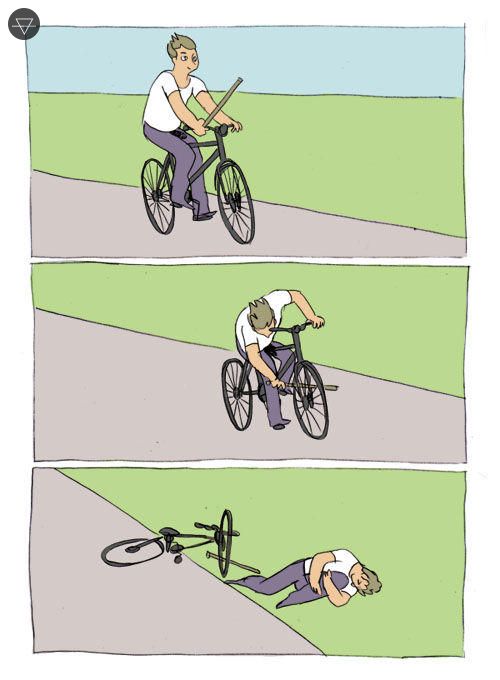
The comparison machine runs both directions. Your standards for your partner are inflated by highlight reels. Your confidence in yourself is deflated by the same reels. So you've got two people sitting across from each other, both convinced the other person could do better, and neither willing to be vulnerable enough to say "I like you and I'm nervous."
Research confirms this isn't just a feeling. Upward social comparison on platforms like Instagram significantly predicts lower self-esteem, and over half of people under 35 say unattainable celebrity body standards affect their mental wellbeing. You're walking into dates pre-defeated by content that was never real in the first place.
This is why only 1 in 3 young adults express confidence in their dating skills. Only 21% of women feel confident approaching someone they're interested in. Only 29% of men feel the same. We're the most connected generation in history, and we can't walk up to someone at a bar and say hello.
The Self-Help Industrial Complex Made Everyone a Therapist
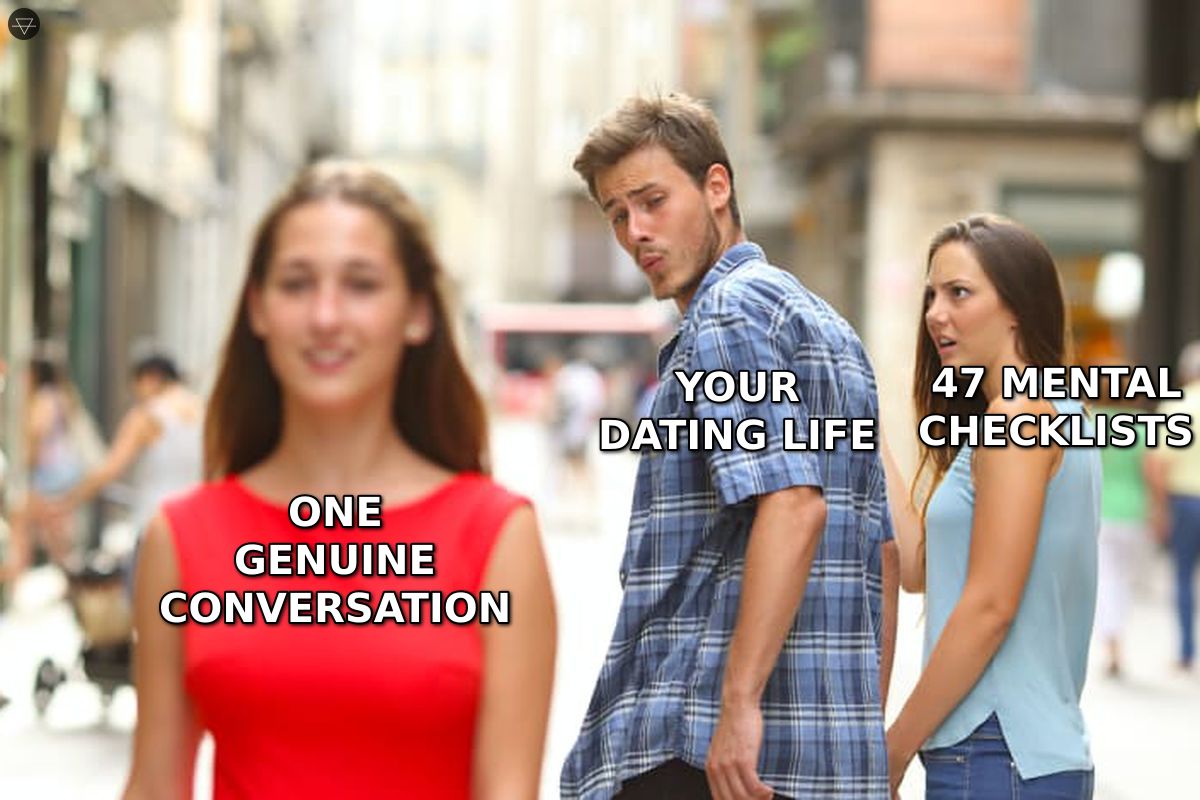
The personal development industry hit $48.4 billion in 2024. Projected to reach $67 billion by 2030. That's a lot of money being spent on "knowing your worth" and "doing the work" and "healing your inner child." And some of it genuinely helps people. But a significant portion of it turned dating into an obstacle course of psychological checkboxes that no human being can clear.
Attachment theory went viral on TikTok. The hashtag has over 142 million views. Suddenly everyone could diagnose whether they were anxious, avoidant, or secure. They learned what "love bombing" meant and what a "trauma response" looked like and what "emotional availability" required. They absorbed years of therapeutic frameworks from 60-second videos made by people who may or may not have had any clinical training.
And then they started applying it. A guy texts back slowly because he's at work? Avoidant. A woman asks where things are heading after three dates? Anxious-attached. Someone gets excited on a first date and shows genuine enthusiasm? Love bombing. We pathologized normal human behavior and called it self-awareness.
The self-help boom convinced an entire generation that they should never compromise. That settling is failure. That the right person will arrive fully formed with zero rough edges and exactly the attachment style that complements yours. And then those same people sit alone at 28, 32, 36, wondering why nobody passes the test. The test was designed to be impossible. Nobody told them.
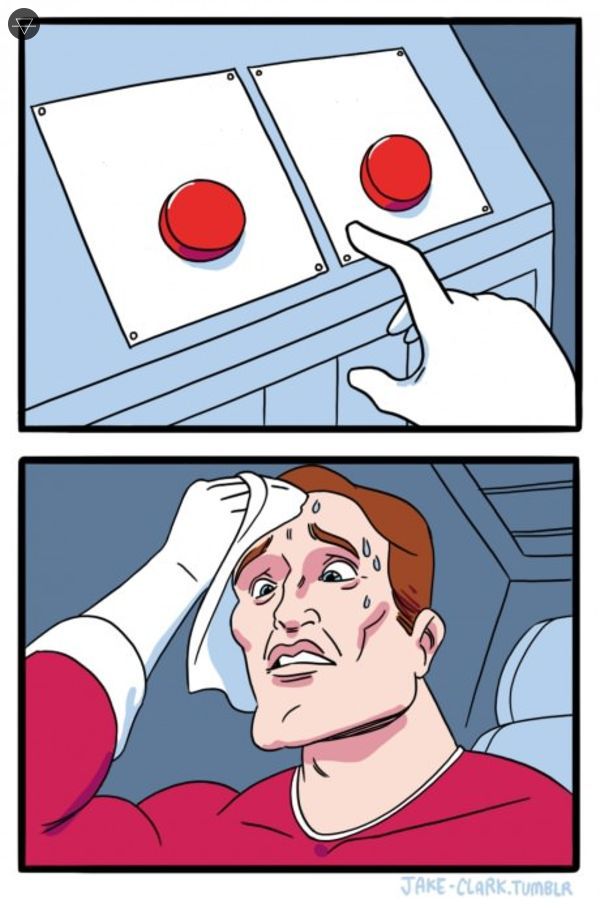
55% of young adults say breakups made them reluctant to start new relationships. Only 28% can stay positive after a relationship setback. The self-help framework was supposed to build resilience. Instead it built walls. Everyone learned the language of boundaries without learning that some walls keep the good stuff out too.
I'm not saying therapy is bad. Therapy is genuinely life-changing when done with a licensed professional who knows your history. But TikTok therapy, the version where you learn to identify "narcissists" from a 45-second video and start screening every first date like a customs officer at an emotional border checkpoint, made people worse at connecting. Not better. You can't diagnose a stranger over appetizers. You're not qualified. Neither am I.
Third Places Are Gone
Sociologist Ray Oldenburg coined the term "third place" to describe the spaces between home and work where people gather informally. Coffee shops. Pubs. Bookstores. Community centers. Barbershops. Parks with actual benches where people sat and talked to each other. These were the places where relationships formed without apps, without algorithms, without anyone's profile photo being evaluated under fluorescent lighting.
They're disappearing.
Food and beverage establishments declined 23% since the Great Recession. Religious organizations dropped 17%. Rising rent is killing independent coffee shops and replacing them with chains designed for takeout, not conversation. The pandemic accelerated what was already happening. Spaces built for lingering turned into spaces built for transactions. Walk in, order on your phone, walk out. Nobody makes eye contact.
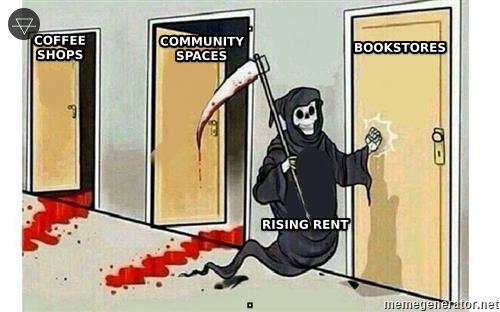
This matters for dating more than people realize. Every generation before ours met partners through proximity and repetition. You saw the same person at the same coffee shop every Tuesday. You made small talk at a bookstore. You joined a recreational sports league and ended up next to someone who made you laugh. 77% of Gen Z couples who found a partner met that person offline. The method still works. The venues are vanishing.
The death of third places coincided directly with rising loneliness. Without these gathering spots, people have fewer opportunities to feel valued in their communities. Zoning changes forbid the organic emergence of walkable social spaces. Gentrification turned neighborhood bars into luxury apartments. And the pandemic finished what economics started. Most of the third places that closed in 2020 never reopened.
So where are you supposed to meet someone? Your apartment? The gym where everyone has headphones in? The grocery store where making eye contact gets you reported to management? The physical infrastructure of human connection was demolished and nobody built a replacement. We just handed everyone a phone and said "figure it out."
Dating Is Too Expensive for This Economy
The average date in America now costs $189. That's up 12.5% from $168 in 2025. The average American spent $2,323 on dating last year. And that's if you actually went on dates. Many people can't afford to.
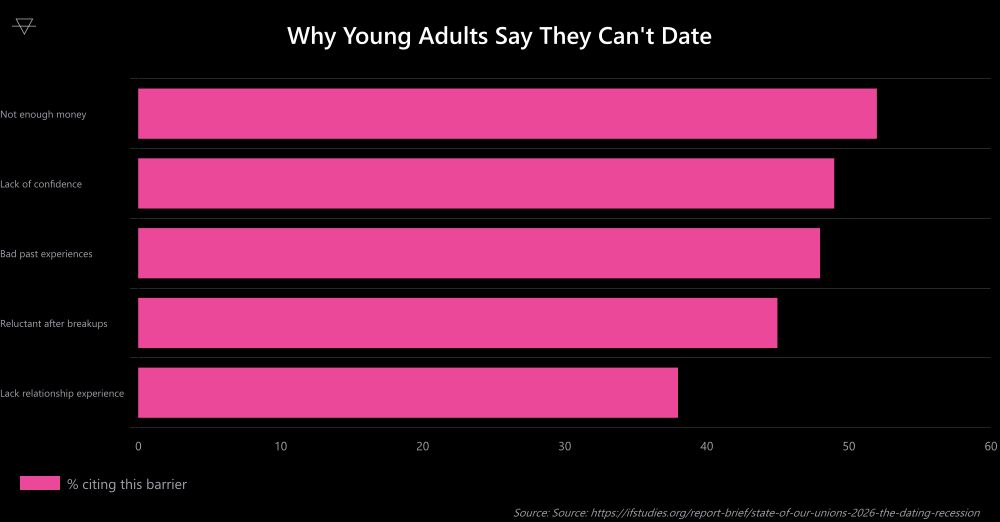
52% of young adults say not having enough money is the primary barrier to dating. That's the number one reason. Not confidence. Not past trauma. Not being too busy. Money. More than four in ten singles have adjusted a date for financial reasons. More than a quarter had to cancel a date because they couldn't afford it. 47% of singles say dating is simply not financially worth it.
Nobody talks about this enough. We discuss attachment styles and communication skills and green flags, but we skip over the fact that a significant chunk of the dating population literally cannot afford to go on a date. Rent takes 30-50% of income for most young adults. Student loans take another bite. Groceries cost more than they did three years ago. And then someone says "let's grab dinner" and you do the mental math of whether this person is worth $189 of grocery money.
The K-shaped dating economy is real. 14% of people say dates cost them nothing. 14% spend $300 or more. The middle is hollowing out. Dating is becoming a luxury activity, like going to concerts or traveling internationally. If you're not in the income bracket that can afford regular dates without stress, you just don't date. You withdraw. You tell yourself you're "focusing on yourself" because that sounds better than "I can't afford a second coffee this week."
53% of Gen Z men and 54% of Gen Z women say they don't spend any money on dating each month. Zero dollars. An entire generation priced out of romance.
The Loneliness Epidemic Is the Real Crisis
Everything above feeds into something bigger. Something the U.S. Surgeon General called a public health crisis. Something that kills an estimated 100 people every hour globally.
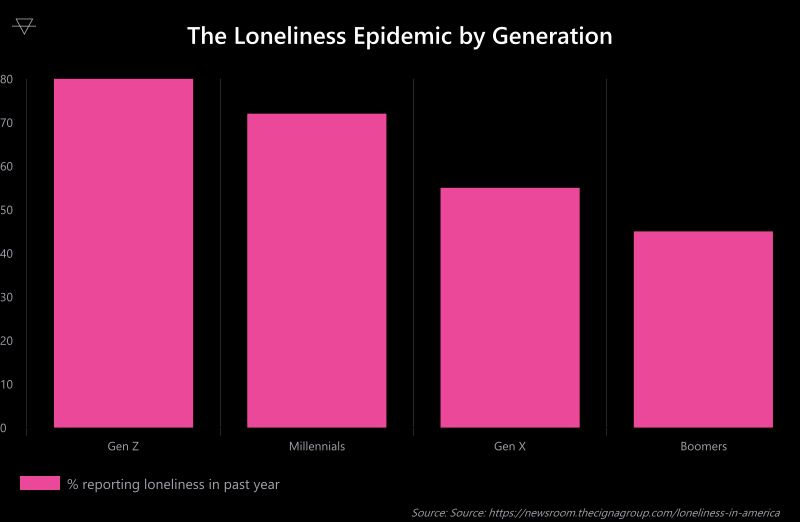
57% of Americans are lonely. Not occasionally. Clinically lonely. The kind that carries health risks equivalent to smoking 15 cigarettes a day. And it's hitting the youngest adults hardest. 80% of Gen Z reported feelings of isolation in the past year, compared to 72% of millennials and 45% of boomers. The generation with the most access to connection technology in human history is the loneliest generation ever recorded.
50.2% of Americans are currently single. 57% eat all their meals alone. 52% of workers report feeling lonely at their jobs. The isolation isn't limited to romantic relationships. It's everywhere. Fewer friends. Fewer community ties. Fewer moments of unplanned human contact. Dating didn't break in a vacuum. It broke because the entire social fabric frayed first.
Sexlessness among young men skyrocketed from 9% in 2013-2015 to 24% in 2022-2023. For young women, it rose from 8% to 13%. 63% of men under 30 are single. The phrase "dating recession" isn't media hyperbole. The Institute for Family Studies used it as the title of their 2026 report. This is a measurable, documented, accelerating decline in the ability of human beings to pair up.
And the loneliness feeds on itself. Lonely people become more guarded. Guarded people are harder to connect with. Harder connections lead to fewer relationships. Fewer relationships mean more loneliness. It's a doom loop with no obvious exit ramp, and telling people to "put themselves out there" when every social venue costs money, requires confidence they don't have, and carries the risk of rejection they can't handle is not a solution. It's a platitude.
Dating is hard partly because you are guessing at strangers. Piercr takes the guessing out of one conversation: drop her handle and it reads her Instagram — her posts and the accounts she follows — then hands you a plain-English read on what she is into, her vibe, and the best way to open. You still write the message. Try it free.
The Solution Nobody Wants to Hear
The answer is not a better app. It's not a better strategy. It's not a better opening line or a better profile photo or a better understanding of attachment theory. All of those things are optimizations for a system that is fundamentally broken at the foundation level.
The foundation is this: human connection requires vulnerability, and vulnerability requires risk, and risk requires a willingness to be disappointed.
Everything in modern culture is designed to eliminate that risk. Dating apps let you pre-screen people so you never have to face rejection in person. Social media lets you curate a version of yourself so nobody sees the real one. Self-help culture gives you a framework for eliminating anyone who might challenge you. Economic pressure means every date has to "be worth it" because you can't afford to waste $189 on someone who turns out to be average. Third places disappeared so you can't even accidentally meet someone anymore.
We removed every possible path to connection that involved uncertainty. And then we wondered why nobody feels connected.
Only 37% of young adults trust their own judgment when choosing a partner. Only 34% feel confident discussing their feelings on a date. We lost the skills because we lost the practice. You don't get better at dating by reading about it. You get better by doing it badly, repeatedly, with real people, in real time, with no algorithm to hide behind.
The people actually finding partners in 2026 are not doing anything revolutionary. 77% of Gen Z couples met their partner offline. 40% of young people meeting partners through social media are doing it the old-fashioned way: noticing something real about a person and saying something about it. Like starting a conversation based on what someone actually posted instead of mass-sending "hey" to 40 strangers.
The fix is not systemic. Nobody is going to rebuild third places overnight or make rent affordable by next month or deprogram an entire generation from the self-help industrial complex. The fix is individual and it's uncomfortable. It's putting down the phone and talking to someone at a coffee shop. It's going on a date with someone who checks seven boxes out of ten instead of waiting for someone who checks all twelve. It's sending a message that references something specific about who they are instead of playing it safe with something generic.
It's lowering the walls and actually connecting with one real person. Not a highlight reel. Not a checklist. Not a theoretical ideal you built from a thousand TikToks. One real, imperfect, complicated person who makes you laugh and occasionally annoys you and doesn't photograph like an influencer.
That's the whole answer. It was always the whole answer. We just buried it under an ocean of optimization.
Try Piercr
You can't fix modern dating culture by yourself. But you can stop participating in the parts that are broken. When there is one person you actually want to talk to, drop her handle and Piercr reads her Instagram — her posts and who she follows — so you approach with context instead of a checklist. It is one way to skip the swipe-based model entirely. Whether she's into yoga, tennis, or surfing, you'll know before you say a word.
Try Piercr free and walk into one real conversation actually knowing who she is.
FAQ
Q: Why is dating so hard in 2026?
A: Five forces converged. The paradox of choice made everyone believe someone better is one scroll away. Social media replaced real self-image with curated highlight reels. The self-help industry turned dating into a screening process. Third places where people used to meet organically disappeared. And economic pressure made even going on a date feel like a financial risk. The result is 74% of young women and 64% of young men who barely date at all, despite 86% saying they want to get married.
Q: Why is it so hard to find someone to date?
A: Only 31% of young adults are actively dating. 52% say they don't have enough money to date. 49% lack confidence. 48% have been burned by past experiences. The dating pool isn't small because there aren't enough people. It's small because most people have withdrawn from it entirely.
Q: Is the loneliness epidemic connected to modern dating problems?
A: Directly. 57% of Americans report feeling lonely. 80% of Gen Z experienced isolation in the past year. The same forces killing dating are driving the loneliness crisis. People have fewer friends, fewer organic social spaces, and fewer opportunities to meet anyone outside of a screen.
Q: Why do people have such high standards in dating now?
A: Social media created a comparison machine that runs 24 hours a day. 1 in 3 people say social media negatively impacts their body image. The self-help boom added a psychological checklist on top. When your reference point for a partner is a composite of the best traits from thousands of profiles, no real person can compete.
Q: Will dating get easier?
A: Not until something structural changes. But individuals can opt out of the system that broke it. 77% of Gen Z couples met their partner offline. The people finding partners are the ones who stopped optimizing and started connecting. One real person at a time.