Bumble vs Hinge vs Instagram for Dating (2026)
Bumble vs Hinge is the most searched dating app comparison of 2026, and every article ranking for it says the same thing. Feature lists. Pricing tables. A safe verdict that both apps are "great for different people." Nobody wants to pick a winner because nobody wants to lose the affiliate commission. This post picks winners. Across seven categories. With data. And then it introduces a third option that most comparison posts pretend doesn't exist.
Here's my philosophy on this, and it's simple. We had an amazing run for ten years. Tinder had a massive piece of the market. Bumble came along. Then Hinge showed up with their "designed to be deleted" tagline. But the business model never changed. When you succeed at dating, the app loses a customer. Every dating app on earth is structurally incentivized to keep you single. It's like chasing a dragon. You're swiping, matching, messaging, hoping. But you never catch it. You never get to delete the app for the right reasons. You only delete it because you're too fed up to keep banging your head against the wall expecting a different result.
The short version: Hinge is the best dating app. Bumble is the worst of the three. And Instagram, used correctly with Piercr, beats both of them on every metric that actually matters for meeting someone.
In This Post
- The 3-Way Comparison Table
- Gender Ratio: Bumble vs Hinge vs Instagram
- What Most Guys Get Wrong About This Comparison
- Why Hinge Is the Best Dating App (and Why That's Not Enough)
- Why Bumble Is the Worst of the Three
- Why Instagram Beats Both Dating Apps
- What This Comparison Looks Like in Real Conversations
- The Bigger Picture
- FAQ
The 3-Way Comparison Table
Before the breakdowns, here's the full comparison. Skim this, then read why each category shakes out the way it does.
| Category | Bumble | Hinge | Winner | |
|---|---|---|---|---|
| Gender ratio | 60% male | 60% male | 52.5% male | |
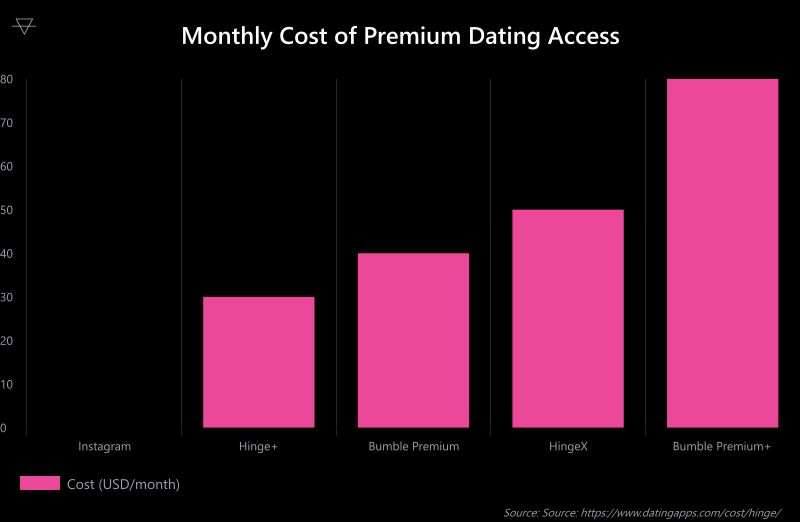
| Monthly cost | $39.99 to $79.99 | $29.99 to $49.99 | Free | |
| Match quality | Generic matches, low conversion | Prompt-based, 40% more likely to plan a date | Months of real context before first message | |
| Conversation quality | Women send "hey" at the same rate | Prompts force specificity but context is still limited | Story replies based on actual shared interests | |
| Time investment | 62 minutes per day | 90 minutes per week | One targeted story reply | |
| Success rate | 1 match per 40 likes for men | 1 match per 40 likes | 40-60% open rate on story replies | |
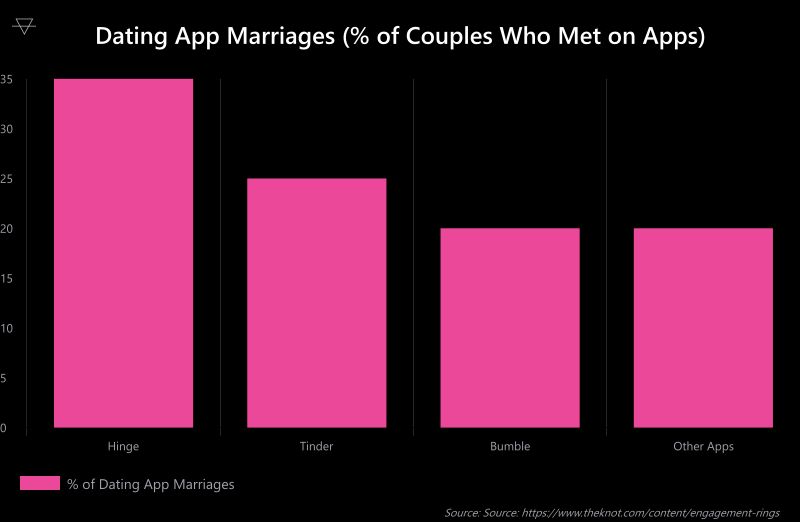
| Long-term outcomes | 20% of dating app marriages | 35% of dating app marriages | 40% of young people meet partners via social media |
Seven categories. Instagram takes all seven. Hinge takes second in five of them. Bumble finishes last in six.
Gender Ratio: Bumble vs Hinge vs Instagram
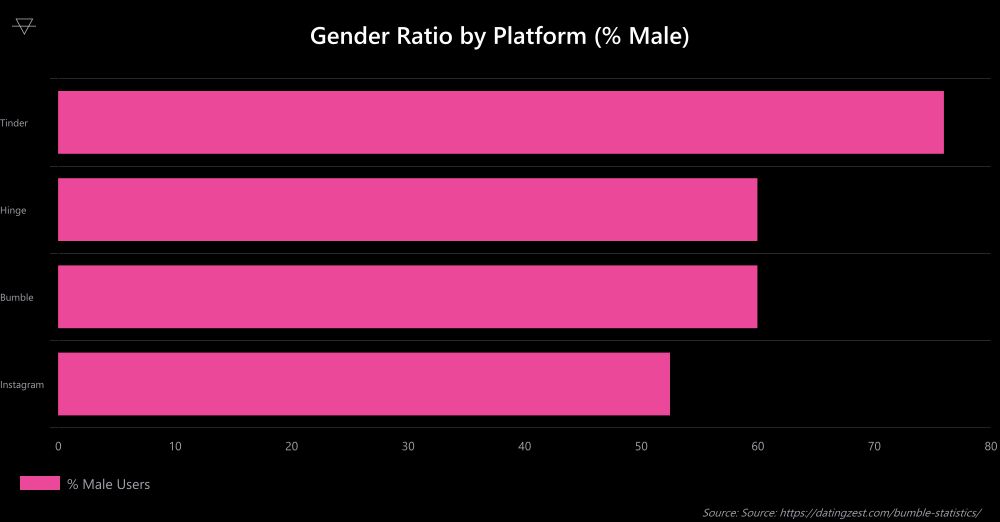
The gender ratio determines everything else. A platform that's 60% male means three guys competing for every two women. A platform that's 76% male, like Tinder, means three guys for every one woman. Instagram's global split is 52.5% male to 47.5% female. Nearly even. That structural advantage is free and permanent.
Both Bumble and Hinge sit at roughly 60% male. Better than Tinder's 76%, but still tilted enough to create the same dynamics. Concentrated female attention on a small pool of top profiles. Invisibility for everyone else. The algorithm making it worse.
51% of American men had zero dates in all of 2025. The gender ratio is the single biggest reason. But here's what makes it worse: even if the numbers were equal, the asymmetry would still be insane. Guys swipe on everything. Girls swipe on maybe 2% of profiles. So the effective ratio isn't 60/40 or even 75/25. It's closer to "every guy competing for the attention of the same tiny fraction of women who are actually swiping right." You're looking for a needle in a haystack, and the haystack is on fire. You can optimize your profile, upgrade to premium, write the perfect prompt response. None of it fixes a structural imbalance that the platform profits from maintaining.
What Most Guys Get Wrong About This Comparison
Treating Hinge prompts like they solve the context problem
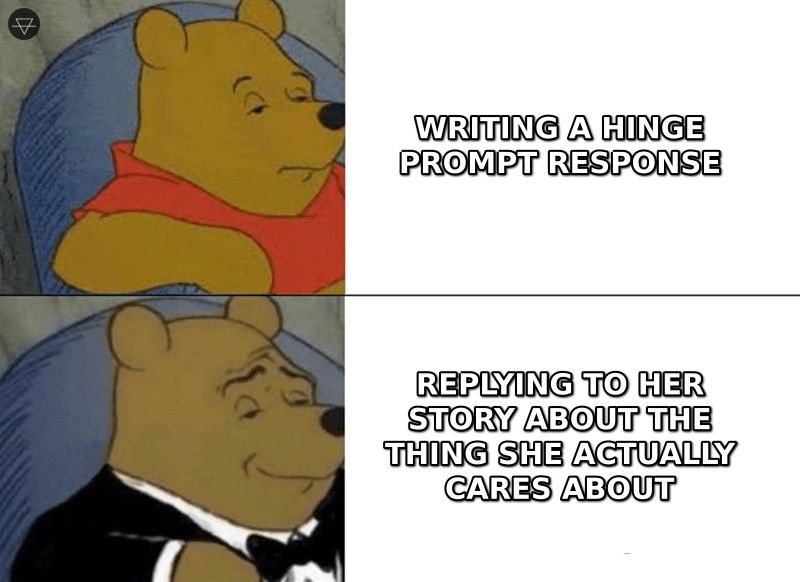
Hinge's prompts are better than Bumble's blank opener box. That's true. Knowing someone's "simple pleasure" is "Sunday morning farmers markets" gives you more to work with than a bio that says "just ask." But it's still a curated answer to a predetermined question. Instagram gives you months of unscripted behavior. Her travel photos, the restaurants she reviews on stories, the workout clips she posts at 6 AM. That's real context. A prompt answer is a performance. A story is a window. What you do with that prompt decides the rest, and there are 120 Hinge openers built off exactly those details.
Thinking "women message first" fixes the quality problem
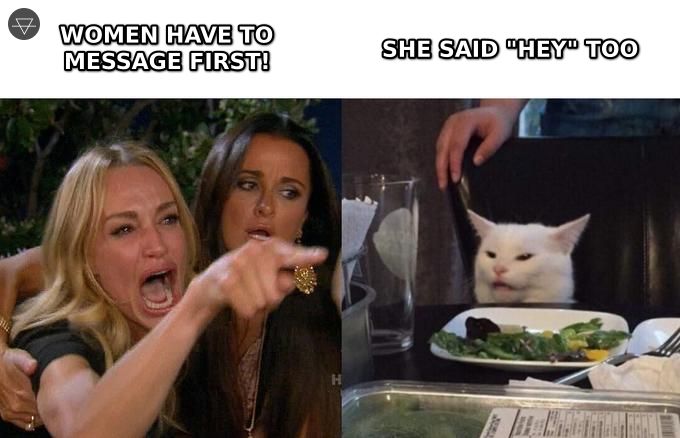
Let me be real about Bumble. It was a carbon copy of Tinder. The only difference was that women had to message first. That was the entire novelty. And here's the funny thing: Bumble eventually got rid of it. Because not enough women were messaging. And I get it. It's a supply and demand thing. Women have way too much demand on these apps. They're not going to proactively reach out when they have 200 guys already in their inbox. So the one feature that made Bumble different from Tinder quietly died because the market rejected it.
The data confirms it. Women on Bumble sent "hey" at roughly the same rate men do on every other app. The mechanic changed who initiates. It didn't change what they say. Bumble introduced "Opening Moves" in late 2024 to patch this, letting men respond to a preset prompt instead. That's Bumble admitting its entire premise was wrong.
Assuming the best dating app is good enough
Hinge is the best dating app. Credit where it's due. The prompt system, the "designed to be deleted" philosophy, the higher intent user base. All real advantages over Bumble and Tinder. But the best dating app still gives you six photos, three prompts, and a 60% male ratio. The ceiling on what any dating app can deliver is fundamentally limited by the amount of context available before the first message.
I spent two months on Hinge last fall. The prompts helped. My conversations were genuinely better than anything I'd had on Bumble or Tinder. But I kept hitting the same wall. Five exchanges in, we'd run out of prompt material and the conversation would flatten into the same "so what do you do for fun" territory that kills every dating app interaction. On Instagram that same week, I found a girl through a climbing hashtag who'd been posting beta videos for months. The conversation started at a depth Hinge couldn't reach because I already knew what she cared about before I typed a word.
Why Hinge Is the Best Dating App (and Why That's Not Enough)
What Hinge does right
Hinge's prompt system is the single best feature any dating app has built. Instead of swiping on a photo and hoping, you like a specific prompt or photo and your message arrives with context attached. Conversations on Hinge are 40% more likely to result in a planned date compared to Bumble. 35% of couples who met on dating apps and eventually married did so via Hinge, compared to 25% for Tinder and 20% for Bumble. The product works better because it's designed around conversation, not swiping speed.
Hinge also attracts higher-intent users. 77% of Hinge users are looking for a serious relationship, compared to 55% on Bumble. The "designed to be deleted" tagline, whatever you think of it as marketing, did filter for people who actually want to meet someone. That intent difference shows up in every conversation metric.
Where Hinge still falls short
The prompt system is a ceiling, not a floor. Three prompts and six photos is more context than Tinder's six photos and a bio. It's still nothing compared to months of Instagram content. A prompt about your "most controversial opinion" tells her something about you. Your actual posts, stories, and interests tell her everything. Squeeze what you can out of the three slots you get, because a specific prompt answer is most of the signal Hinge lets you send.
Hinge is 60% male. The ratio advantage over Tinder is real. The ratio disadvantage compared to Instagram is also real. And Hinge's premium tier, HingeX at $49.99 per month, gates features like priority placement and enhanced recommendations behind a paywall that free users are quietly penalized for not buying.
Why Bumble Is the Worst of the Three
The original promise failed
Women message first. That was the pitch. It would fix online dating by putting women in control and producing better first messages. Bumble's revenue fell 10% in 2025 to $966 million. Paying users dropped 20.5% in Q4. The stock lost over 90% of its value since 2021. The market's verdict was clear before the users' was.
The "women message first" mechanic produced the exact dynamic it was supposed to prevent. Women swipe right on roughly 6% of profiles on Bumble. Men swipe right on 33%. When a match happens, the woman has 24 hours to send the first message. In practice, she sends "hey" or the match expires. The mechanic added friction without adding quality.
And look, people say dating apps are full of creeps. It goes both ways. You have creepy guys and lazy guys, and you have creepy girls and lazy girls. It's the same on both sides. The only difference is that men carry the burden of initiation. And sometimes they come across as creepy not because they're bad people, but because they don't have the skill set. They don't know how to do it better. That's not a character flaw. That's a training gap. And no dating app is interested in closing it because trained users who succeed are users who leave.
The pricing is financial humiliation
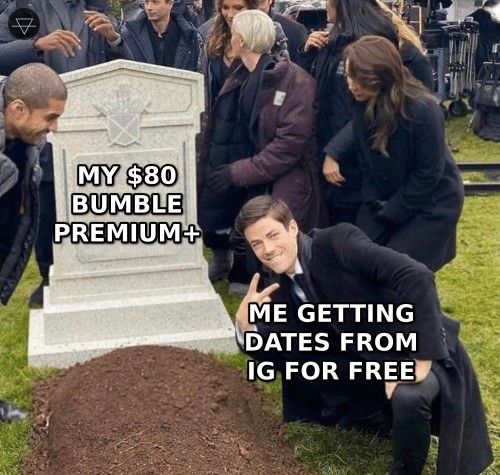
Let's talk about the prices. Bumble Premium costs $39.99 per month. Bumble Premium+ costs $79.99 per month. And Tinder is even worse. Gold, Premium, Platinum, Pro. I can't even remember them all. On top of that you can buy boosts and super likes. So they have five different products for one simple app where you just swipe. It is a form of financial humiliation and emotional humiliation that customers go through. You're paying eighty dollars a month to use an app where your match rate is one in forty likes and half those matches never become conversations. The subscription packages are deliberately confusing. They want you confused. Confused people spend more.
The company knows it
Bumble laid off 30% of its workforce in 2024. They introduced Opening Moves, essentially abandoning the women-message-first model. They're rebuilding the product because the original product didn't work. That's not speculation. That's what $966 million in declining revenue and a 90% stock crash looks like.
I downloaded Bumble Premium for a month last summer after a friend swore by it. The "Beeline" feature showed me everyone who'd swiped right. Twelve profiles in two weeks. Three were clearly inactive accounts. Two unmatched before a message was sent. Of the seven remaining, four sent "hey" or a single emoji as their opening message. Seven conversations that could have been. Four that arrived dead on arrival. The premium experience was paying $40 to watch in real time as the product failed to deliver. That same month, I got a date from a story reply about a trail running route. Cost me nothing.
Why Instagram Beats Both Dating Apps
Context is the variable no app can replicate
We covered this in detail in the Instagram vs Tinder comparison. The argument applies even more strongly against Hinge and Bumble. Hinge gives you three prompts and six photos. Bumble gives you the same six photos plus a bio. Instagram gives you months of someone's actual life. Her food posts, travel stories, workout clips, music taste, the causes she shares, the jokes she laughs at. You know who you're talking to before the conversation starts.
2 in 5 young people met their partners through social media. That number is growing. The dating app numbers are shrinking. The market picked context over algorithms.
The warm approach changes everything
Cold DMs on Instagram get a 1 to 5% response rate. Comparable to matching and messaging on any dating app. But story replies are different. They land in her primary inbox, not message requests. She just engaged with the content. She's already active. Story replies see 40 to 60% open rates. That warm-approach mechanic doesn't exist on Bumble, Hinge, or any other dating app. The framework for how to do this is covered in how to DM a girl on Instagram.
Free beats $80 per month
Instagram costs nothing. No premium tier gating your visibility. No algorithm suppressing free users. No "boost" feature charging you for temporary attention. The entire cost comparison is a forfeit by both dating apps. Active daters spend an average of $310 per month on dating overall. Most of that goes to app subscriptions that deliver worse results than a free platform.
The vibe is just off
This is anecdotal but I've heard enough people say the same thing that it counts. The vibe on dating apps is weird. When you're on Tinder or Bumble, you feel tense. You feel like you're doing a chore. Like you're working. The girls feel the same way. Everyone is super defensive. There are hoops to go through because she wants to make sure you're not a creep, and you want to make sure she's going to put some effort in instead of giving one-word answers. It feels synthetic. We all cracked the code on what these apps are, and nobody wants to keep doing it.
And here's the other thing nobody talks about: the kind of girls you actually want to date are not on these apps. The healthy ones. The ones who have their life together, have hobbies, have options. They're either already in relationships, or they're comfortable enough with themselves that they don't need to be on an app that everyone says is full of creeps. The women on Instagram aren't there to date. They're there to live their lives. That's exactly why approaching them there feels different.
37% of singles report not being authentic on dating apps. 76% of Gen Z believe other users aren't authentic. That trust deficit doesn't exist on Instagram because the profiles weren't built for dating. Whether she's into surfing, yoga, or fashion, her content tells you more than any prompt ever could.
Piercr reads the person you already want to message. Drop her handle and it reads her Instagram, her posts and who she follows, then hands you a plain-English read on what she's into and how to open. You write the message. No swiping. No subscriptions. Try it free.
What This Comparison Looks Like in Real Conversations
The Bumble approach
You match. She has 24 hours to message first. She types "hey" because the app gives her no context to work with and she matched with 15 other guys today. You respond to "hey" with something moderately clever. She replies in four hours. You reply in two. The conversation dies after six messages because neither of you has enough information about the other to sustain it. You both pretend the match never happened. On Bumble, the best case scenario is a conversation that starts at zero and has to build from nothing.
The Hinge approach
You like her prompt about "the most spontaneous thing she's done." You write something specific about it. Better start than Bumble. She responds with more energy because you referenced something she actually wrote. Four exchanges in, you've exhausted the prompt material. Now you're back to "so what do you do" and "where are you from" territory. The prompts gave you a better opening. They didn't give you enough depth to sustain a conversation past the first date.
The Instagram approach
She posted a story about a new ramen spot. You noticed a detail about the restaurant that proved you knew the food scene. She didn't give you much at first. Short answers. Testing. But your specificity earned a real exchange because it proved you weren't mass-messaging from the explore page. By the eighth message, she was asking you questions.
A friend of mine ran an experiment last winter. Same photos, same bio, three platforms simultaneously. Bumble for a month. Hinge for a month. Instagram story replies for a month. Bumble produced three matches that turned into zero dates. Hinge produced eight matches that turned into two dates, both decent but surface-level. Instagram produced one date from a story reply about a ceramics class she'd posted. That one date turned into something real. The volume was lower. The quality was incomparable.
Whether she's into books, chess, or CrossFit, the framework stays the same. Reference the specific thing. Prove you paid attention. Let the conversation build at her pace. The approach is covered in detail in how to start a conversation on Instagram. 42% of Gen Z women feel the men they date don't want deep conversations. Your first five messages are your chance to prove otherwise.
The Bigger Picture
Hinge deserves credit. The prompt system was the first real innovation in dating app design since the swipe. It proved that forcing specificity improves conversation quality. That insight matters. But the best dating app is still a dating app. Still a 60% male ratio. Still six photos and three prompts. Still a paywall separating free users from full functionality. The ceiling on what any swipe-based platform can deliver is set by the amount of context available at first contact.
Bumble tried something brave in 2014 and spent the next decade watching it fail. Women messaging first didn't produce better conversations. It produced the same "hey" from a different sender. The company's stock price, layoffs, and product pivots tell the story more honestly than any feature update ever could. Bumble's 30% workforce reduction wasn't a strategic realignment. It was a company running out of ways to make a broken premise work.
Instagram didn't set out to compete with dating apps. It won by accident, because the one thing every dating app lacks is depth. In my view, Instagram is essentially a digital version of a public street where you can chat up girls. They will either reject you, tell you they have a boyfriend, or say hi and have a banter with you. It's the same dynamic as real life. The only difference is the medium. And somehow that feels more natural than any dating app ever managed to.
Everyone is still addicted to online dating because it's what we're used to. But the platform shifted. 40% of young people meet partners through social media. 62% of women are open to meeting partners outside of apps. The shift already happened. The guys who figured it out early have a structural advantage that compounds with every conversation.
Try Piercr
The Instagram approach beats the apps because you already know who she is before you message. The slow part is doing that reading by hand, scrolling months of someone's posts to work out what she's actually about.
That's what Piercr does for you. Drop the handle of someone you already have in mind and it reads her Instagram, her posts and the accounts she follows, then hands you a plain-English read on what she's into and the best way to open. You write the message yourself. Try Piercr free and skip the part where you spend 62 minutes a day swiping on Bumble.
FAQ
Q: Is Hinge better than Bumble for dating in 2026?
A: For serious relationships, yes. 77% of Hinge users are looking for a serious relationship, and Hinge conversations are 40% more likely to result in a planned date. Hinge also leads in marriages among dating app couples at 35%, compared to Bumble's 20%.
Q: Why is Bumble losing so many users?
A: Bumble's revenue fell 10% in 2025 to $966 million. Paying users dropped 20.5% in Q4. The women-message-first model produced low-effort openers at the same rate as every other app. Bumble laid off 30% of its workforce and its stock lost over 90% of its value since the 2021 IPO.
Q: Can you use Instagram instead of dating apps?
A: Yes. 40% of young people meet partners through social media, compared to 29% through dating apps. Instagram gives you months of context about someone before your first message. There's no paywall, no algorithm hiding your profile, and story replies see 40 to 60% open rates.
Q: Which dating app has the best gender ratio for men?
A: None of them are good. Hinge and Bumble are both roughly 60% male. Tinder is 76% male. Instagram's global split is 52.5% male. The closer the ratio gets to even, the less you're competing against other men for the same attention.
Q: What is the best dating app for serious relationships in 2026?
A: Hinge is the best dating app for relationships. 35% of dating app marriages come from Hinge. But Instagram outperforms all dating apps on context, cost, and conversation quality. You get months of someone's real life before your first message instead of six photos and a prompt about their favorite movie.